After Bulguksa, lunch in central Gyeongju at Hwangnam Milmyeon — and a small confession: this was my first bowl of Korean cold noodles eaten in Korea.
- The Mildness Is the Design
- Notes from the Day
- Frequently asked questions
- What is milmyeon, and how is it different from naengmyeon?
- What can you order at Hwangnam Milmyeon?
- Why does the broth taste so mild?
- Mul or bibim — which should I order?
- Is the kimchi worth paying attention to?
- How much does lunch cost?
- What is the dining room like?
- What can I combine it with?
- What are the opening hours?
The Mildness Is the Design
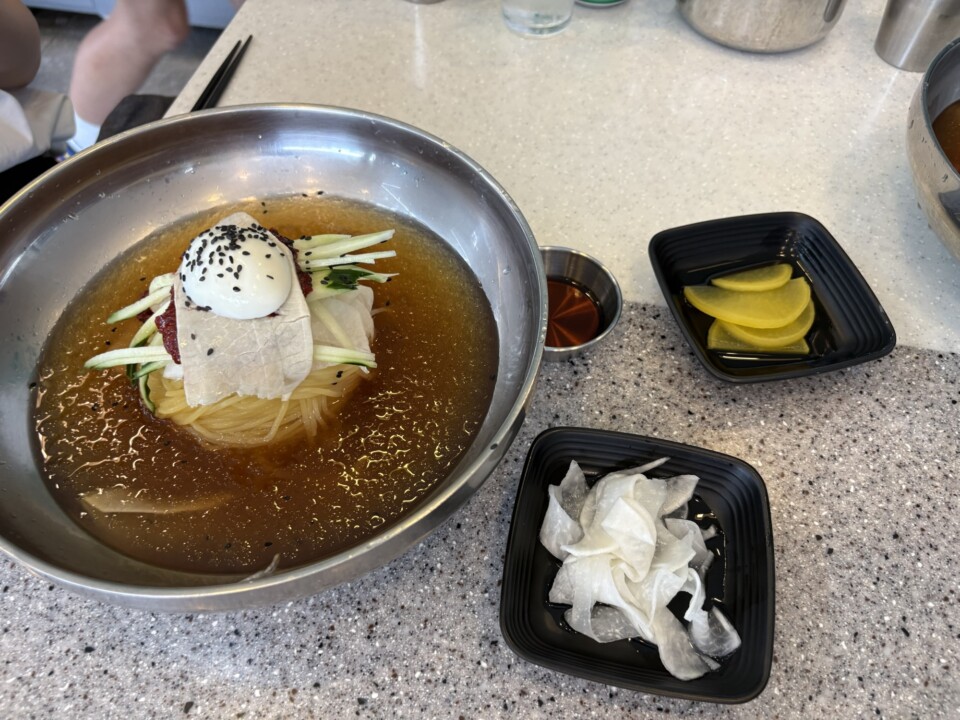
Milmyeon is cold noodles made with wheat, a specialty of the Busan and Gyeongsang region. Thin noodles rest in a clear, chilled broth under a soft egg and ribbons of cucumber. First impression: mild. But slurp by slurp it becomes obvious the restraint is deliberate — the broth stays quiet so the wheat noodles can speak, and the two never fight. I drank the bowl dry.
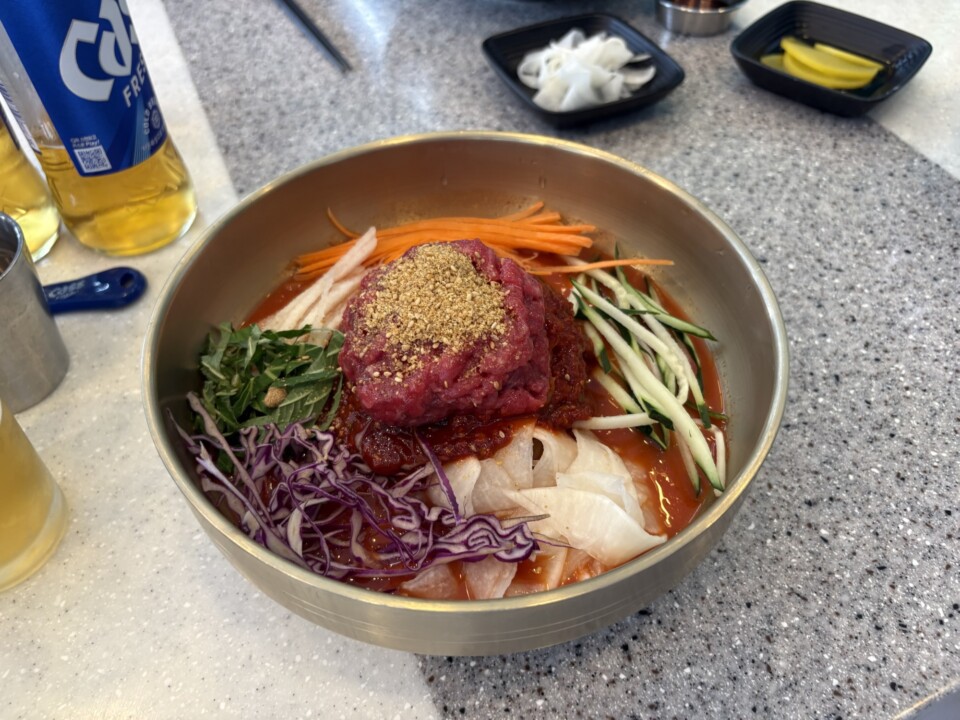
The second bowl was the bibim style, crowned with yukhoe — Korean beef tartare — to be mixed through shredded vegetables and chili sauce. All punch where the first was all subtlety; alternating between the two bowls, boredom never stood a chance.
What impressed me most was the kimchi: heat, yes, but with genuine fermented umami underneath. Cold noodles, then kimchi, then noodles again — a complete little cycle, and a very full stomach for around 15,000–20,000 won per person.
Notes from the Day
- Milmyeon is the wheat-noodle version of Korean cold noodles — a specialty of the Busan/Gyeongsang region, unlike buckwheat-based Pyongyang naengmyeon.
- Hwangnam Milmyeon is a popular spot in Gyeongju’s Hwangnam-dong, serving both the chilled-broth (mul) and mixed spicy (bibim) styles.
- A filling lunch runs roughly 10–15 US dollars per person (as of my visit).
- The kimchi here has real fermented depth, not just heat — a perfect counterpoint to the cold noodles.
After lunch, a stroll through Hwangnidan-gil — the liveliest street in Gyeongju right now.
The two World Heritage sites we walked that morning: Bulguksa Temple and the 10-won coin pagoda, and the granite dome of Seokguram.
Visited in August 2026. Prices and details are as of my visit.
Frequently asked questions
What is milmyeon, and how is it different from naengmyeon?
Milmyeon is Korean cold noodles made with wheat, a specialty of the Busan and Gyeongsang region. Pyongyang-style naengmyeon is buckwheat-based; milmyeon uses thin wheat noodles, which is why the broth around them is built the way it is.
What can you order at Hwangnam Milmyeon?
Two styles: mul milmyeon, the noodles in a clear chilled broth, and bibim milmyeon, mixed with shredded vegetables and chili sauce. My mul bowl came with a soft egg, cucumber and pickled radish; the bibim bowl was crowned with yukhoe, Korean beef tartare.
Why does the broth taste so mild?
The first spoonful reads as thin, but the restraint is deliberate: the broth stays quiet so the wheat noodles can be tasted, and the two never compete. By the end I had drunk the bowl dry.
Mul or bibim — which should I order?
If there are two of you, order one of each and swap. The mul bowl is all subtlety and the bibim bowl is all punch; alternating between them, neither gets boring.
Is the kimchi worth paying attention to?
Yes. It has heat, but also real fermented umami underneath. Cold noodles, then kimchi, then noodles again is a complete little cycle, and it is a large part of why the meal worked.
How much does lunch cost?
Roughly 15,000–20,000 won per person, or about 10–15 US dollars, for a filling lunch at the time of my visit. Prices change, so check the current menu before you go.
What is the dining room like?
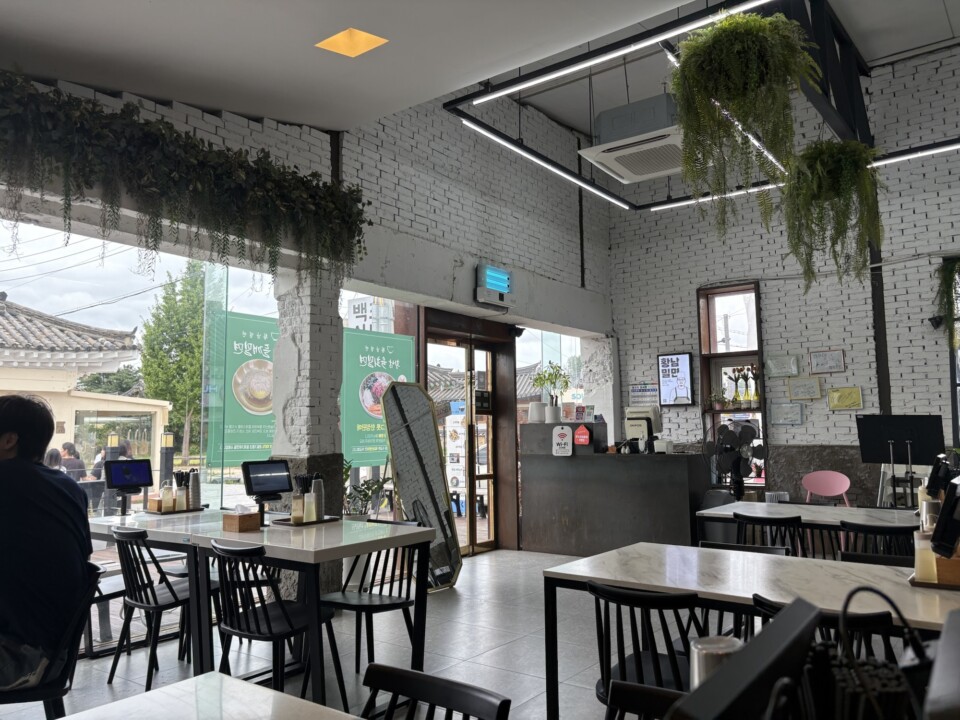
Bright and casual: white-painted brick walls, trailing plants hung from the ceiling, and big windows onto the street, where you can see tiled hanok roofs across the road. Each table had its own small tablet screen when I visited.
What can I combine it with?
It sits in Hwangnam-dong in central Gyeongju, so Hwangnidan-gil — the liveliest street in town right now — is the natural walk after lunch. We came here straight from a morning at Bulguksa Temple and Seokguram.
What are the opening hours?
I did not record them on the day, so I will not guess. Check the restaurant’s current listing on a map app or its official channels before you go.
Related Articles
- [Yokohama] Breakfast at Le Normandie, Hotel New Grand: A Monte Cristo With the Harbor in View
- Teppanyaki Sagami, Yokohama Bay Sheraton: Order Both the Beef and the Seafood
- Myeongdong at eight at night, where you cannot walk where you want to
- Fresh somen at Shodoshima Furusato-mura, which our daughter loved enough to have two days running
Comments