Come to Kagawa, eat udon. On this trip we tried three shops: Teuchi Judan Udon Baka Ichidai in central Takamatsu, Zaigo Udon Honke Waraya at the foot of Yashima, and Teuchi Udon Gennai in Shido.
We did not cram all three into one day; we spread them over two, moving by rental car. Geographically, Baka Ichidai is in central Takamatsu (Taga-cho), Waraya is at the foot of Yashima, and Gennai is in Shido in Sanuki City. They line up heading east, further from Takamatsu each time.
To give away the ending: the best of the three, for us, was Waraya.
Udon Baka Ichidai: 80 minutes in line for kama-butter
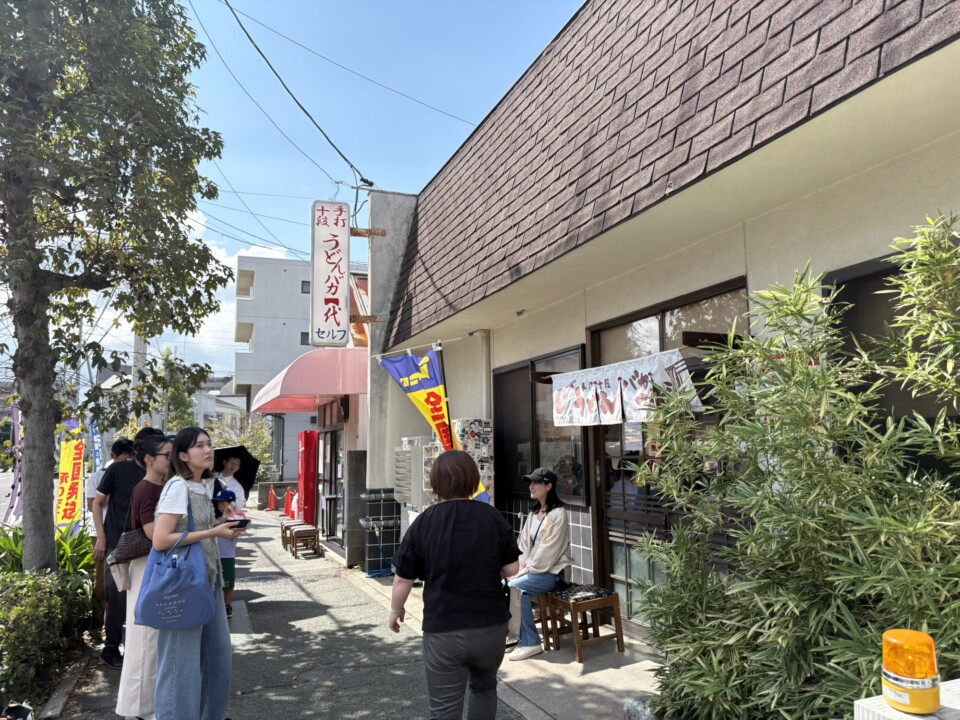
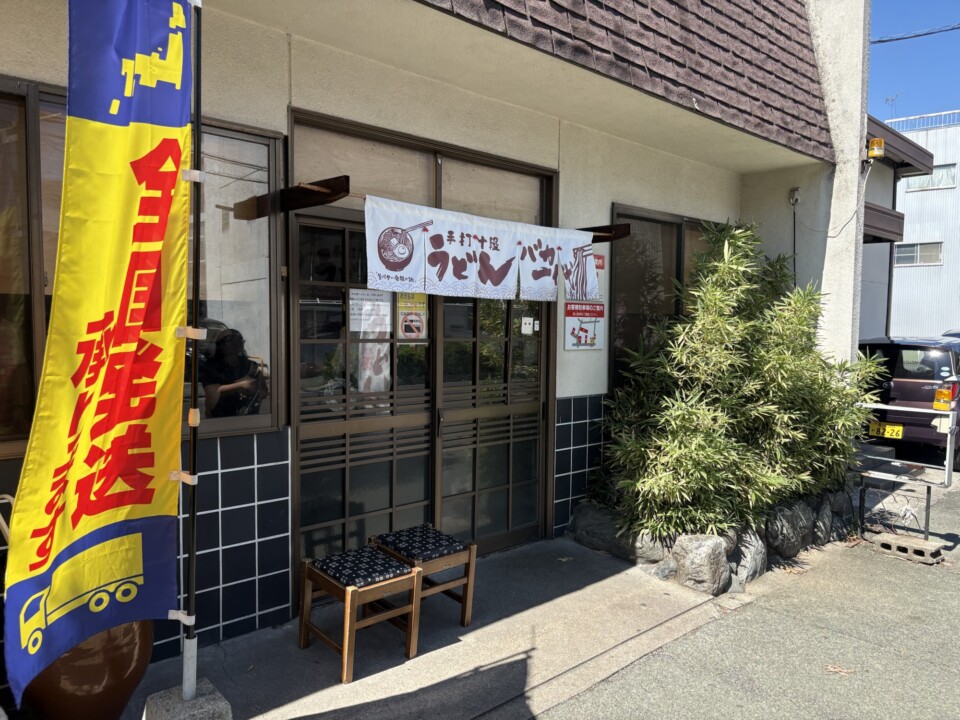
A popular shop in central Takamatsu that opens at 6 a.m. The queue ran out onto the street and we waited nearly 80 minutes.
We were in that line between 9 and 11 in the morning. For a shop that opens at six, I suspect this is simply what happens once you miss the opening rush. It trades from 6:00 to 18:00 and closes only on 1 January.
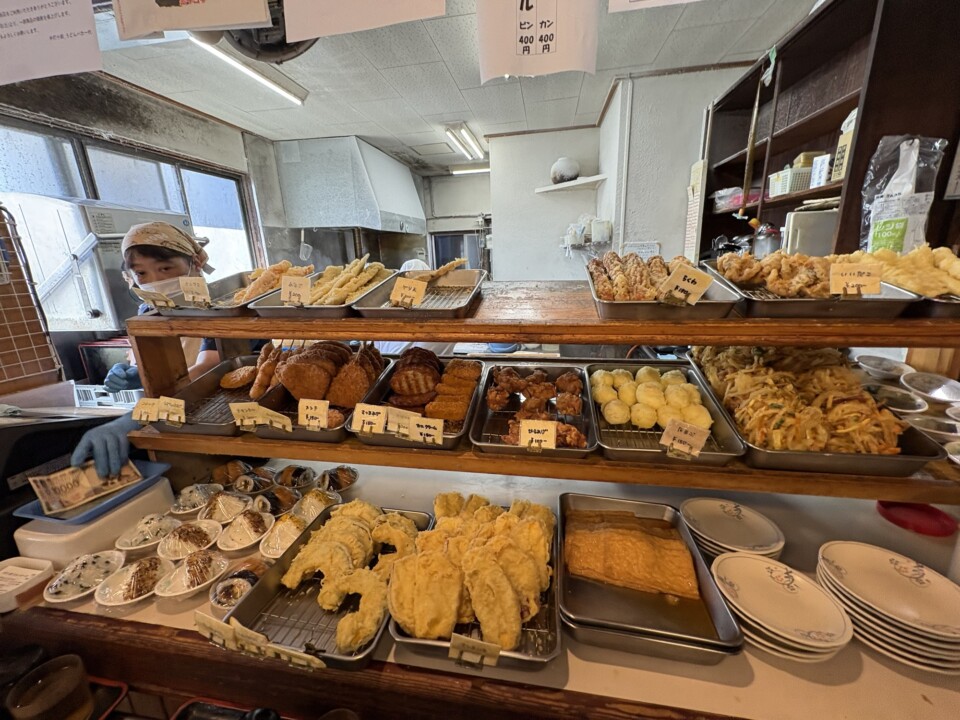
It is self-service: you take your tempura and fried items from the case yourself. I ordered the house speciality, kama-butter udon.
Kama-butter is kamaage udon with butter and black pepper through it. Kamaage itself means noodles served straight from the pot, in a tub with their cooking water, never rinsed in cold water — so they arrive hot and soft. Add butter and black pepper to that and the outline really does approach carbonara.
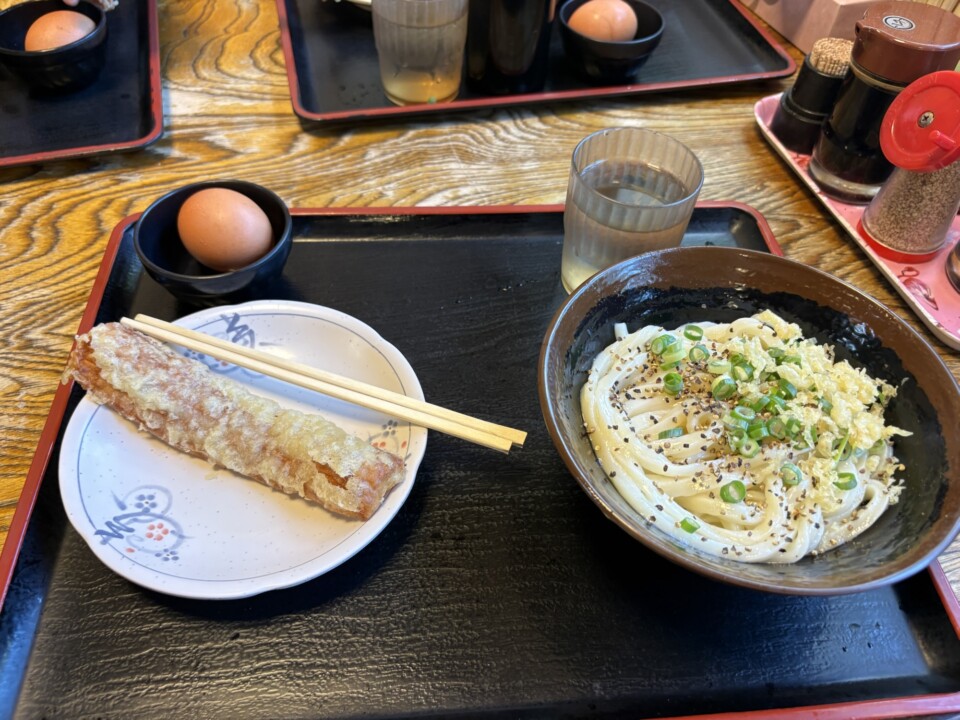
It was good. But having come to Shikoku looking forward to its udon, I did not find it moving.
Firm noodles, a broth full of dashi — I had hoped for a flavour particular to the region, but those things are already being reproduced in Tokyo. Once you add the range of flavour combinations, the overall quality and how comfortable the shop is, Tokyo wins on satisfaction by a wide margin. In its way, this bowl is what made me notice how good udon in Tokyo has become.
Something I learned afterwards: Kagawa has prefecturally developed wheat varieties for Sanuki udon, Sanuki no Yume 2000 and its successor Sanuki no Yume 2009, and shops that use them are distinguished as Sanuki no Yume specialists. Which implies the reverse — most Sanuki udon is made with Australian wheat. The raw material is not something only Kagawa has. That is probably part of why you can meet the same texture in Tokyo.
What I was comparing it against in my head were Tokyo chains like Hanamaru Udon and Tsurutontan. I thought the noodles were about equal. Add the broth, the breadth of ways to order, and the cleanliness of the room, and Tokyo comes out ahead. What I confirmed by travelling to Shikoku was not how good Shikoku udon is, but how high the standard in Tokyo has got.
Zaigo Udon Honke Waraya: kamaage in a thatched house
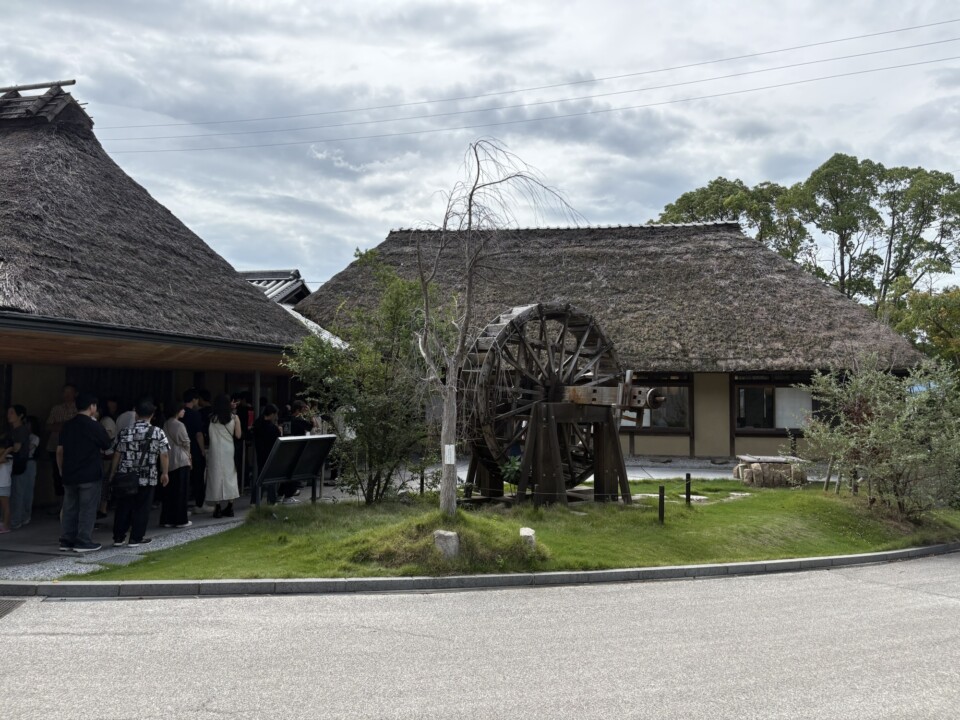
Waraya stands near the entrance to Shikoku Mura, at the foot of Yashima. It occupies a farmhouse built in the Iya region at the end of the Edo period, and the thatched roof and the water wheel make it easy to spot.
The address is 91 Yashima-nakamachi, Takamatsu. It trades from 9:30 to 17:30 (last order 17:00) and opens every day. It is five minutes on foot from Kotoden Yashima station, and there is parking for 100 cars, so arriving by car is no trouble either.
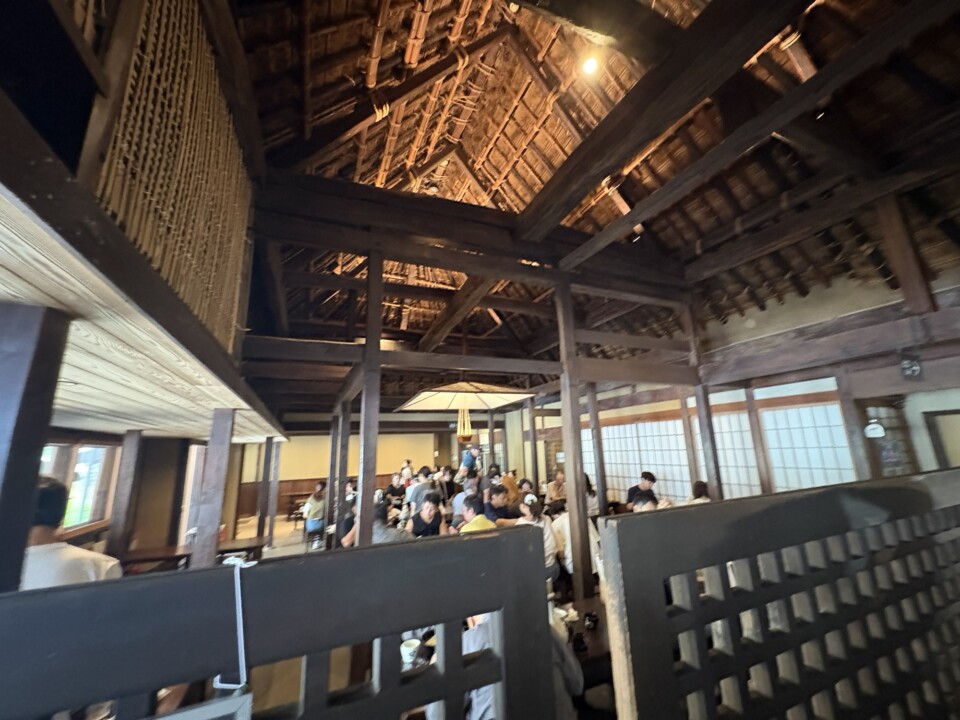
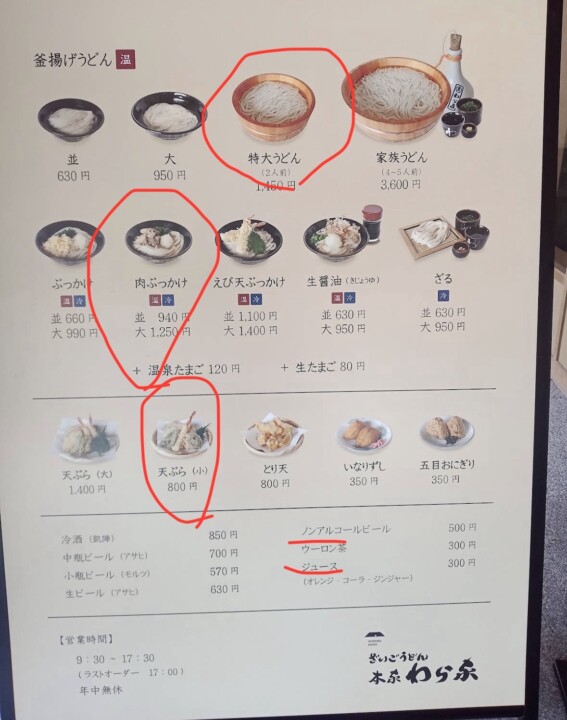
We ordered kamaage udon, cold niku udon and a tempura platter. The noodles had real Shikoku firmness and the broth was rich with dashi. Of all the udon we ate on this trip, this was the best.
There were three or four of us, and the kamaage did not arrive in a single portion tub but in a large basin for everyone to serve themselves from. The menu has a Family Udon for three to four people served in exactly that basin, at 3,200 yen, so this is evidently how the shop expects a group to eat.
The dashi is made with dried sardine — iriko, as it is called in Kagawa. Iriko from Ibukijima in particular has a reputation for a refined flavour. What I tasted in Waraya broth was certainly pointing in a different direction from a dashi built on bonito alone.
The feel of eating inside a straw-roofed house was good too.
Teuchi Udon Gennai, Shido: a slightly sweet broth
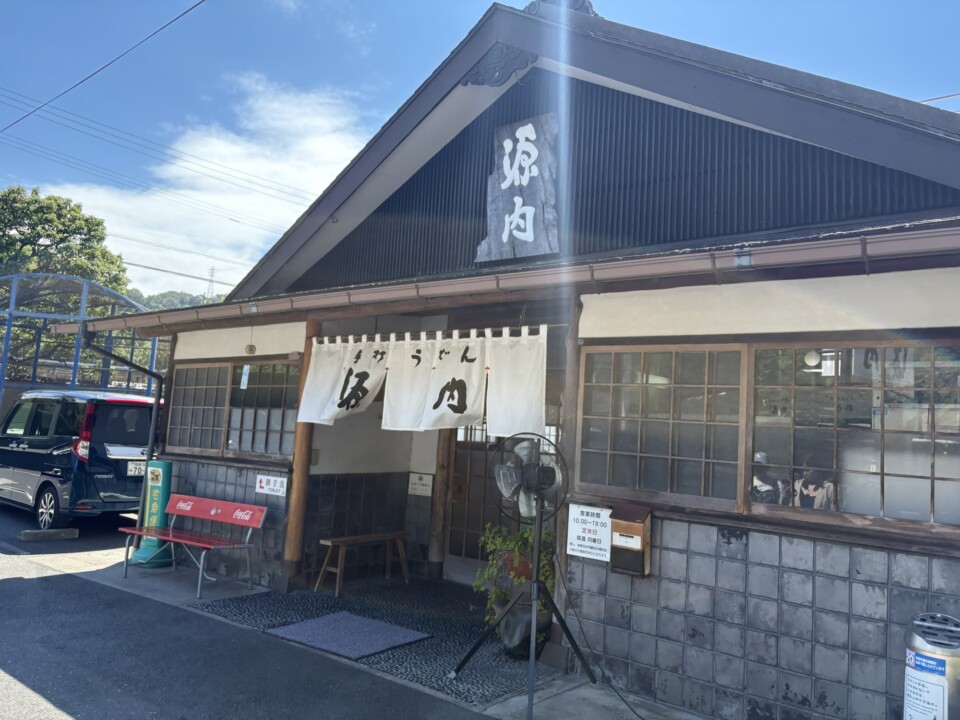
Photography is not allowed inside, so the only picture is of the outside. The noodles here also had that Shikoku firmness. We had kake udon as well, and the broth carried a slight sweetness that seems particular to this shop.
What I ordered was cold bukkake. Bukkake means pouring a concentrated dashi directly over the noodles rather than serving them in soup; cold noodles with cold liquid is called hiyahiya. The sweetness I noticed was in that bukkake liquid.
Gennai is not self-service but a full-service shop where you sit and order. It opens at 10:00 and closes when it sells out, shut on Mondays (Tuesday when Monday is a holiday). The cheapest kake udon is 550 yen, a spiced curry udon is 1,000 yen, and the house udon-suki is 3,300 yen.
One more thing. Photography is banned inside, but there is a peacock in front of the shop. Local write-ups mention it as an attraction in its own right, and honestly, the sight of a peacock outside an udon shop is what stayed with me.
After three shops
All three had properly firm Shikoku noodles. Of the three, the one that also had a dashi-rich broth and the atmosphere of a straw-roofed house was Waraya.
Something else I picked up across the three: Sanuki udon has a proper vocabulary for how you eat it. Kake, noodles in broth. Bukkake, concentrated dashi poured straight over. Shoyu, or kijoyu, just soy sauce. Kamatama, hot noodles with raw egg and soy sauce. Kamaage, served in the tub with the cooking water. Hiyahiya, cold noodles with cold liquid. Knowing these names is what makes ordering quick.
For what it is worth, the current udon boom is generally traced to a magazine series in a Kagawa town paper that was published as a book in 1993. Thirty years on, it has reached the point where someone from outside the prefecture queues 80 minutes from nine in the morning.
Shop information
- Teuchi Judan Udon Baka Ichidai: 1-6-7 Taga-cho, Takamatsu, Kagawa / 6:00–18:00 / closed only on 1 January (shorter hours over New Year) / parking for 45 cars / self-service
- Zaigo Udon Honke Waraya: 91 Yashima-nakamachi, Takamatsu, Kagawa (near the entrance to Shikoku Mura) / 9:30–17:30 (last order 17:00) / open every day / 5 minutes on foot from Kotoden Yashima / parking for 100 cars
- Teuchi Udon Gennai (Shido main shop): 1597-10 Shido, Sanuki, Kagawa 769-2101 / opens 10:00, closes when sold out (closing listed as 19:00 or 20:00 depending on the source) / closed Mondays (Tuesday if Monday is a holiday) / no photography inside
Shop details (address, hours, closing days, prices) were checked in October 2026 against the Kagawa Prefecture Tourism Association, Rurubu, Yahoo! Travel and similar listings. They may change, so please check before you go.
📖 A companion guide from Private Wisdom
Going beyond the usual route? Off the Beaten Path in Japan — the islands, small towns and quiet corners most visitors never reach, and how to get to them, from a long-time local. Free to read with Kindle Unlimited.
▶ Read on Amazon (Kindle Unlimited)Frequently asked questions
Which of the three would you recommend?
Waraya. The noodles had Shikoku firmness, the broth was rich with iriko dashi, and it is in a thatched farmhouse moved from the Iya region. It was the best of the three for us.
How long is the wait at Udon Baka Ichidai?
We queued close to 80 minutes, arriving between 9 and 11 in the morning. The shop opens at 6 a.m., so going near opening is likely to be very different.
What is kama-butter udon?
Kamaage udon — noodles served straight from the pot in their cooking water, never rinsed cold — with butter and black pepper through it. The result sits somewhere near carbonara.
Is Sanuki udon made with local wheat?
Mostly not. Kagawa developed Sanuki no Yume 2000 and 2009 specifically for Sanuki udon, and shops using them are separately designated, which implies most Sanuki udon uses Australian wheat.
What do the ordering terms mean?
Kake is noodles in broth, bukkake is concentrated dashi poured directly over, shoyu is just soy sauce, kamatama is hot noodles with raw egg and soy sauce, kamaage is served in the tub with its cooking water, and hiyahiya is cold noodles with cold liquid.
Sources
- Ordering terminology, iriko dashi, the Sanuki no Yume prefectural wheat and the 1993 book that started the boom: Ministry of Agriculture, Forestry and Fisheries
- Shop addresses, hours, closing days and prices: Kagawa Prefecture Tourism Association, Rurubu, Yahoo! Travel and similar listings, checked October 2026
Comments