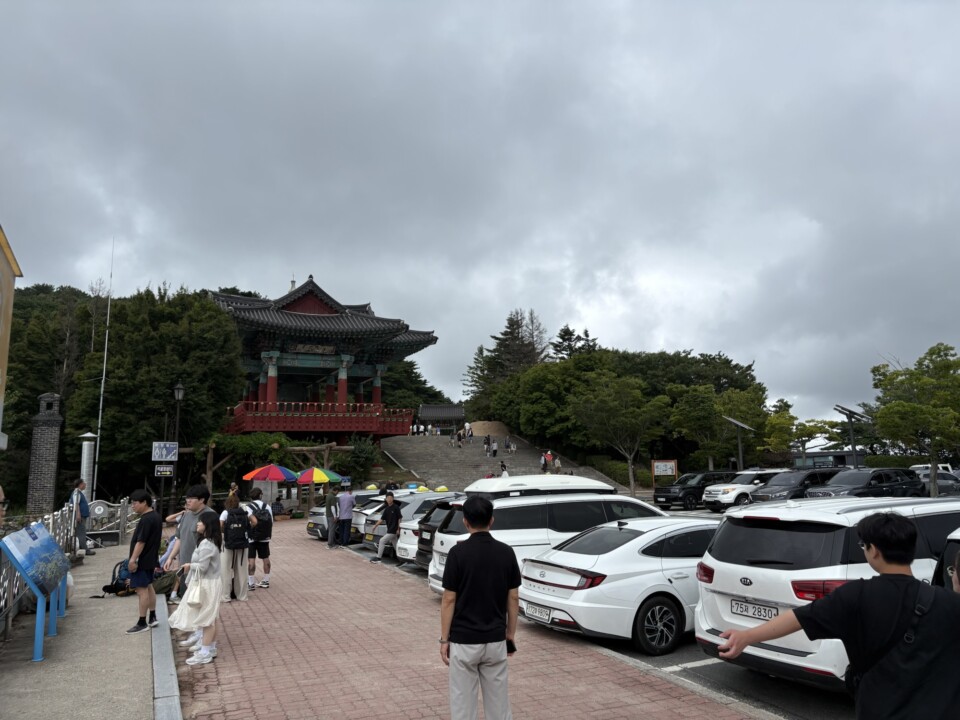
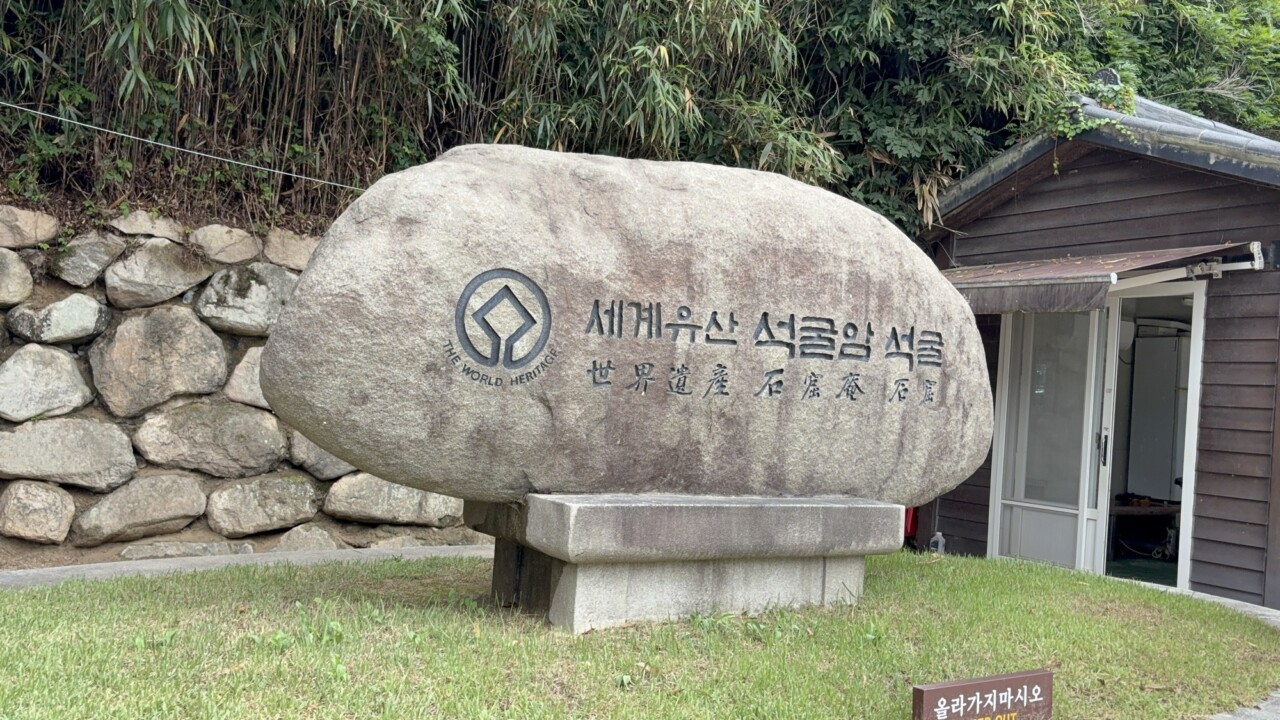
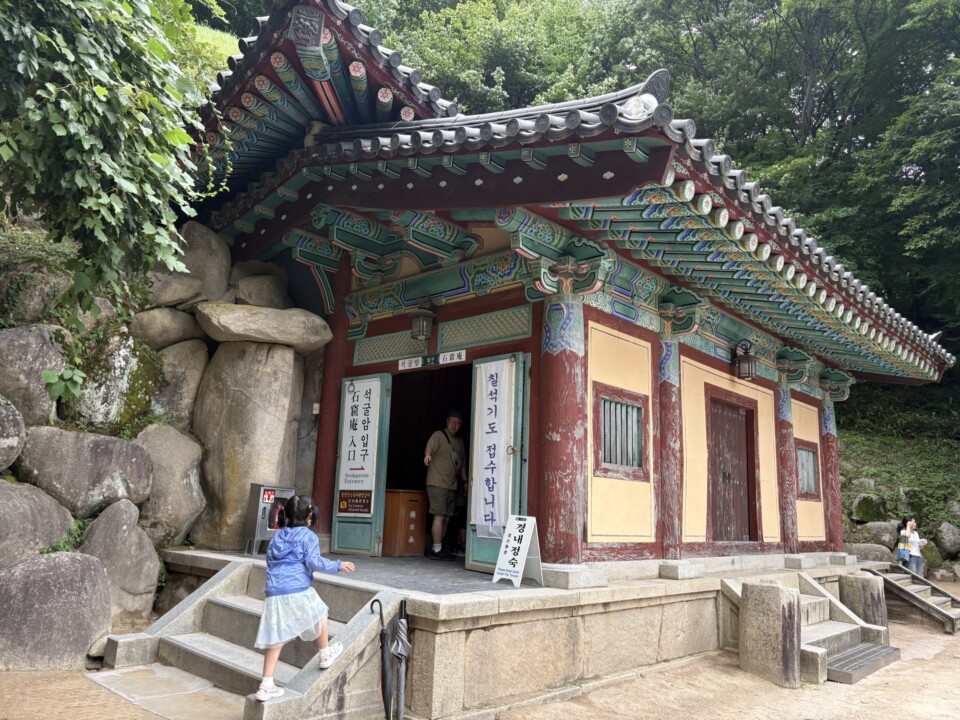
After the rest-stop break, our first stop in Gyeongju was Seokguram, the grotto temple partway up Mount Tohamsan — a UNESCO World Heritage site often called the pinnacle of Silla Buddhist art.
Thirteen Centuries Ahead of Its Time
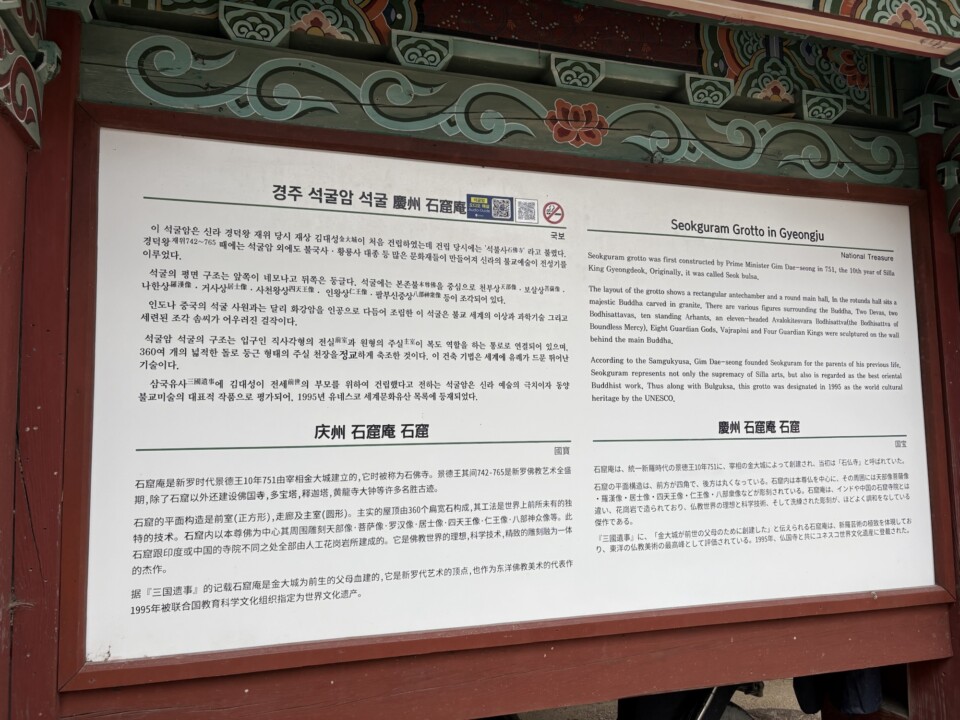
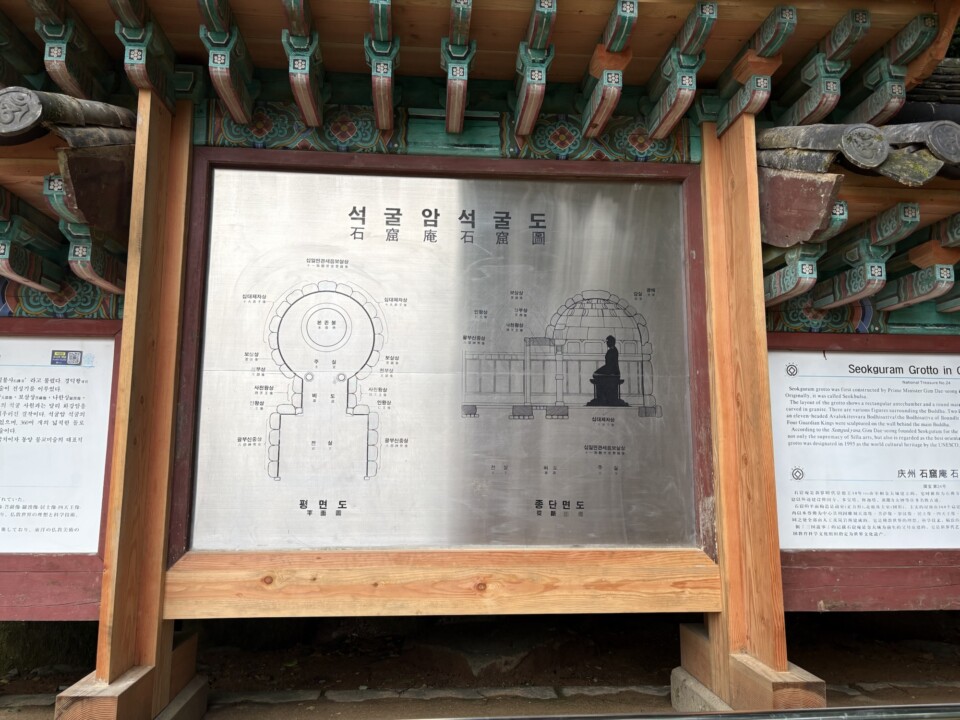
The information boards along the path carry explanations in Japanese and English. Construction began in 751, led by the Silla prime minister Gim Dae-seong, who is said to have built it for the parents of his previous life. A square antechamber connects by corridor to a round main hall, its dome assembled from more than 360 granite blocks fitted with astonishing precision — in an age with no cement and no steel.
Photography is forbidden inside. Facing the principal Buddha through the glass, I learned it was carved from a single block of granite. How do you carve stone that hard? How did they even haul the block this far up the mountain? The questions kept coming, and in place of answers there was only a quiet, physical sense of awe. Not being able to photograph it, I suspect, is exactly why I remember it so vividly.
Lanterns on the Path, Mountains Below
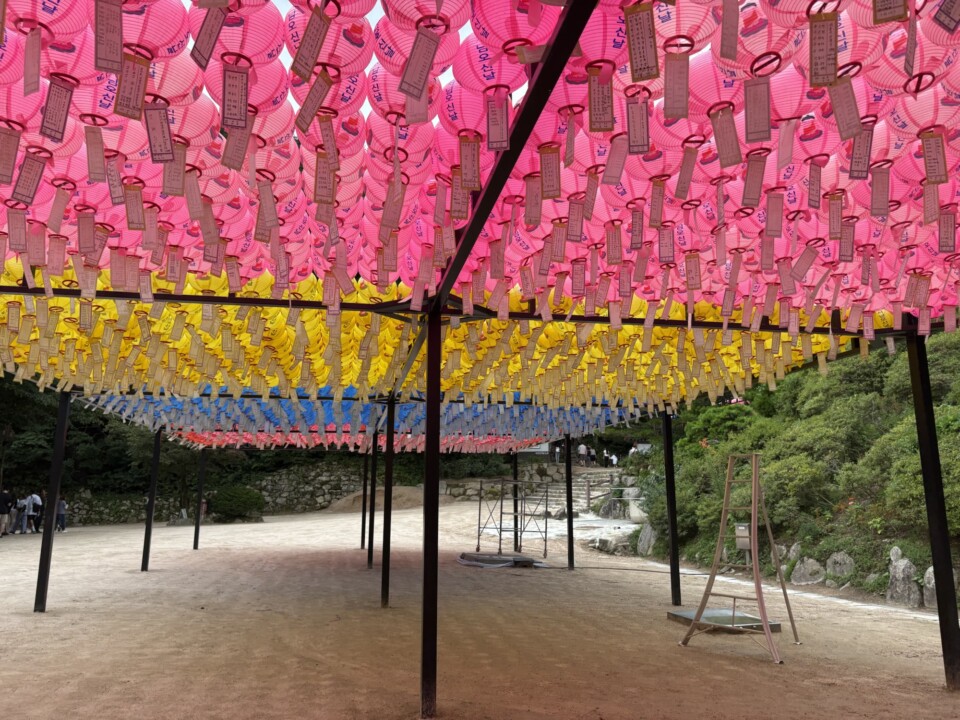
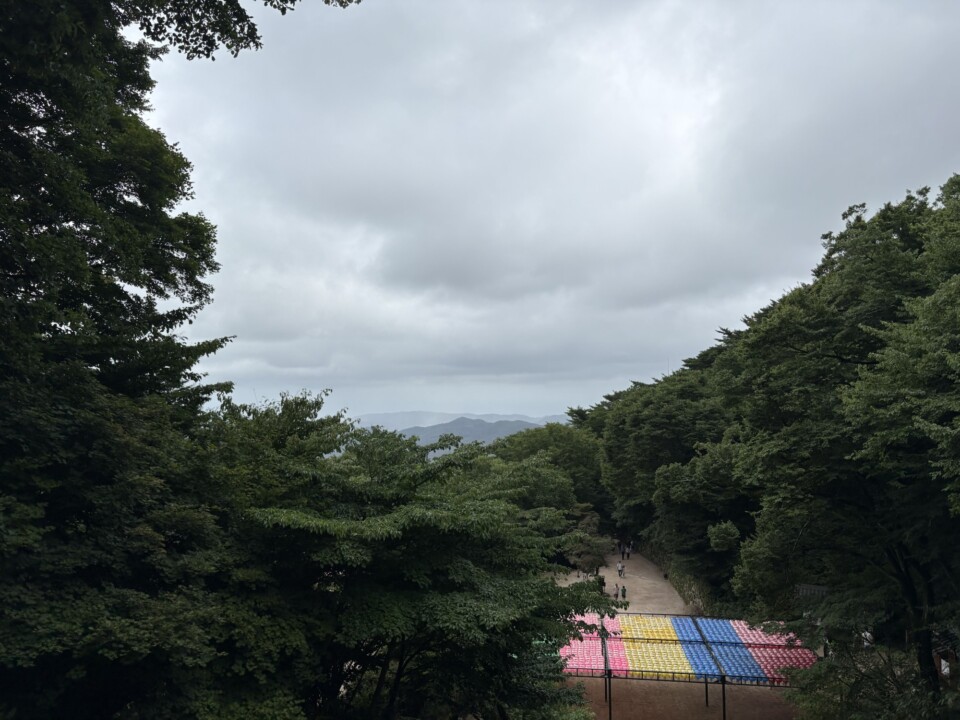
Outside, the approach path runs beneath a dense canopy of pink and yellow prayer lanterns, each with a paper wish tag swaying under it. Turn around, and the mountains of Gyeongju roll out to the horizon. The Buddha has a better view than most of us ever will.
Notes from the Day
- Seokguram is a granite grotto temple begun in 751 by Silla prime minister Gim Dae-seong; it was originally called Seokbulsa, “stone Buddha temple” (per the on-site information board).
- A square antechamber leads to a round main hall whose dome is assembled from over 360 precisely fitted granite stones. The principal Buddha is carved from a single block of granite.
- Inscribed as a UNESCO World Heritage site in 1995 together with Bulguksa Temple. Photography inside the grotto is prohibited.
- It is about a 10-minute walk from the parking lot. Check hours on the official Gyeongju tourism site — details as of my visit.
Down the mountain waits the other half of this World Heritage pair, also built by Gim Dae-seong: Bulguksa Temple.
Seokguram Grotto: Frequently Asked Questions
What exactly is Seokguram?
A grotto temple partway up Mount Tohamsan. According to the information boards on site, construction began in 751 under the Silla prime minister Gim Dae-seong, and it was originally called Seokbulsa.
What makes the architecture remarkable?
A square antechamber joins a round main hall by corridor, and the dome above is assembled from more than 360 granite blocks fitted with great precision — with no cement and no steel. The principal Buddha is carved from a single block of granite.
Can you take photographs inside?
No. Photography is forbidden inside the grotto, and you face the Buddha through glass. Not being able to photograph it is, I think, why the memory stayed so sharp.
How far is the walk from the parking lot?
About ten minutes along the approach path. Pink and yellow lanterns line the way, each with a prayer tag hanging from it, and looking back you can see the Gyeongju ranges stretching into the distance.
Can I combine it with Bulguksa?
Yes. Bulguksa Temple was begun by the same Gim Dae-seong and inscribed as a World Heritage site alongside Seokguram in 1995. It is just down the mountain. For opening hours, check the official Gyeongju tourism site.
More from the same day in Gyeongju
- Walking Bulguksa Temple: the pagoda on the 10-won coin
- My first real milmyeon at Hwangnam Milmyeon
- A hanok Miffy store on Hwangnidan-gil
Visited in August 2026. Prices and details are as of my visit.
Related Articles
Comments