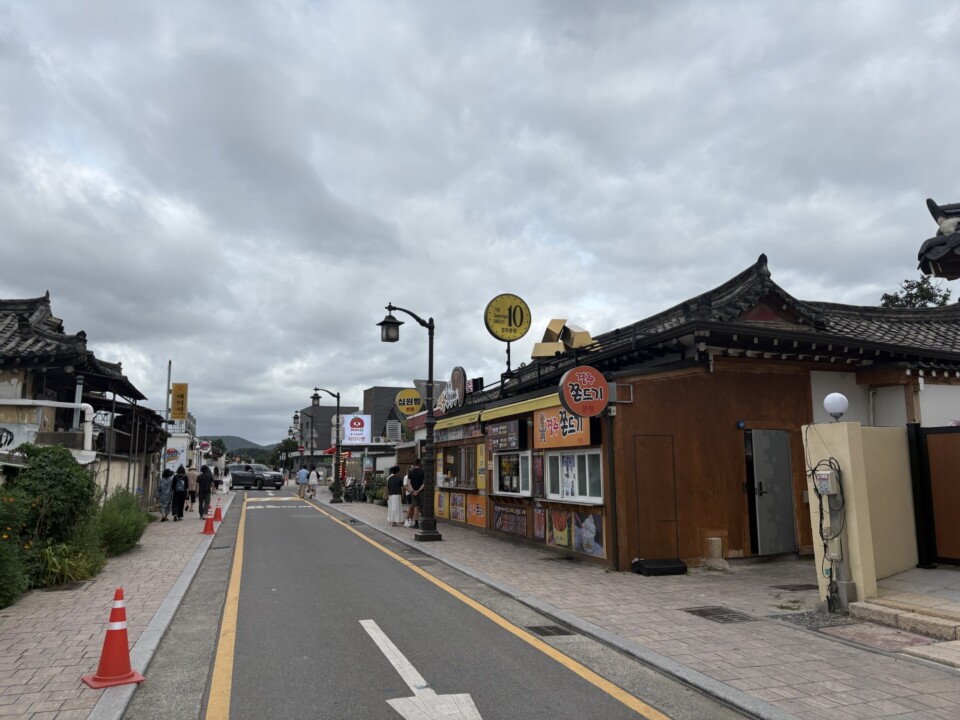
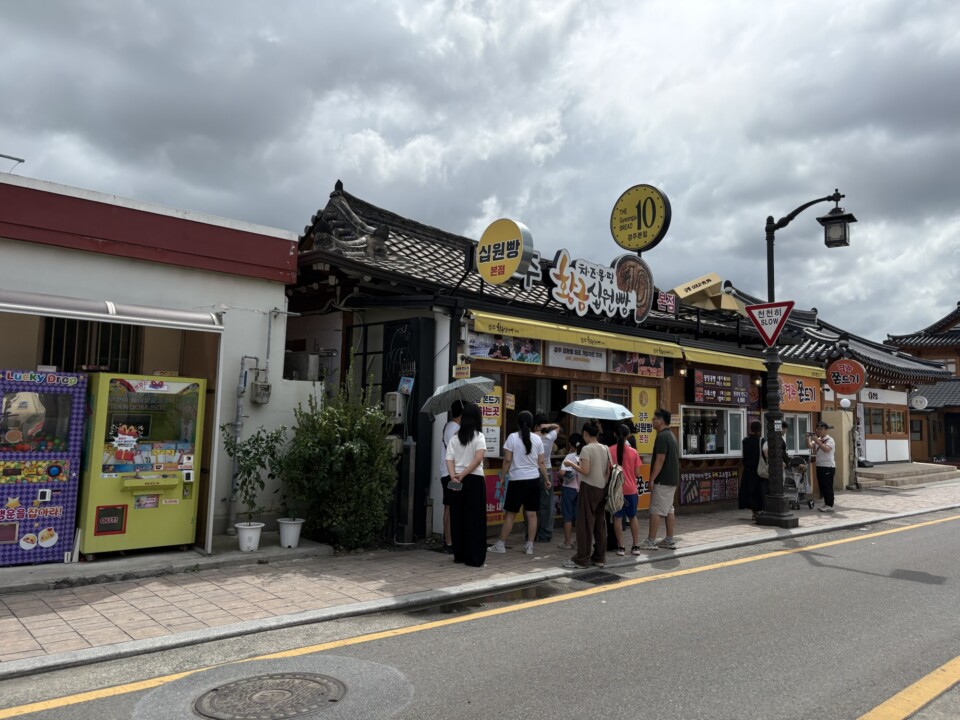
Leaving the Miffy store, we noticed one shop with a queue conspicuously longer than the rest: a 10-won bread stand. Hwangnidan-gil has four or five shops selling the same specialty, and still the lines never die — that tells you something.
A World Heritage Pagoda, Snackified
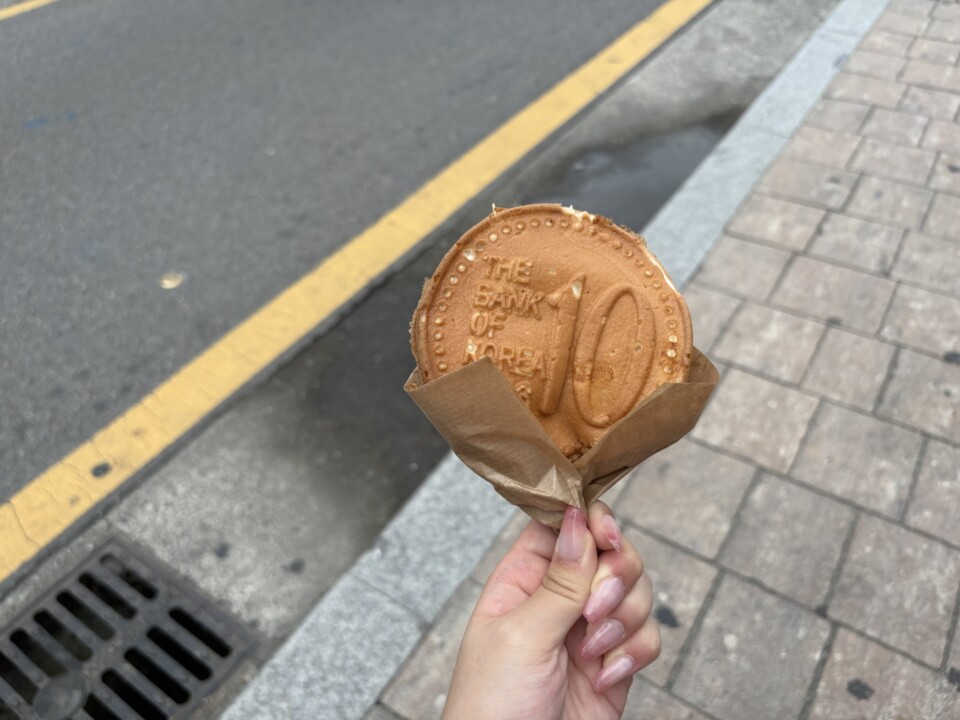
Sibwon-ppang is a baked snack molded after Korea’s 10-won coin — and the design engraved on that coin is the very Dabotap pagoda we had looked up at in Bulguksa that afternoon. In its birthplace of Gyeongju, this snack completes a neat little loop: see the World Heritage site by day, eat it by evening. We bought ours fresh off the press at a shop called Geumppang Georaeso.
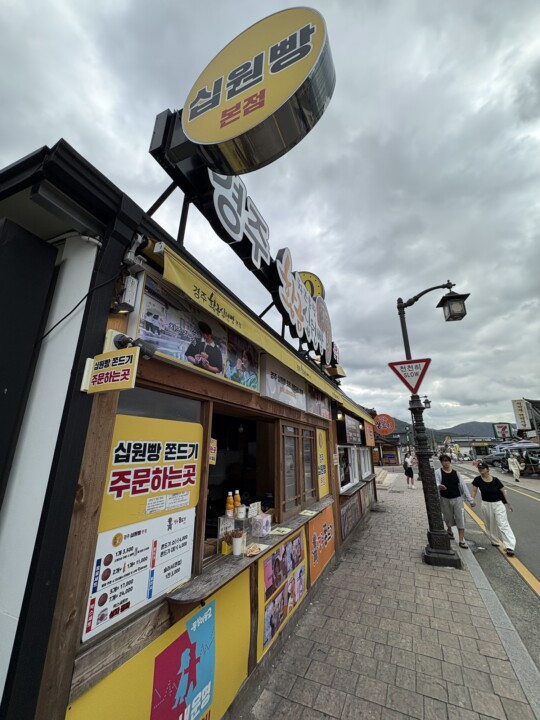
About 3,000 won each. Crack the sweet, custard-scented crust and out stretches a rope of mozzarella, salty against the sugar in just the right proportion — ideal refueling for tired legs. The cheese-pull moment is undeniably photogenic. No mystery about the queues.
The Street Where Trends Are Born
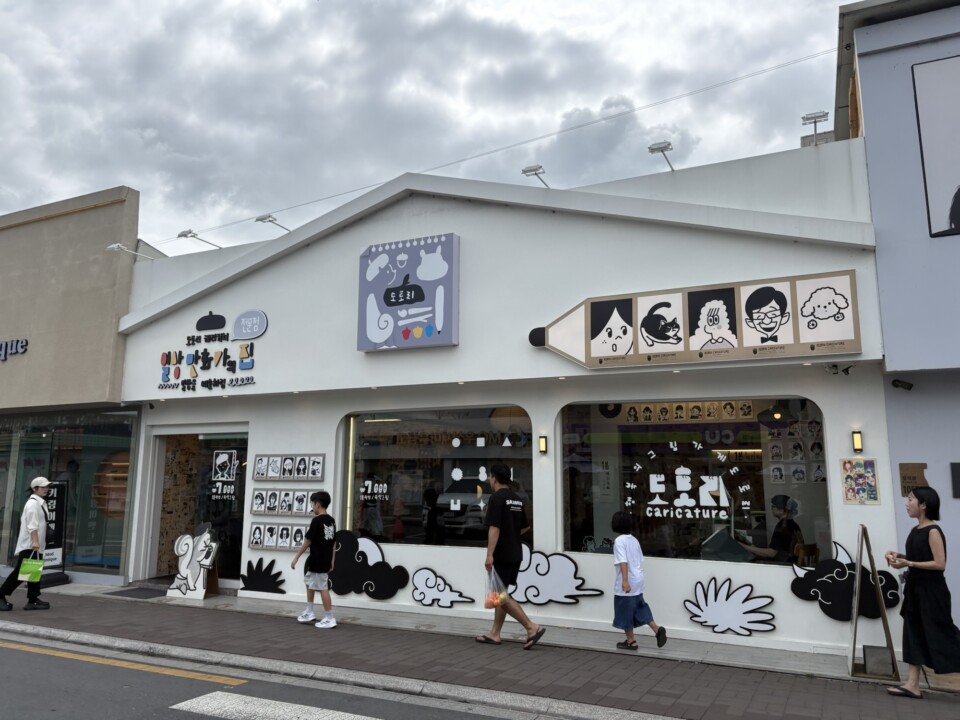
A few doors down, a caricature studio with charming monochrome illustrations was drawing its own crowd. This get-drawn-on-the-spot pastime feels like something that will land in Harajuku before long. Gyeongju’s young street doubles as a trend laboratory.
Notes from the Day
- Sibwon-ppang (10-won bread) is a Gyeongju-born street snack shaped like the Korean 10-won coin — whose design is the Dabotap pagoda of Bulguksa. Inside: stretchy mozzarella.
- We bought ours at Geumppang Georaeso (“the gold bread exchange”). Hwangnidan-gil has 4–5 shops selling it, all with queues.
- Around 3,000–3,500 won apiece as of my visit. Sweet custard-like dough against salty cheese — the balance works.
- The cheese-pull moment is made for photos. Pair it with the street’s popular caricature shops for the full Hwangnidan-gil experience.
The Busan–Gyeongju journey continues — more to come.
Visited in August 2026. Prices and details are as of my visit.
10-Won Bread in Gyeongju: Questions I Had
What is sibwon-ppang (10-won bread)?
A baked snack molded after Korea’s 10-won coin. Break open the sweet, custard-like dough and a stretchy cheese pull appears inside. It is a specialty that originated in Gyeongju’s Hwangnidan-gil.
What is the pagoda engraved on the coin?
It is Dabotap, at Bulguksa — the very pagoda we had looked up at that afternoon. In its birthplace of Gyeongju, the loop closes neatly: see the World Heritage site by day, eat it by evening.
Which shop did you buy from?
We bought ours fresh off the press at a shop called Geumppang Georaeso (금빠거래소) on Hwangnidan-gil. Four or five shops on the same street sell the identical specialty.
How much does it cost?
About 300 yen each when we visited. Prices change, so please check at the shop for the current price.
Are the queues really that long?
Yes. Even with four or five shops selling the same thing, none of the lines ever died down. What made us stop at all was one queue conspicuously longer than the rest.
How did it taste?
The balance was right — sweet custard-like dough against salty cheese — and it was exactly the kind of refuel that legs tired from walking need. The moment the cheese stretches does photograph well.
Is there anything else worth seeing on that stretch?
Next to the bread stands there was a caricature shop with charming monochrome illustrations, also busy. That kind of drawn-on-the-spot amusement feels like something that will turn up in Japan before long.
Related Articles
- MARLOWE at Hayama Marina: the pudding comes turned out onto a plate
- Three udon shops in Kagawa, and the best was the kamaage at Waraya
- Yamaroku Shoyu on Shodoshima: a wooden-barrel brewhouse home to a hundred microbes, and ice cream with soy sauce
- [Toyosu] Eleven O’Clock Is the Answer at Senkyakubanrai: Maruri Suisan’s Uni Bowl and the Spend That Makes Parking Free
Comments