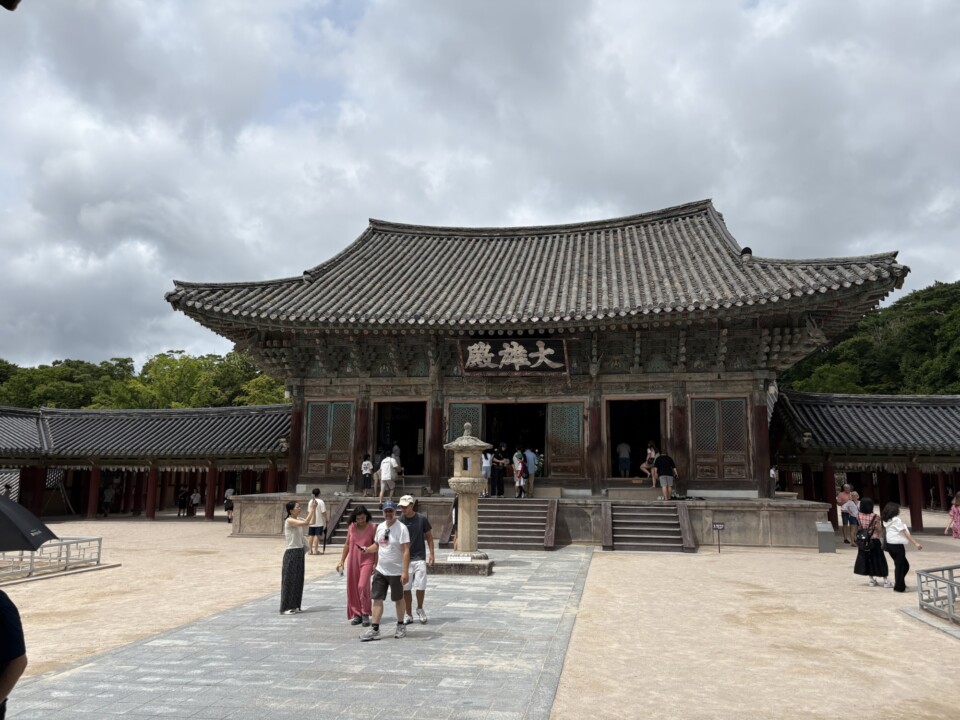
Down the mountain from Seokguram lies Bulguksa, its World Heritage twin — begun in the same year, 751, by the same Gim Dae-seong, and the heart of Silla Buddhist culture. Walking a temple that the kings of the thousand-year capital patronized, you can feel the era’s ambition rising out of every stone.
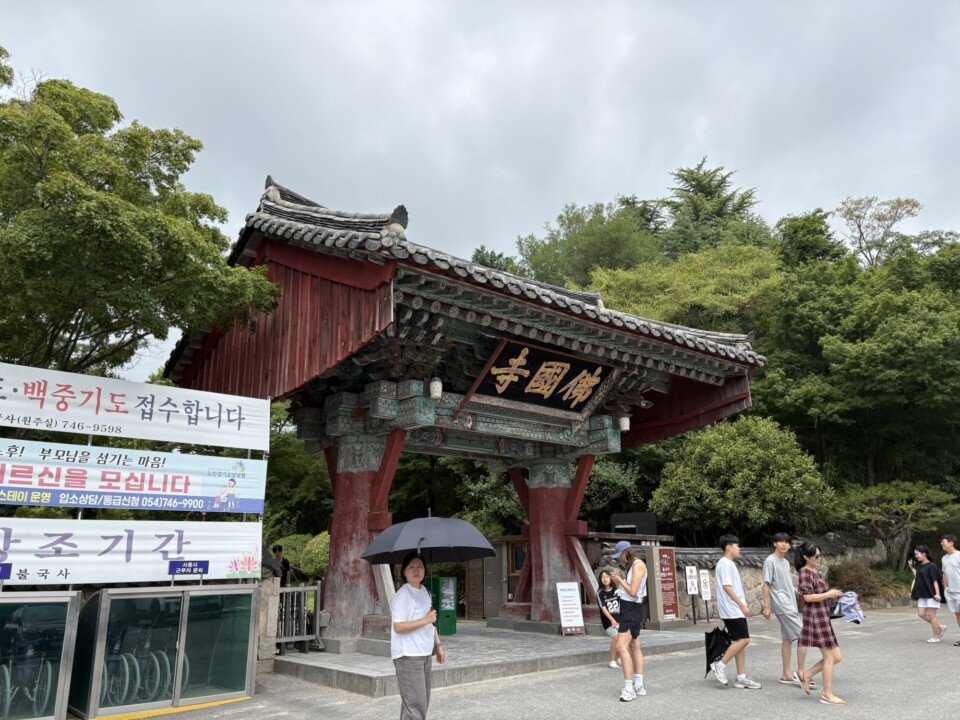
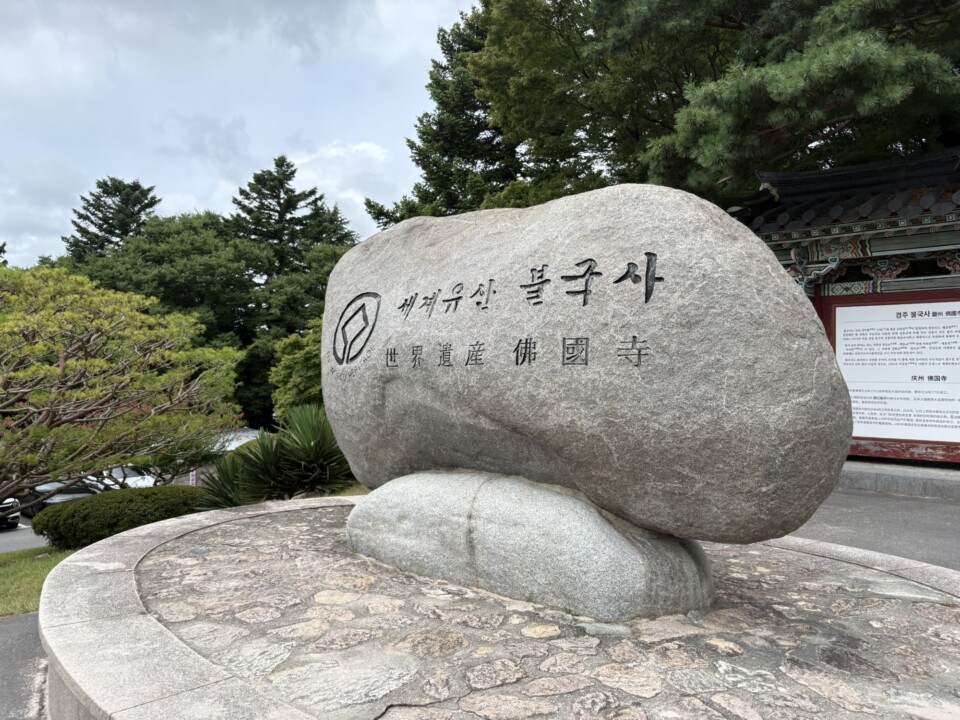
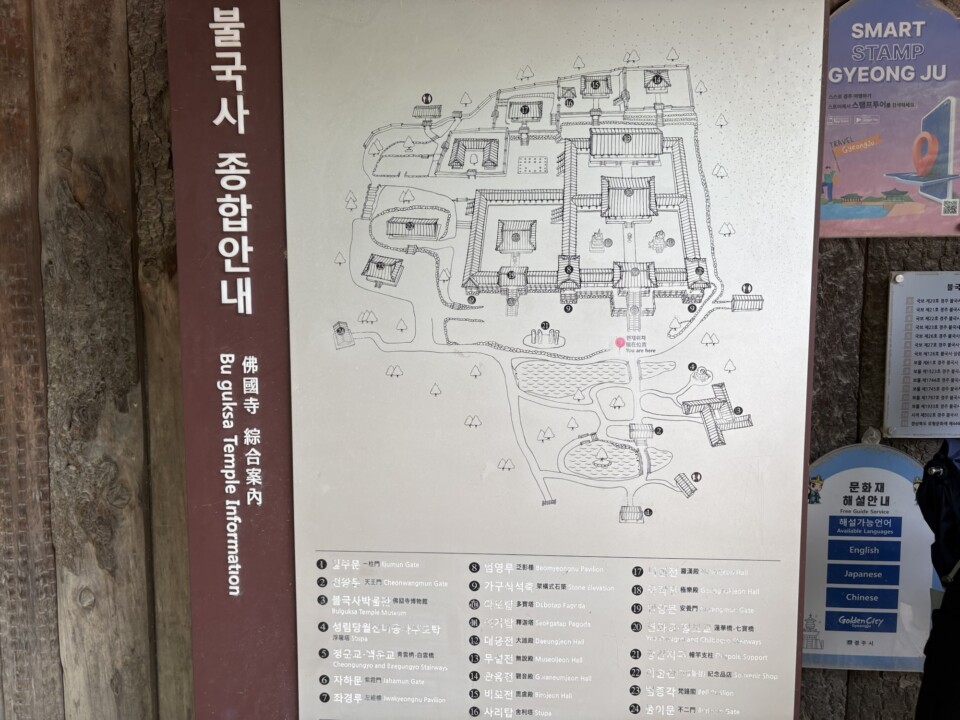
It was a Monday, yet the grounds had a steady flow of visitors. Locals say tourism has picked up since Gyeongju hosted the APEC summit in 2025.
Meeting the 10-Won Coin Pagoda in Person
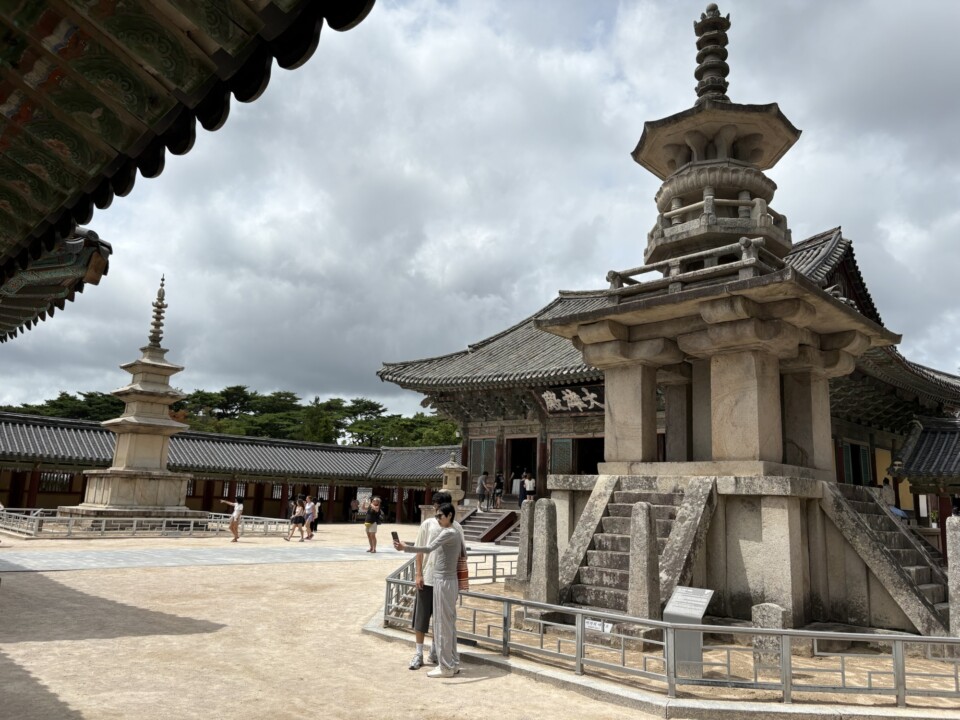
In the forecourt of the main hall stand two stone pagodas: Seokgatap, plain and powerful, and Dabotap, layered with delicate ornament. Dabotap is the pagoda engraved on Korea’s 10-won coin — arguably the most famous pagoda in the country. There is a peculiar delight in watching a line drawing you have seen on pocket change become a three-dimensional thing in front of you.
Stacking Stones, Watching Lilies
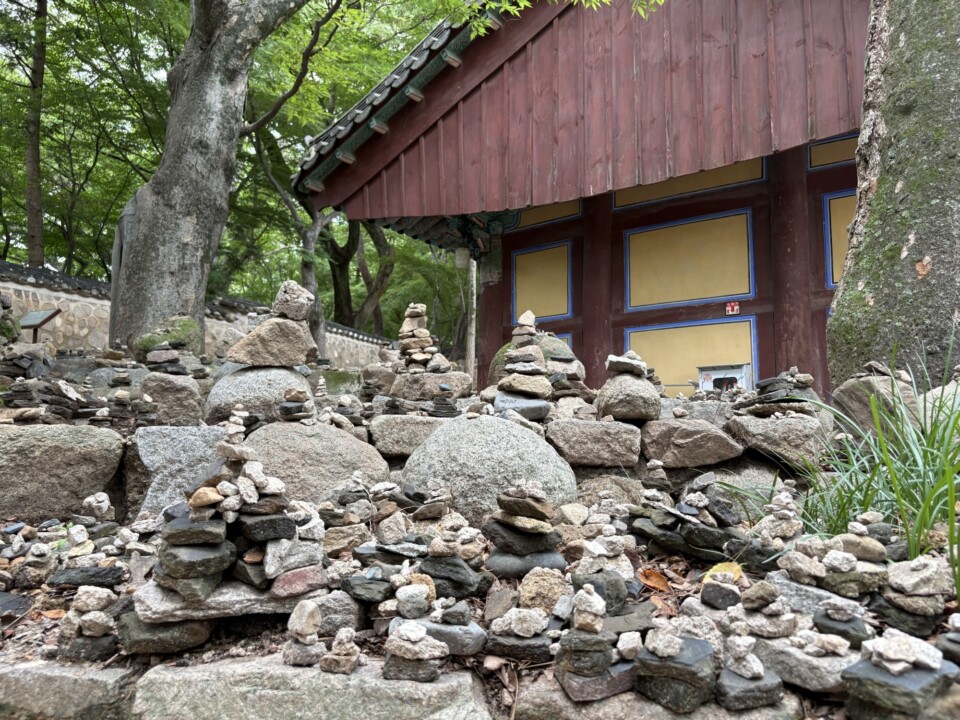
Behind the halls we found a stretch of ground covered in countless small stone stacks, piled up by visitors with their wishes. We added one stone each, as a family — the few breath-held seconds spent balancing it felt oddly close to prayer.
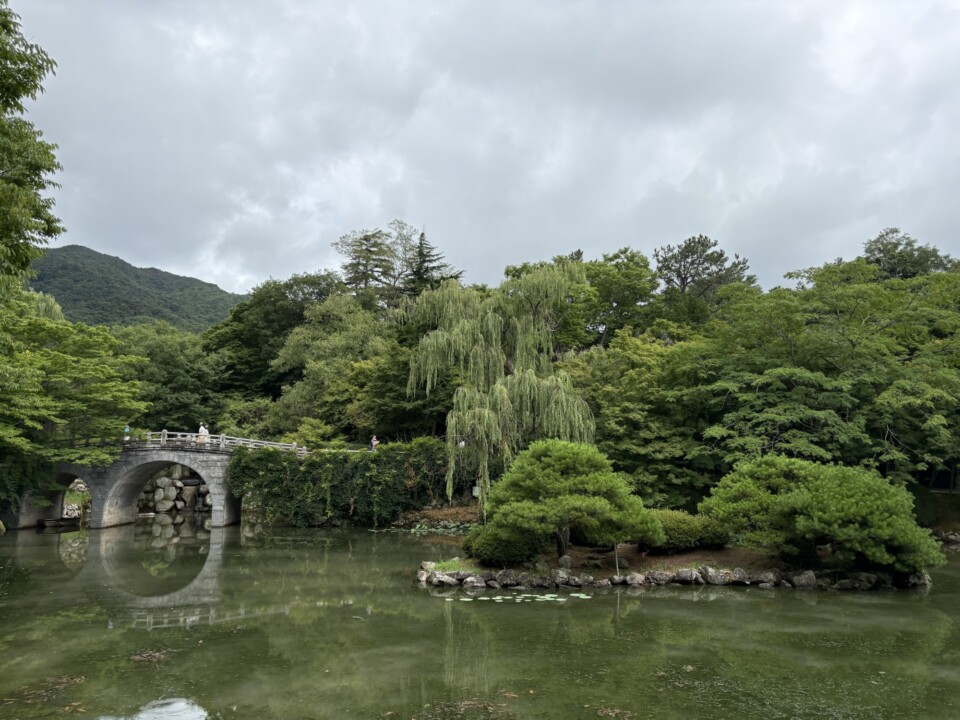
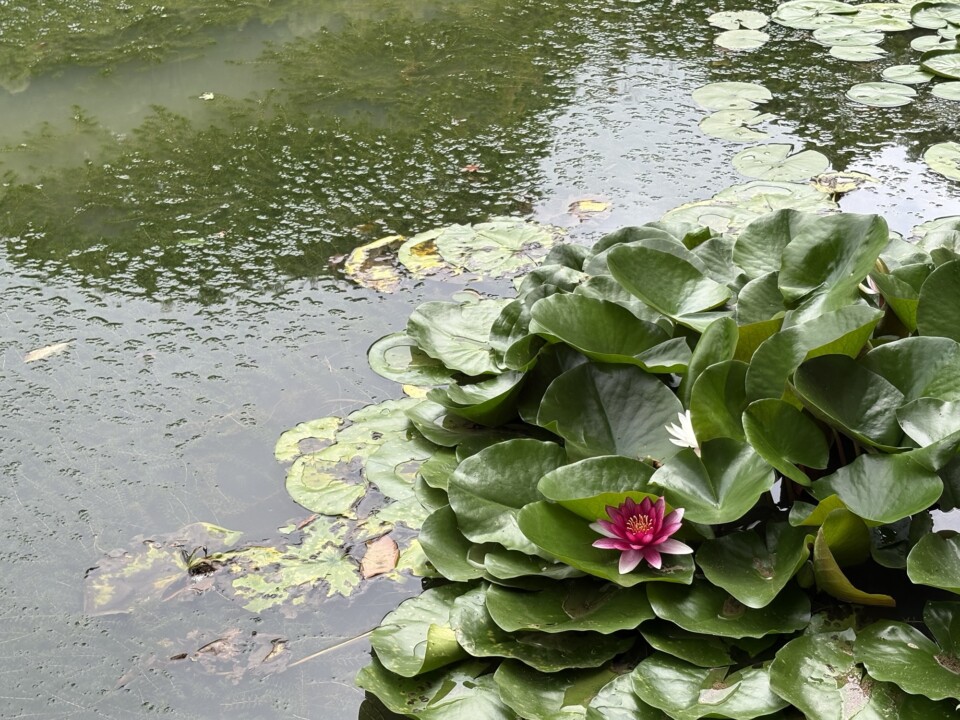
The garden on the way out deserves its own mention: an arched stone bridge mirrored in a pond, willows overhead, and, in August, water lilies in quiet bloom. The contrast between the grand halls and this stillness is the temple’s finest trick.
Notes from the Day
- Bulguksa was begun in 751 by Gim Dae-seong and inscribed as a UNESCO World Heritage site in 1995 together with Seokguram Grotto.
- The highlight is the pair of stone pagodas before the main hall: the austere Seokgatap and the ornate Dabotap — the latter is the pagoda engraved on Korea’s 10-won coin.
- The gardens are lovely too; water lilies bloom on the pond in August. Allow 1.5–2 hours.
- Crowds have reportedly grown since Gyeongju hosted the APEC summit in 2025 — even a weekday had a steady stream of visitors.
- Hours and details on the official Gyeongju tourism site — as of my visit.
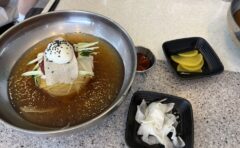
Two World Heritage sites down, appetites up — into central Gyeongju for a bowl of milmyeon, the wheat-noodle cousin of Korean cold noodles.
Bulguksa Temple: Frequently Asked Questions
When was Bulguksa built, and by whom?
Construction began in 751, during the Silla period, under Gim Dae-seong. In 1995 it was inscribed as a UNESCO World Heritage site together with Seokguram Grotto, which the same man began.
Which pagoda is the one on the 10-won coin?
Dabotap, the ornate one of the two stone pagodas in the forecourt of the main hall. Its plainer twin is Seokgatap. Seeing the line drawing from your pocket change standing in three dimensions is the whole point of coming.
How long should I allow for a visit?
Ninety minutes to two hours if you walk the gardens as well. The halls alone go faster, but the pond near the exit tends to stop people.
What is there to see in August?
When I visited in August, water lilies were open on the pond where the arched stone bridge is reflected. The contrast between the grand halls and that quiet corner is what stayed with me.
Is it crowded?
It was a Monday, and the grounds still had a steady flow of visitors. Locals said tourism has picked up since Gyeongju hosted the APEC summit in 2025. For opening hours, check the official Gyeongju tourism site.
More from the same day in Gyeongju
- The 10-won bread queues of Hwangnidan-gil
- My first real milmyeon at Hwangnam Milmyeon
- Driving from Busan to Gyeongju, and the Oedong service area
Visited in August 2026. Prices and details are as of my visit.
Comments