Here is the conclusion first. Goryokaku makes no sense until you see it from above.
Walk the grounds and what you get is a moat, an earthwork and some trees. The star is invisible from human eye level. That is why there is a 107-metre tower next to it. It looks like a tourist contrivance and is in fact an entirely rational piece of architecture.
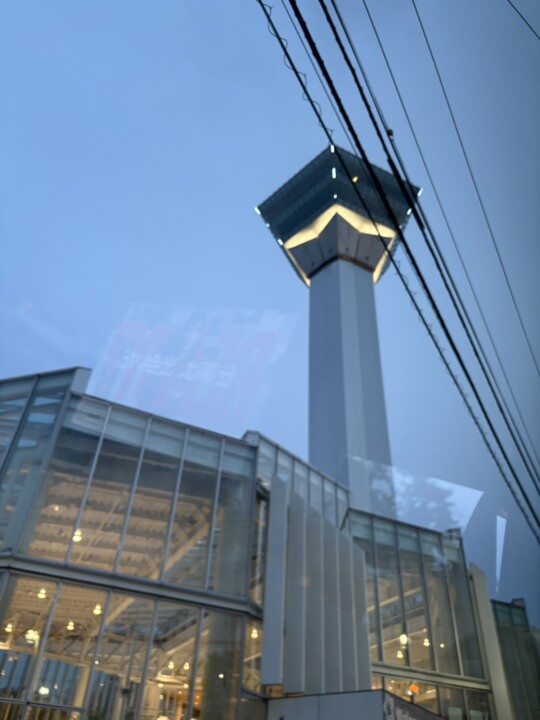
The observation floor is 90 metres up
The tower stands 107 metres; the upper observation floor sits at 90 metres. The lift opens onto a floor walled in glass.
The windows run floor to ceiling all the way around, so the view is uninterrupted in every direction, and the opening goes low enough that you can look straight down into the moat.
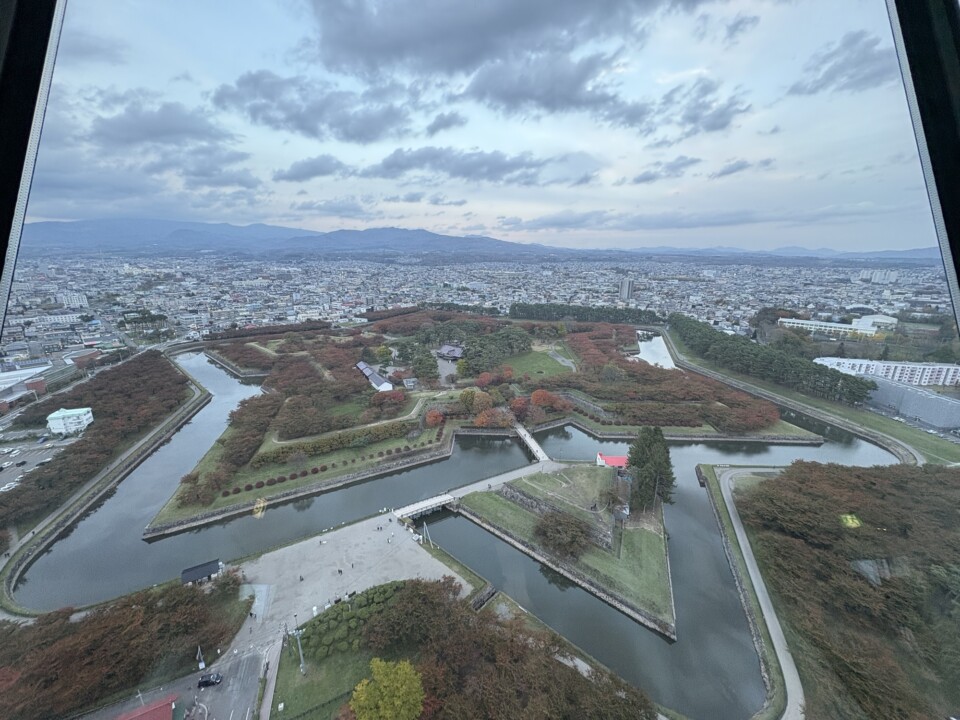
What you see
And there it is.
A water-filled moat cut into a clean five-pointed star. We went in early November and the trees inside the fort had turned, so green, red and yellow sat within the star and made the outline sharper still.
I had seen the shape in photographs many times. From directly above it reads differently. This is not a castle, it is a diagram. The western fortification principle of projecting angles to remove blind spots is drawn straight onto the ground. Built by the Tokugawa shogunate at the end of the Edo period, and later the site of the Battle of Hakodate: the history lands simply by looking at the shape.
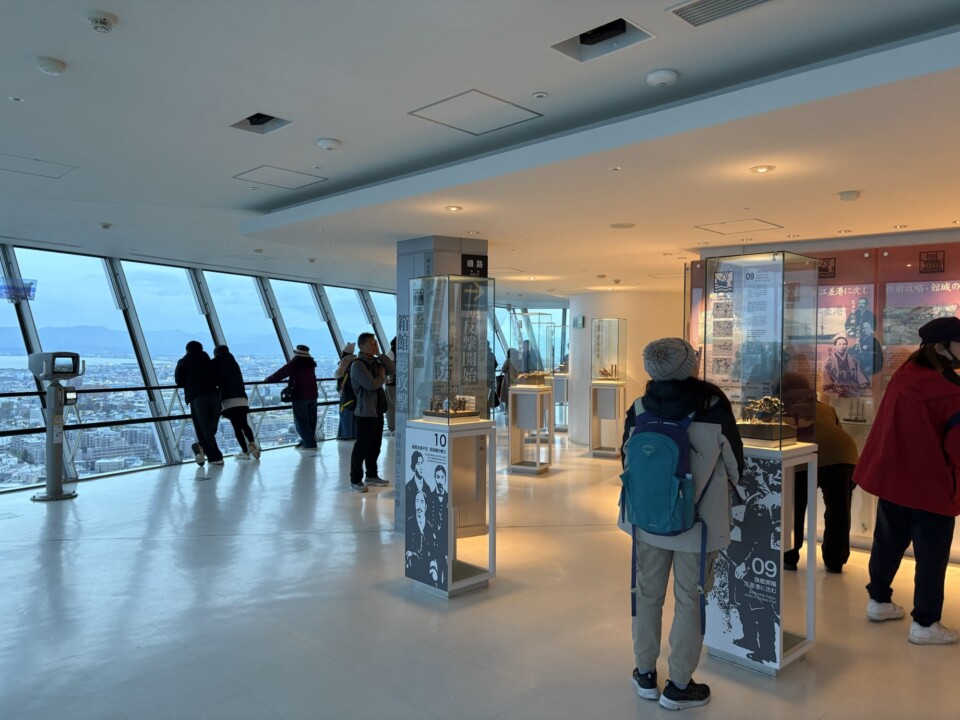
The exhibition is on the same floor
In the middle of the observation floor is the Goryokaku History Corridor, with models, dioramas and documents, laid out so you can read them against the view outside.
Look at the view, turn around and read, go back to the window. That back-and-forth is what an independent museum cannot offer. We stayed longer than planned.
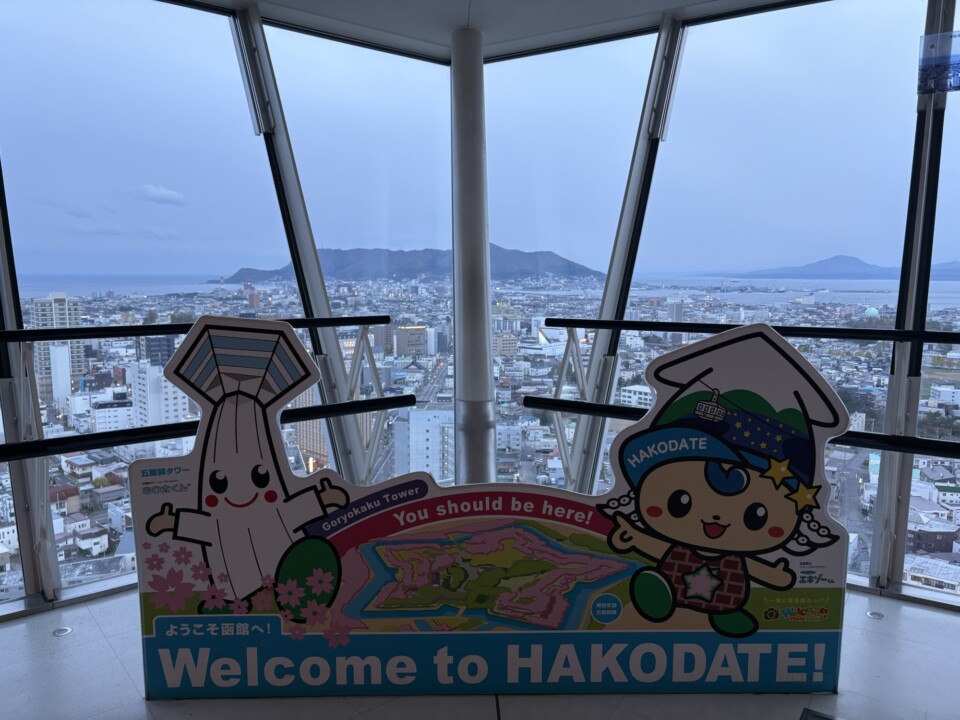
Mount Hakodate is visible too
Turn away from the fort and Mount Hakodate lies across the city, low on the horizon.
People think of Mount Hakodate as a night destination, but seeing its shape from here in daylight means that when you are up there after dark you know where you are. Which part is the bay, which is the city, which way you are facing. Do both and the geography of Hakodate connects.
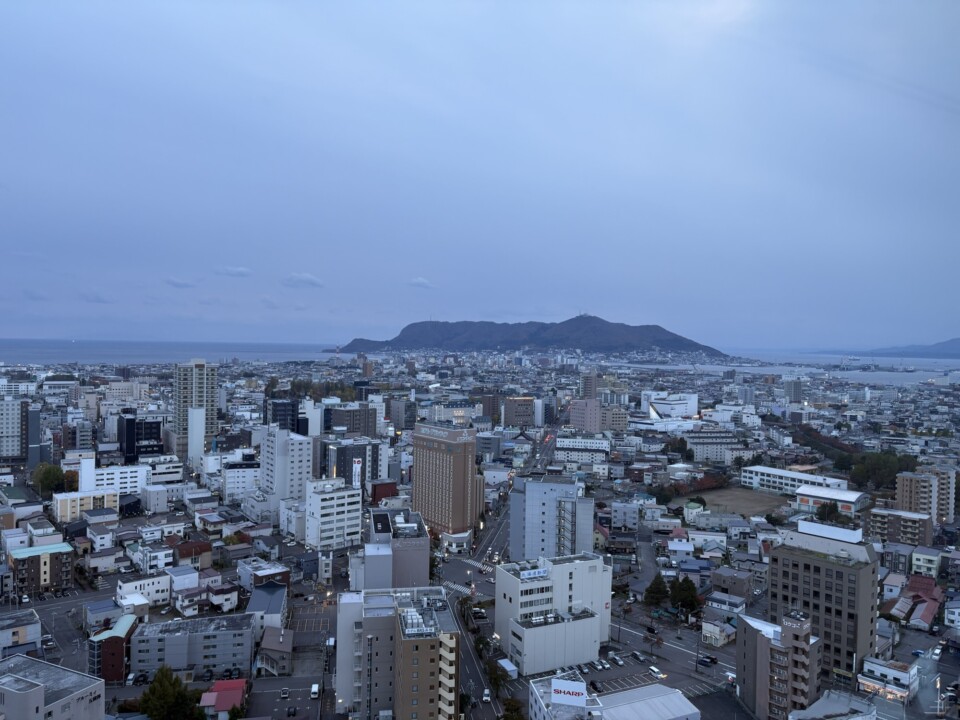
The case for a sightseeing taxi
This is the thing I most want to pass on.
We took a taxi to Goryokaku, and the driver stayed on as a guide. He talked about the history and the background on the way and after we arrived.
It made more difference than I expected. Reading an exhibition yourself and having a local talk you through it deliver information at different densities. You arrive at the observation deck already knowing what to look for, so the same view reads differently. And you can ask questions.
Hakodate scatters its sights across the city, and doing it by tram stacks up transfers and waiting. If you have limited days and want Goryokaku, Motomachi and Mount Hakodate, handing even half a day to a taxi is worth considering. Mount Hakodate turned out to be a taxi job too.
The basics
- Address: 43-9 Goryokaku-cho, Hakodate, Hokkaido
- Tower height: 107 metres (upper observation floor at 90 metres)
- Hours: 9:00 to 18:00
- Access: about 15 minutes on foot from the Goryokaku-koen-mae tram stop
- Observation floor: Goryokaku History Corridor, with models, dioramas and documents
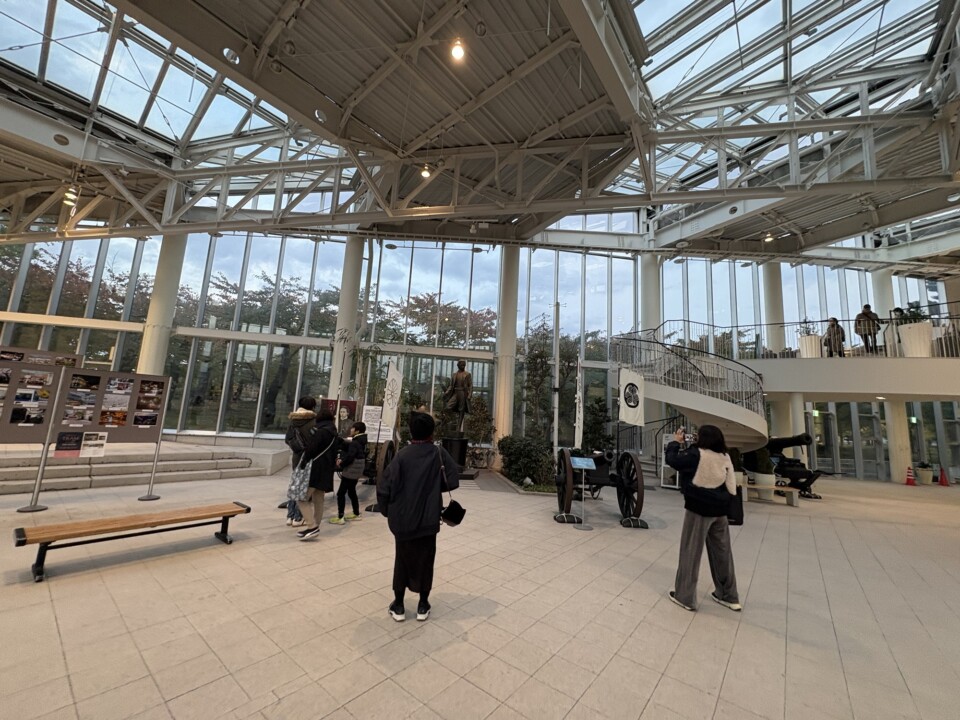
- Ground floor: atrium, cafe stand, shop and restaurant
In short
- The star is invisible from the ground. Going up is not a formality, it is the only way
- Early November colours the fort. The outline reads more sharply
- View and exhibition sit in the same room. Allow more time than you think
- A sightseeing taxi changes the visit. The same view with the background explained is a different view
- See Mount Hakodate from here in daylight. It makes sense of the night view later
Frequently asked questions
Do I have to go up the tower to see the star shape?
Yes. From ground level you see only the moat and the earthworks. The shape requires the observation deck.
How high is the observation deck?
The tower is 107 metres and the upper observation floor is at 90 metres.
Can I get there by tram?
Yes. It is about 15 minutes on foot from the Goryokaku-koen-mae tram stop.
How long should I allow?
The History Corridor exhibition shares the observation floor, so you end up staying longer than planned. An hour is a reasonable allowance.
Can I hire a sightseeing taxi?
Our taxi driver stayed on as a guide. Hakodate spreads its sights out, so handing over even half a day is worth it.
Related reading
- Mount Hakodate at night: what to do when the ropeway is closed
- Hachimanzaka and the old public hall, by tram
- fav Hakodate: five minutes from the station, and the room changes colour
Sources
- Tower height, observation floor height, hours, address and exhibition content: official Hokkaido tourism facility information
- Everything else is from our visit in November 2026
Related Articles
- Korokke from Hayama Asahiya: thirteen minutes and a Sunday queue
- The Notsuke Ice Horizon Is Not Something You Just Turn Up For
- Neungdong Minari in Seongsu: a minari hotpot with the whole surface green
- Yamaroku Shoyu on Shodoshima: a wooden-barrel brewhouse home to a hundred microbes, and ice cream with soy sauce


Comments