Downhill from the Miffy cafe, along the Yeongdo shore, stands a building marked Yeongdo Haenyeo Culture Exhibition Hall. Its ground floor is a seafood hall run by haenyeo — Korea’s traditional women free-divers — and this was where we had decided to eat.
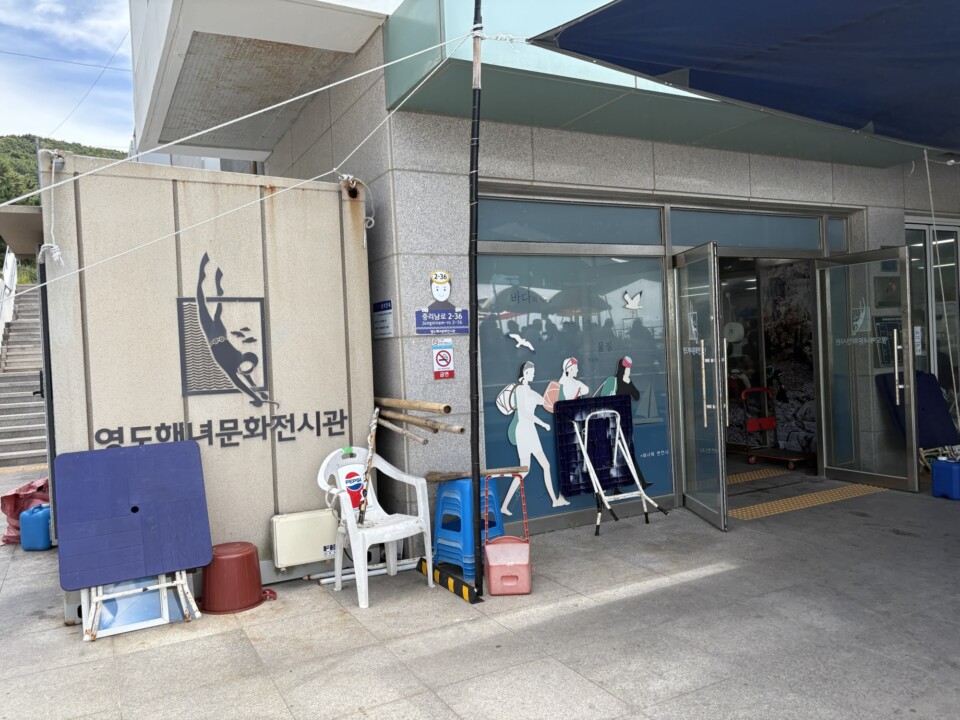
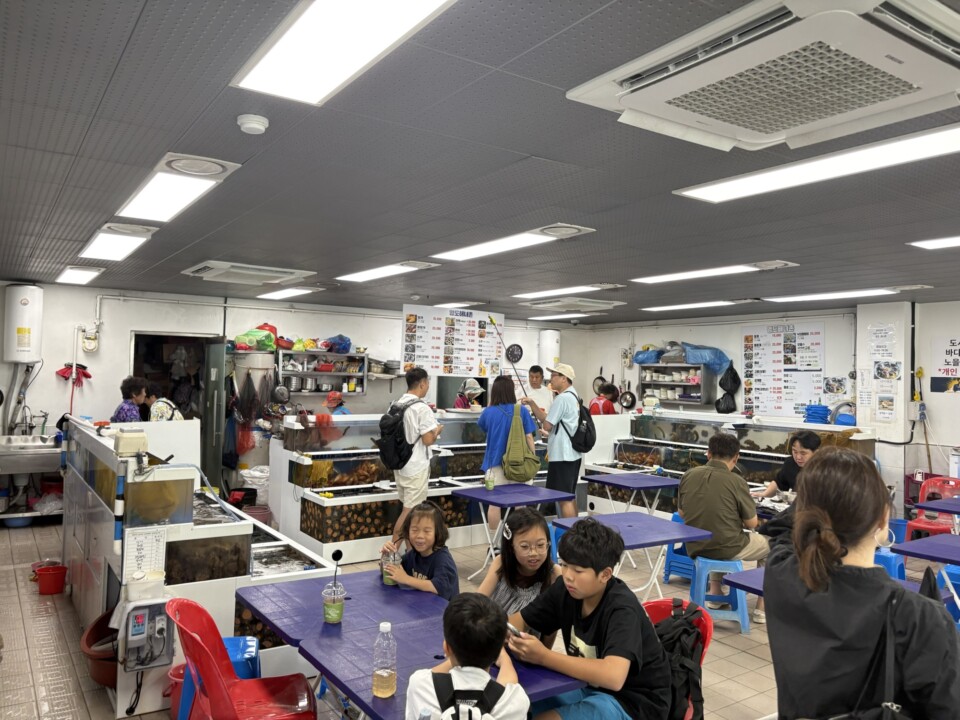
Where Ordering Is Its Own Workout
The menu by the tanks reads: sea urchin 10,000 won, conch 20,000 won, abalone from 30,000 won — most seafood plates land around 20,000–30,000 won, with gimbap and ramyeon near 10,000. The divers work the room at full shout; years underwater, we are told, have taken a toll on their hearing. So you shout your order back from the diaphragm. It is a workout, and it is also exactly the atmosphere you came for.
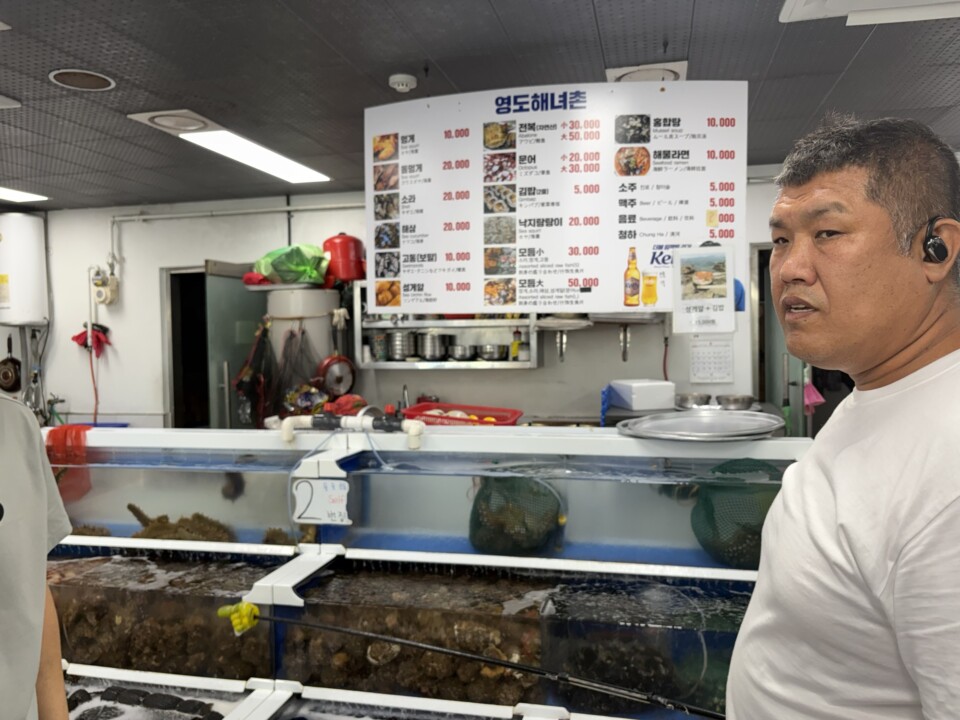
Morning-Caught Urchin, Steamed Abalone
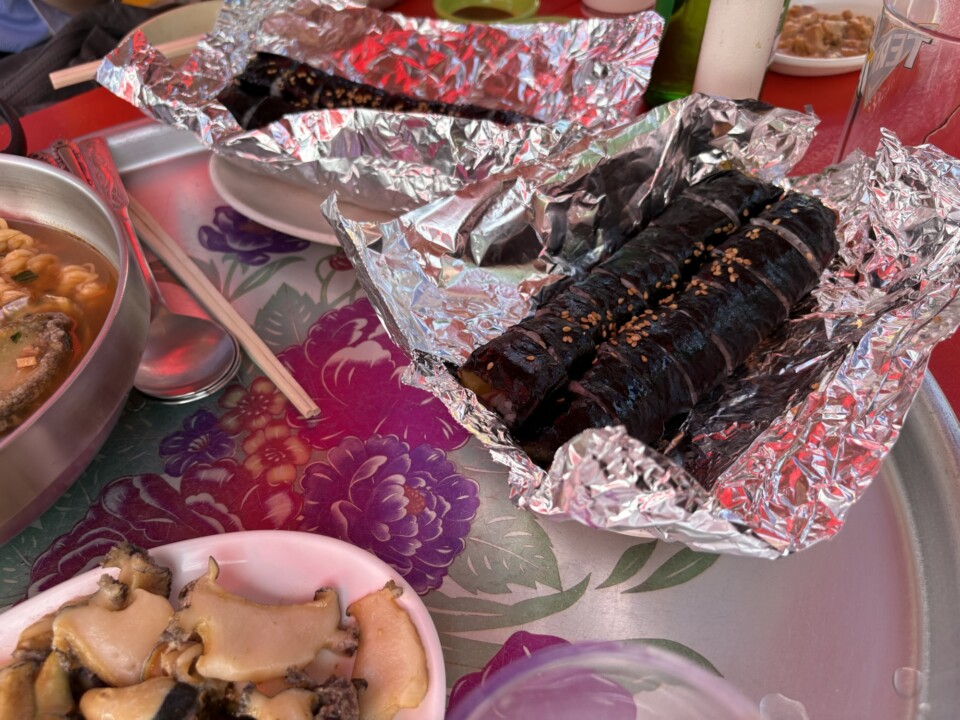
We ordered the morning’s sea urchin, steamed abalone, seafood ramyeon and gimbap, with Terra beer. Honest verdict: to a palate spoiled by fine uni at home, the flavor here is on the delicate side. But that brine-washed taste snapped perfectly onto a childhood memory — fishing with my father, cracking open an urchin we had happened to catch, eating it right there on the rocks. This is not a taste of technique; it is a taste of memory.
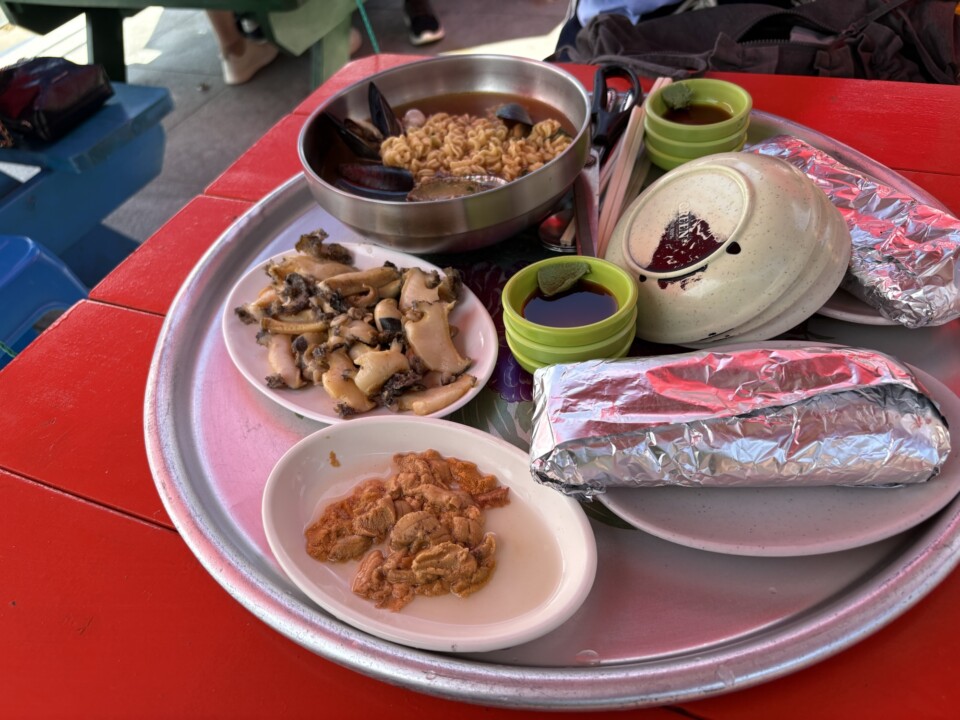
The abalone was as tender as any we had eaten at the markets, unimpeachably good. Seafood ramyeon rich with shellfish broth and foil-wrapped gimbap closed out a lunch that left the whole family satisfied.
Upstairs: How the Haenyeo Got Here
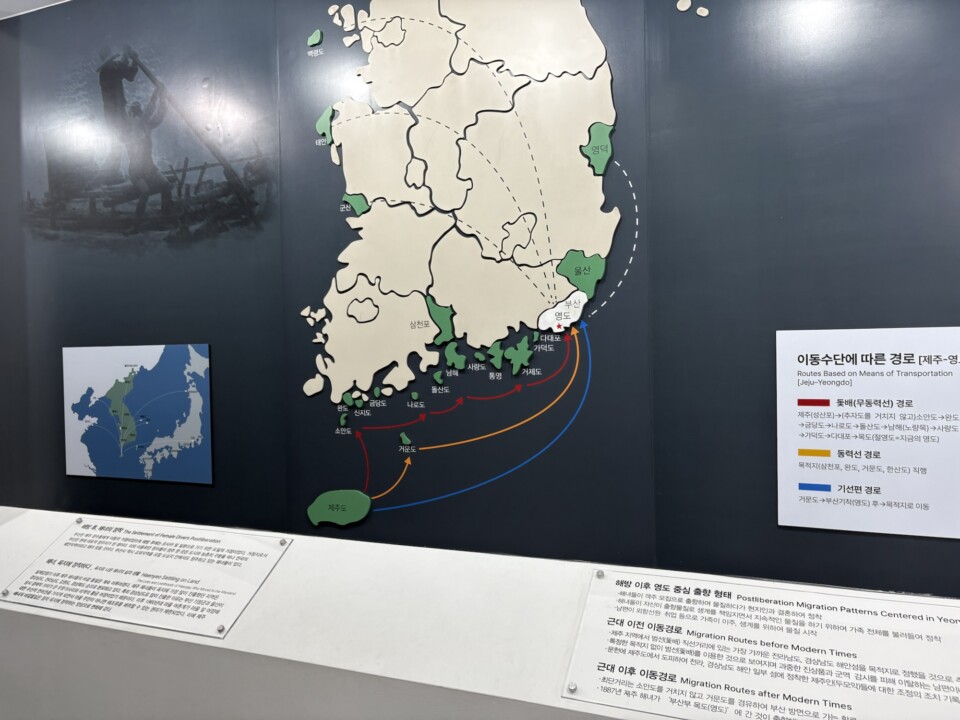
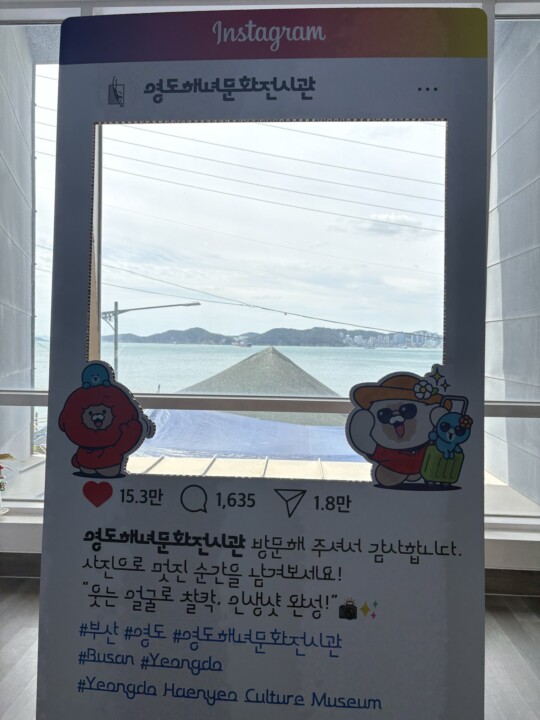
After lunch we browsed the museum upstairs. The exhibits explain that haenyeo culture was born on Jeju Island, and that Jeju divers crossed by boat to settle Yeongdo — a wall map traces the routes by type of vessel. Their diving culture is said to connect even to Japan’s ama divers in places like Aomori and Chiba. By the window, inevitably, stood an Instagram-style photo frame: even a hall of intangible heritage keeps its photo game sharp. Very Korea.
Notes from the Day
- The Yeongdo Haenyeo Culture Exhibition Hall sits on the Jungni coast of Yeongdo; the ground-floor hall serves seafood caught by working haenyeo divers.
- Guide prices from the board at my visit: sea urchin or top shell 10,000 won, conch or sea cucumber 20,000 won, abalone from 30,000 won, mixed platter 30,000/50,000 won, gimbap (2 rolls) 5,000 won, seafood ramyeon 10,000 won.
- The museum upstairs tells how haenyeo culture originated on Jeju Island and crossed to Yeongdo — free to browse.
- Ordering is done at full volume — the divers, years in the water, are hard of hearing, and the din is part of the charm.
Day four in Busan: a Miffy pilgrimage and a haenyeo lunch. The trip is entering its final stretch.
Visited in August 2026. Prices and details are as of my visit.
The Yeongdo Haenyeo Divers’ Hall: Frequently Asked Questions
What exactly is the Yeongdo Haenyeo Culture Exhibition Hall?
It stands on the Jungni coast of Yeongdo, downhill from the Miffy cafe along the shore. The ground floor is a seafood hall run by haenyeo — Korea’s traditional women free-divers — serving what they catch, and there is a small museum upstairs.
How much does the seafood cost?
Guide prices from the board at my visit: sea urchin or top shell 10,000 won, conch or sea cucumber 20,000 won, abalone from 30,000 won, a mixed platter 30,000 or 50,000 won, gimbap (two rolls) 5,000 won, and seafood ramyeon 10,000 won. Most seafood plates land around 20,000 to 30,000 won.
What did we order?
The morning’s sea urchin, steamed abalone, seafood ramyeon and gimbap, with Terra beer. To a palate spoiled by fine uni at home the flavour is on the delicate side, but that brine-washed taste is the point. The ramyeon was rich with shellfish broth, and the gimbap came wrapped in foil.
Why do people say you have to shout your order?
Because you do. The divers work the room at full shout — years underwater, we were told, have taken a toll on their hearing — so you shout your order back from the diaphragm. Ordering is its own workout, and the din is part of the atmosphere you came for.
What is in the museum upstairs?
The exhibits explain that haenyeo culture was born on Jeju Island and that Jeju divers crossed by boat to settle Yeongdo, with a wall map tracing the routes by type of vessel. Their diving culture is said to connect even to Japan’s ama divers in places such as Aomori and Chiba. It is free to browse.
More from this Busan trip
Nearby and on the same trip: [Busan] My First Live Octopus at Sindonga Fisheries Market · [Busan] A Local Kamado-Rice Lunch at Goseul Goseul · [Busan] Miffy Store Busan: Sea-Blue Exclusives.
Comments