Here is the conclusion first. If you think you dislike Genghis Khan lamb, the place to go is a shop that serves nama ramu — fresh, never-frozen lamb. It is a different food.
Yamagoya sits inside a multi-tenant building in Susukino, Sapporo. A local recommended it. The sign says the taste has been carried on since Showa 31, which is 1956. We walked over from our hotel and joined the queue.
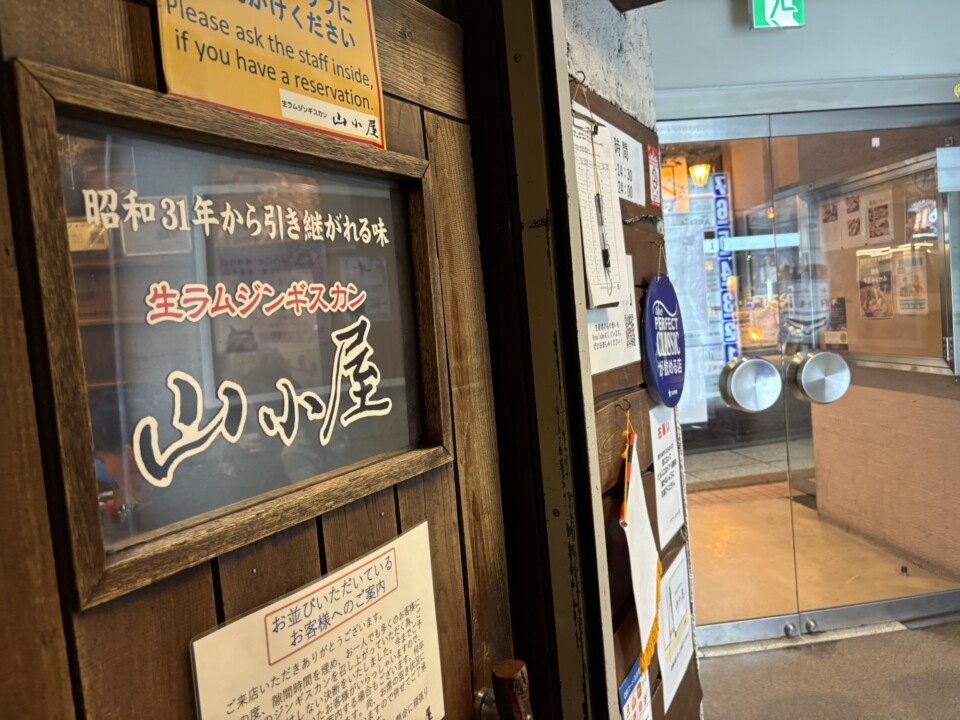
Nearly an hour in a building corridor
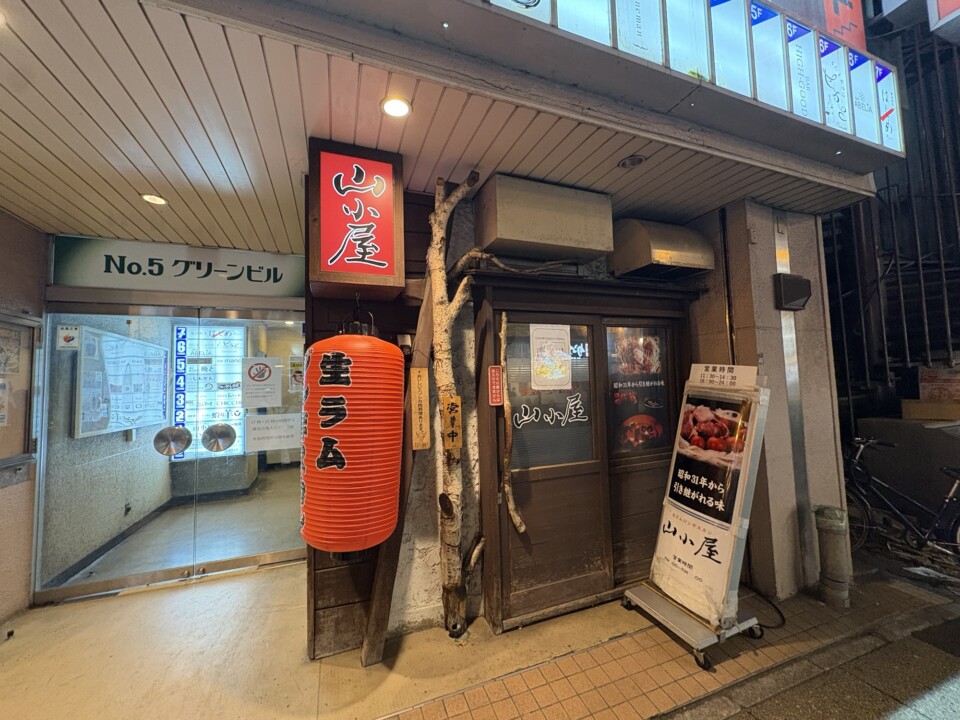
The restaurant is inside an ordinary commercial building. A red paper lantern hangs by the entrance with two words on it: fresh lamb. You open the door expecting to be seated, and the evening takes a turn.
The queue is the corridor. Not the street, not the front of the shop, but the narrow passage running back from the lift lobby, with people standing single file. We were there close to an hour. The plainness of the shopfront and the length of that line do not match, which tells you everything about how well regarded it is.
Worth knowing before you commit: you are indoors, which beats standing outside in Sapporo at the end of October, but there is nowhere to sit.
Fresh lamb is not the Genghis Khan you know
Inside, the first thing is smoke. The air is faintly white. A cast-iron pan with holes in it sits on the table, and vegetables are piled onto it.
The lamb arrives looking wrong, in a good way. It is the colour of raw meat rather than the dark red of the frozen stuff. Cook it, eat it, and the smell most people associate with mutton is simply absent. It is also tender. You do not have to work at it.
When people say they do not like Genghis Khan, they usually mean the smell and the chewiness. Neither is here.
The holes in the pan are the design
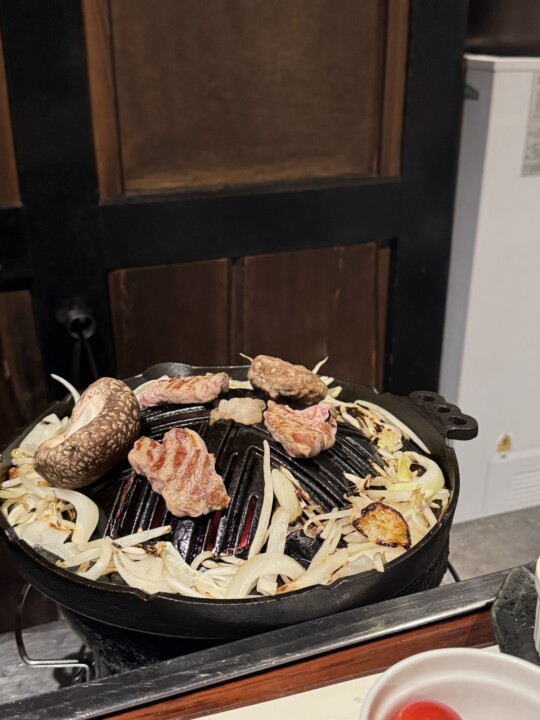
A Sapporo Genghis Khan pan is domed in the middle and perforated at the base, and there is a reason for it.
You cook the meat on the high centre. The rendered fat runs down the slope. Vegetables sit around the rim and catch all of it. That is why the bean sprouts and onion at the edge taste best at the end of the meal. If you eat all the meat first, the mechanism never runs.
So: vegetables around the rim, meat in the middle, and as you take the meat off, nudge the vegetables inward. Do that and the last mouthful is as good as the first.
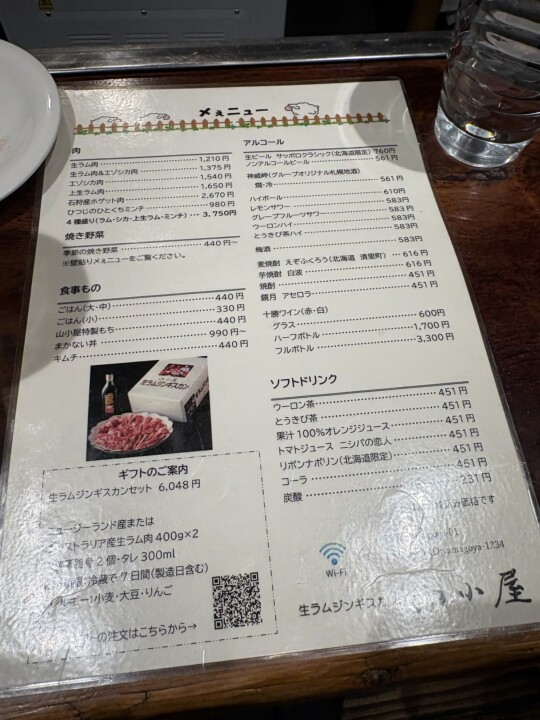
The menu is short
There is lamb, there are vegetables, there are a few additions. Not much to deliberate over, which in a place like this is a feature.
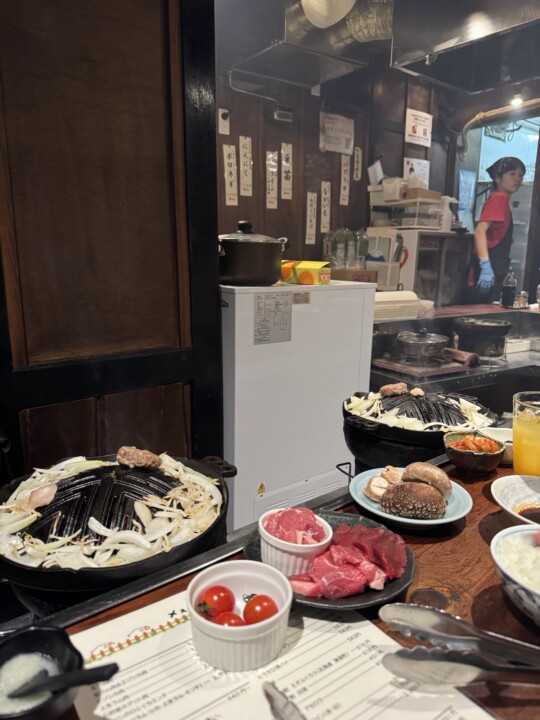
Vegetables go on the pan freely, so we added shiitake. On the pan they lose water, take on the fat, and become something else. We also ordered Ezo deer. The grain runs differently from lamb, and cooking both on the same pan makes the contrast obvious.
About the smoke
The one real warning is the smoke. Describing it as billowing is not a figure of speech. By the time you leave, it is in your hair and in your clothes.
Choose what you wear. Put your coat in a bag or leave it at the counter if you can. Go in the jacket you plan to wear tomorrow and you will be carrying the restaurant with you. Whether you can live with that decides how much you enjoy the evening.
I would still go back. Everything except the smoke.
Timing an evening around a queue
If you know you will be queuing, work the evening backwards. An hour of waiting means arriving at six and eating at seven.
Our hotel was on the south side of Susukino, so the wait mattered less: we could walk home afterwards. Staying within walking distance makes this kind of restaurant far easier to attempt. From the station area you end up deciding whether to queue based on the subway timetable.
Because of the smoke, do not plan anything after. This is where the night ends.
Before you go
- Fresh lamb is a different food. None of the smell or chewiness people associate with Genghis Khan
- You will queue. Single file in a building corridor. Budget an hour
- The smoke is real. Hair and clothes. Not the jacket you need tomorrow
- Add shiitake and Ezo deer. Vegetables are unlimited on the pan, so the extras are where the range comes from
- Work the rim. Keep vegetables around the edge to catch the fat
Frequently asked questions
Can you book?
We queued, for close to an hour. Check the current system with the restaurant before you go.
What is the difference between fresh lamb and regular Genghis Khan?
Most Genghis Khan meat sold in Japan is frozen mutton or lamb with a distinctive smell. Fresh lamb has not been frozen, so the smell is mild and the meat is tender.
What should I wear?
Not the jacket you plan to wear the next day. The smoke gets into clothes and hair.
Where is it?
Inside a multi-tenant building in Susukino, Sapporo. A red lantern and signage mark the entrance.
Related reading
- InterContinental Sapporo: You Do Not Need a High Floor
- Sapporo to Hakodate on the Hokuto: four hours, and a disappointing ekiben
Sources
- Founding year: the restaurant signage (taste handed down since Showa 31)
- Everything else is from our visit in November 2026


Comments