After filling up on seafood at Sindonga Market, we took a taxi up the hillside to Gamcheon Culture Village, where pastel-colored houses pile up the slope as far as the eye can see. Standing on the observation deck, I understood at once why people call it the Machu Picchu of Korea.
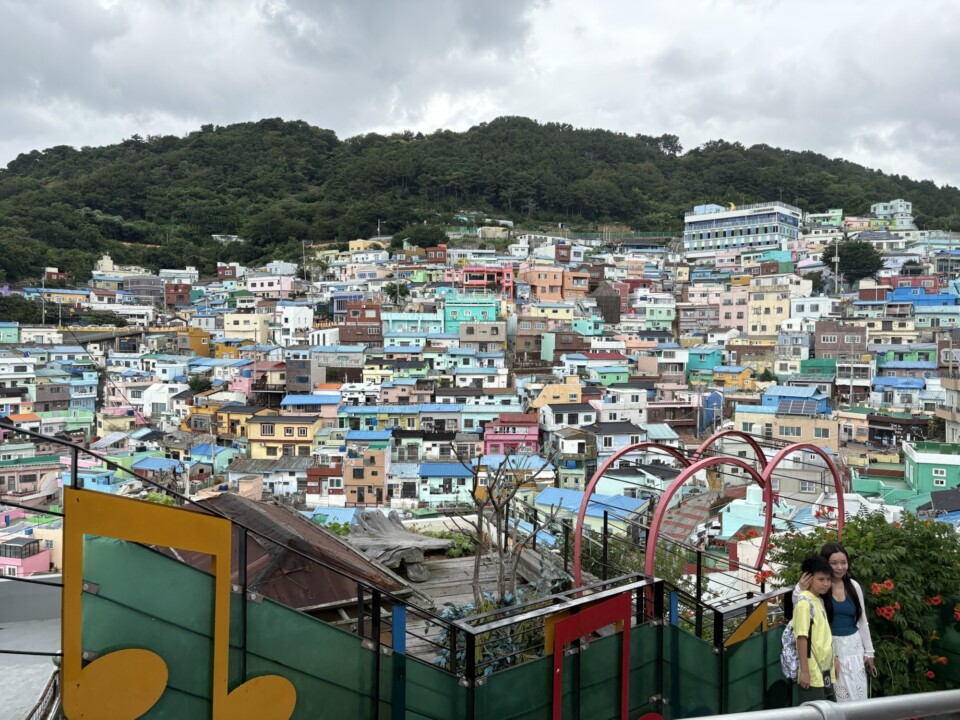
- The Colors Sit on Top of a Sad History
- The Alleys Are a Maze of Art
- An Hour-Long Queue for the Little Prince
- Notes from the Day
- Gamcheon Culture Village: Frequently Asked Questions
- Why is Gamcheon Culture Village called the Machu Picchu of Korea?
- What is the history behind all the colour?
- The alleys are a maze. How do I avoid getting lost?
- How long is the queue for a photo with the Little Prince?
- Is there anything here for BTS fans?
- How much time should I allow, and what should I wear?
- More from this Busan trip
The Colors Sit on Top of a Sad History
It is a cheerful-looking place, but the history underneath is sobering. This neighborhood was originally built by refugees who fled all the way to Busan during the Korean War. The city became the provisional capital, people overflowed, and those with nowhere else to go built their homes in terraced rows up this hillside — the very topography that makes the village so photogenic today is a remnant of that era. The turning point came around 2009, when city-supported public art projects filled the village with artworks and reshaped it into a place where residents’ daily life and art coexist. Once you know the story, every color on every wall looks a little different.
The Alleys Are a Maze of Art
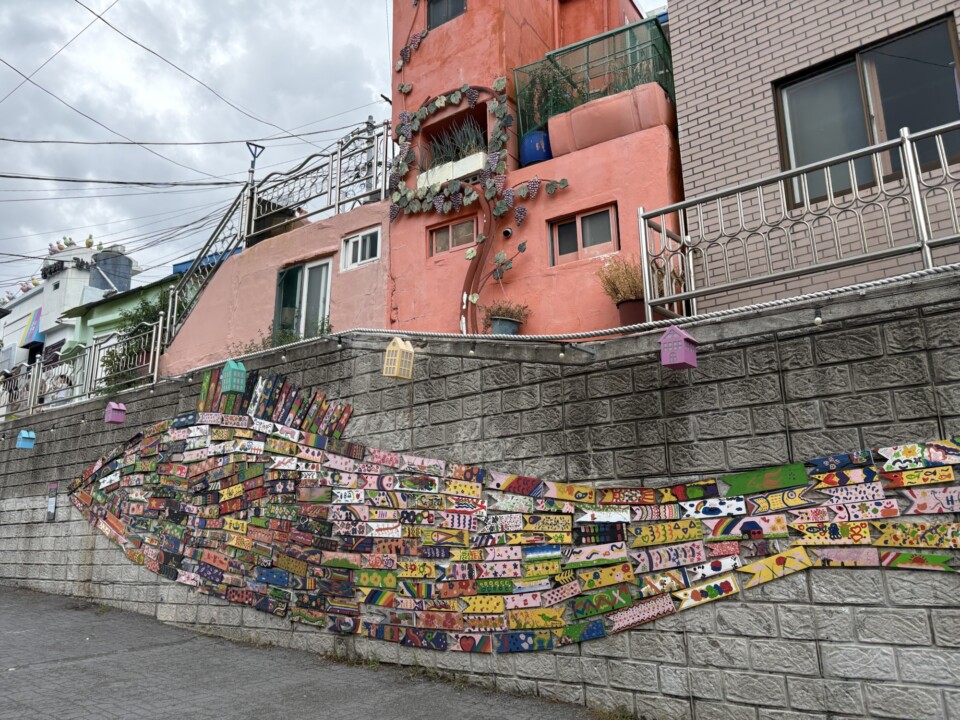
Walk the lanes and you will notice schools of wooden fish swimming across the walls. They are not mere decoration: the direction the fish swim marks the walking route. The alleys twist like a maze, but follow the fish and you will be fine — a wayfinding trick with real charm.
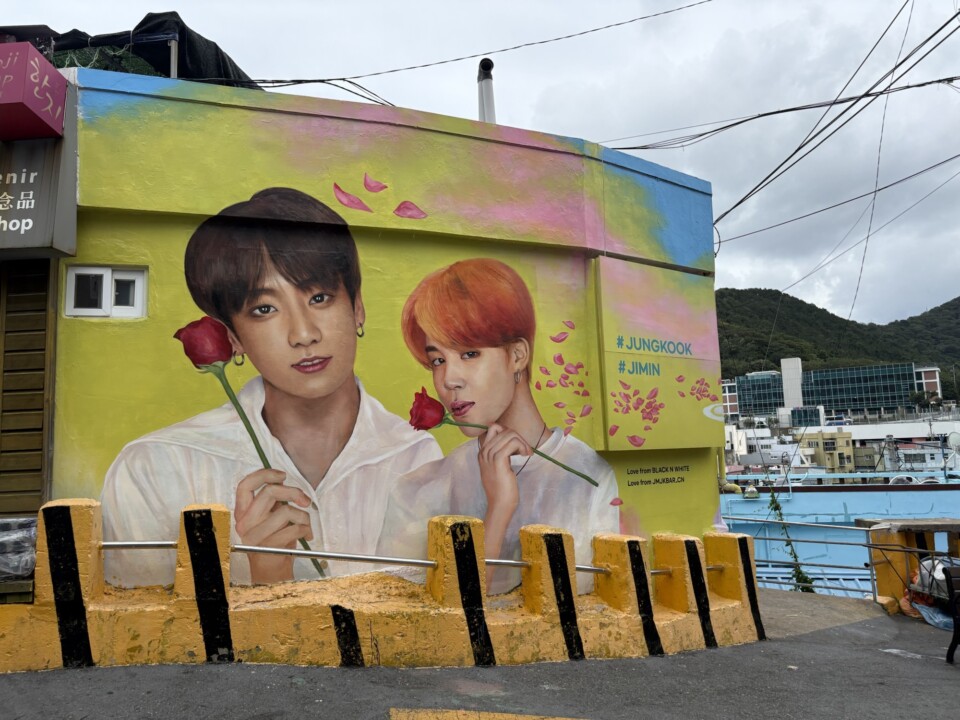
There is also a mural of Jungkook and Jimin of BTS, both Busan natives. Fans took turns posing in front of it the whole time I stood there — this village, I learned, is one of their pilgrimage sites.
An Hour-Long Queue for the Little Prince
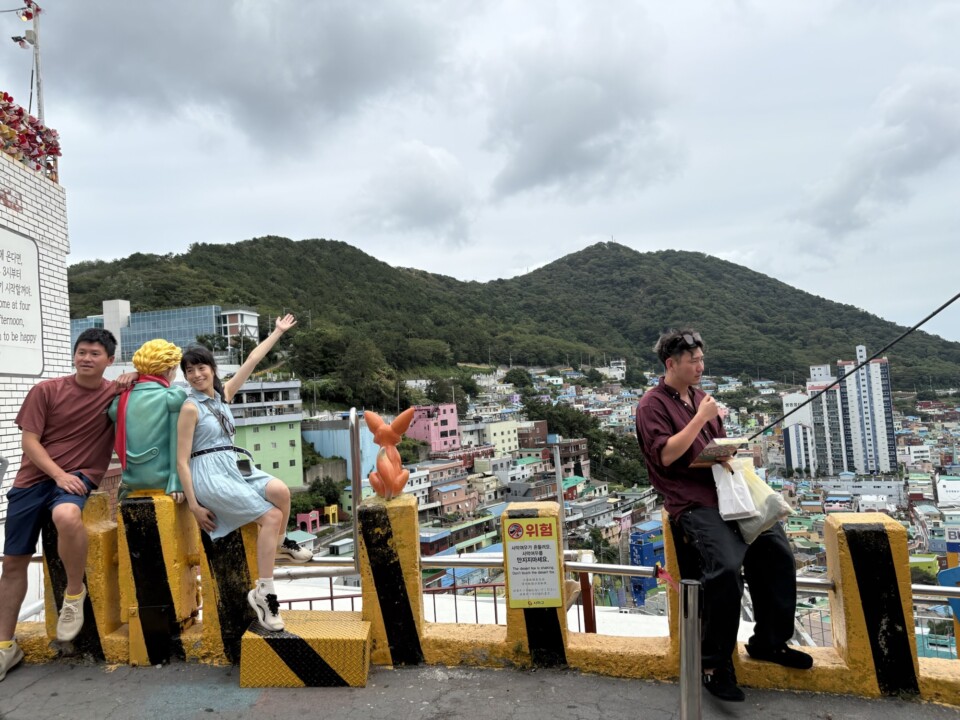
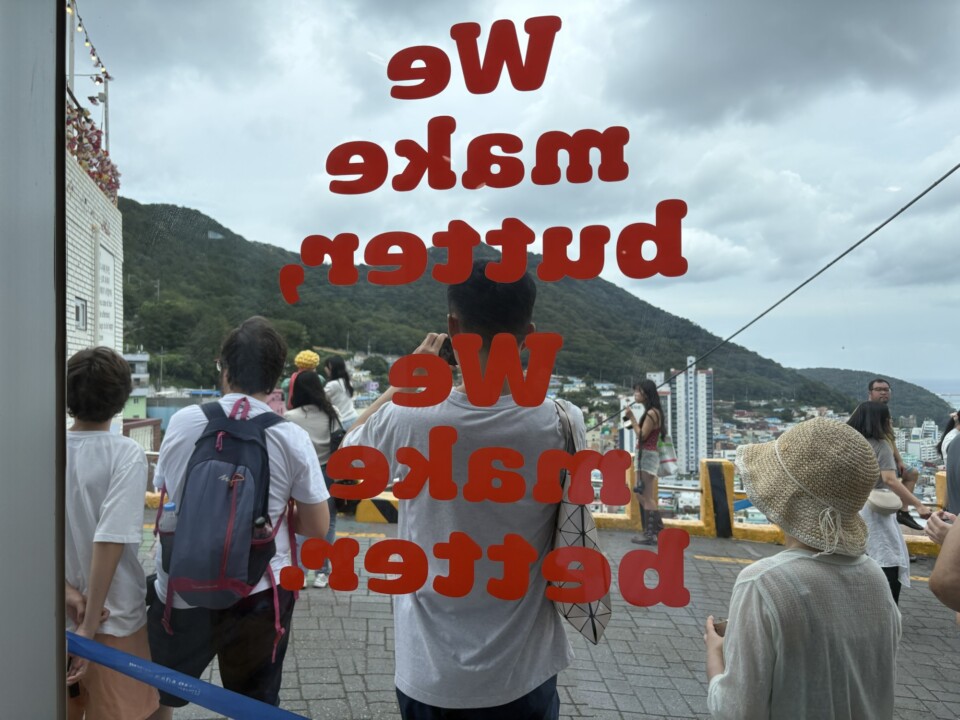
The most beloved residents of the village are the Little Prince and his desert fox, perched on a railing at the viewpoint. The queue to sit next to him for a photo was about an hour long. I skipped the line and settled for admiring him from a distance, townscape and all — which, frankly, still makes a fine picture.
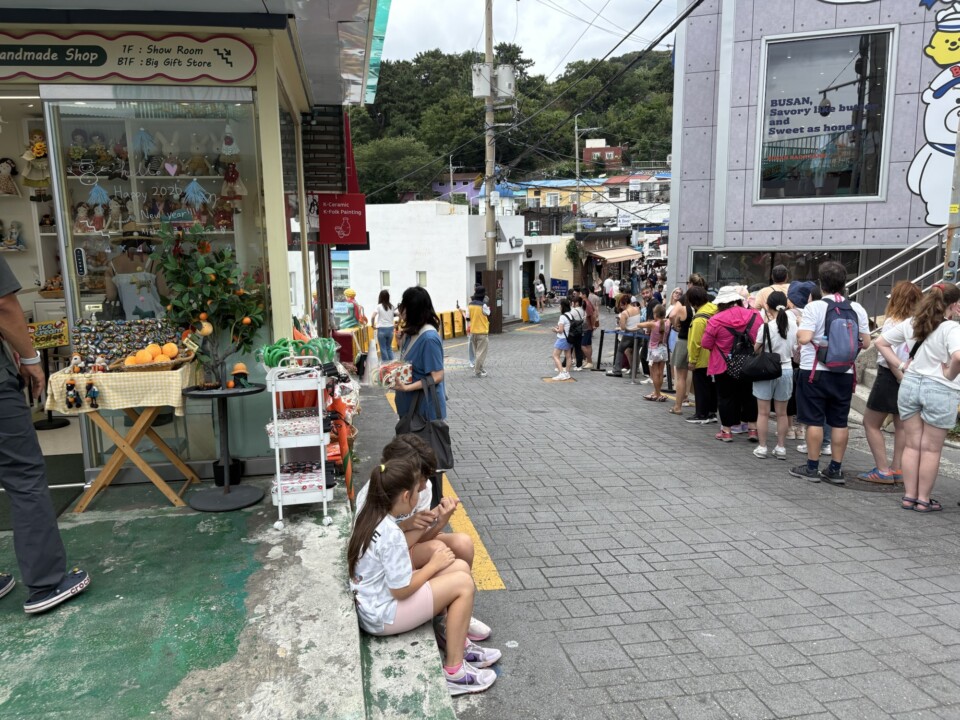
The main street is lined with craft shops, street snacks, and cafes, and the whole place hums with an energy that is easy to enjoy. I watched the crowds drift past from a cafe window, and before I knew it, about an hour had gone by. The views, the streets, the story underneath them — this village earns the walk.
Notes from the Day
- Gamcheon Culture Village sits on a hillside reached by bus or taxi from Toseong Station (Metro Line 1). Wear comfortable shoes — it is all slopes and stairs.
- The Little Prince statue is the most popular photo spot in the village. The queue was about an hour long when I visited.
- The wooden fish on the walls are wayfinding signs — follow the direction they swim and you will not get lost.
- Plenty of craft shops, street food, and cafes. Allow one to one and a half hours for a stroll.
- See the official Gamcheon Culture Village website (Korean/English) for details — information as of my visit.
Next, we head back down to Nampo-dong and the street stalls of BIFF Square, the movie district of Busan.
Visited in August 2026. Prices and details are as of my visit.
Related: BIFF Square to Bupyeong Kkangtong Market
Gamcheon Culture Village: Frequently Asked Questions
Why is Gamcheon Culture Village called the Machu Picchu of Korea?
Because of the way pastel-coloured houses pile up the hillside as far as the eye can see. Standing on the observation deck, I understood the nickname at once.
What is the history behind all the colour?
It is a cheerful-looking place with a sobering history underneath. The neighbourhood was originally built by refugees who fled all the way to Busan during the Korean War, when the city became the provisional capital and people had nowhere else to go — they built their homes in terraced rows up this hillside. The turning point came around 2009, when city-supported public art projects filled the village with artworks and reshaped it into a place where residents’ daily life and art coexist.
The alleys are a maze. How do I avoid getting lost?
Follow the fish. Schools of wooden fish swim across the walls, and they are not decoration: the direction they swim marks the walking route. It is a wayfinding trick with real charm.
How long is the queue for a photo with the Little Prince?
About an hour when I visited. The Little Prince and his desert fox are perched on a railing at the viewpoint, and it is the most popular photo spot in the village. I skipped the line and admired him from a distance with the townscape behind — which, frankly, still makes a fine picture.
Is there anything here for BTS fans?
Yes. There is a mural of Jungkook and Jimin, both Busan natives, and fans took turns posing in front of it the whole time I stood there. The village is one of their pilgrimage sites.
How much time should I allow, and what should I wear?
Allow one to one and a half hours for a stroll. The village sits on a hillside of slopes and stairs, so comfortable shoes matter. The main street is lined with craft shops, street snacks and cafes — I watched the crowds drift past from a cafe window and an hour went by before I noticed. See the official Gamcheon Culture Village website for current details.
More from this Busan trip
Elsewhere on the same trip: [Busan] Haedong Yonggungsa, the Temple That Stands on the Sea · [Busan] Up the 100th Floor at BUSAN X the SKY · [Busan Haeundae] The Westin Josun Busan.
Related Articles

Comments