We went to a department store food hall to buy souvenirs. Not the duty-free floors above — the food floor below.
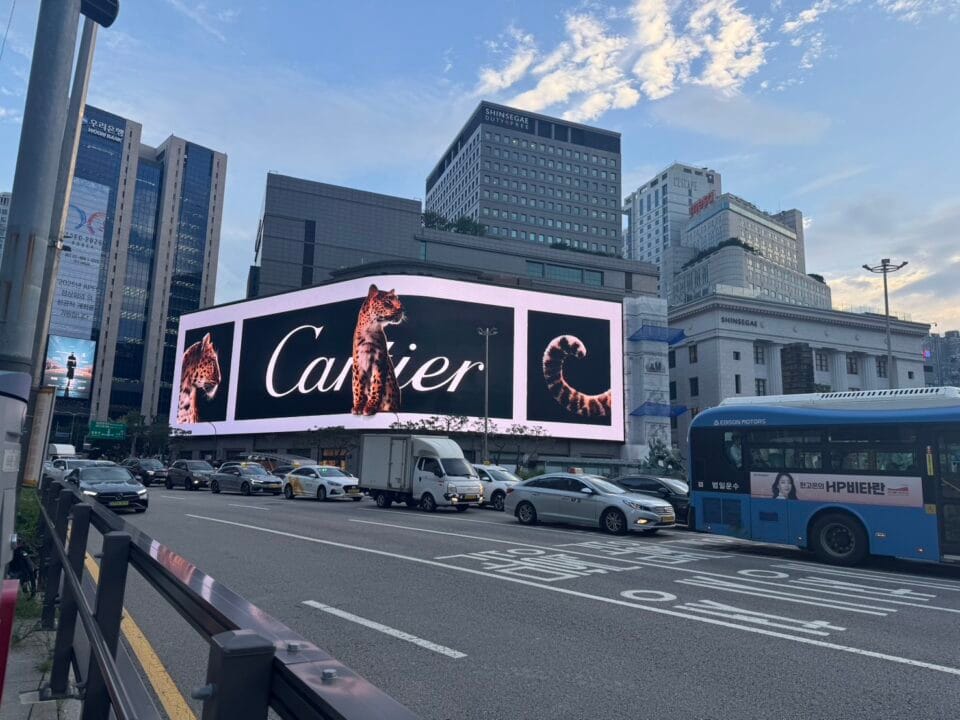
The food floor under the duty-free shop
We went into the duty-free shop at Shinsegae department store in Myeongdong, but the basement was the target.
The building splits cleanly between its upper and lower halves. Shinsegae Duty Free Myeongdong occupies floors 8 to 12: brands and watches on 8 and 9, cosmetics and perfume on 10, character goods and health foods on 11, electronics, spirits and tobacco on 12. Everything laid out for tourists is upstairs.
The food floor is in the basement. It connects directly to Exit 7 of Hoehyeon station on subway Line 4, and it is about five minutes on foot from Myeongdong and Namdaemun Market, ten minutes from Seoul Station.
When buying souvenirs abroad, going where local people buy their groceries is more interesting than working through the luxury counters of a duty-free hall. The sense of what things cost, and of what counts as everyday, is clearest there.
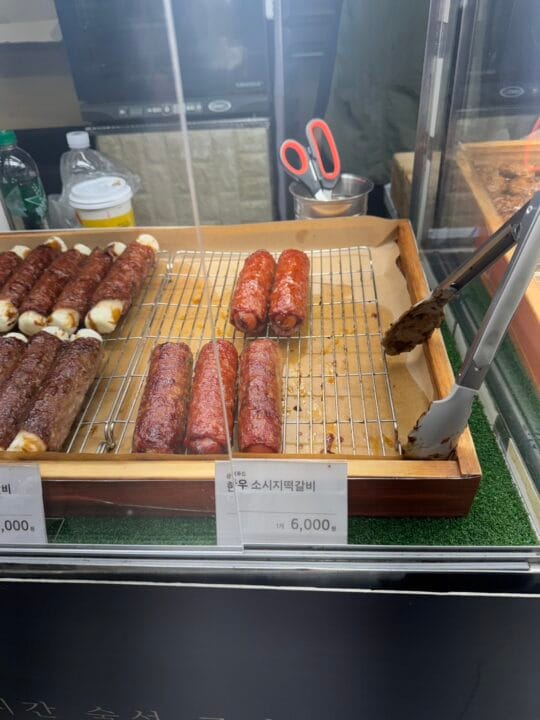
Counter after counter of prepared food
The basement is glass cases running on and on.
We went in the afternoon. Mostly locals, but tourists too — not tipped decisively either way.
There is a confectionery section, and beyond it the prepared-food counters. The range on display is wide. The construction is similar to a Japanese depachika and the contents are different, so it does not read as the same kind of place.
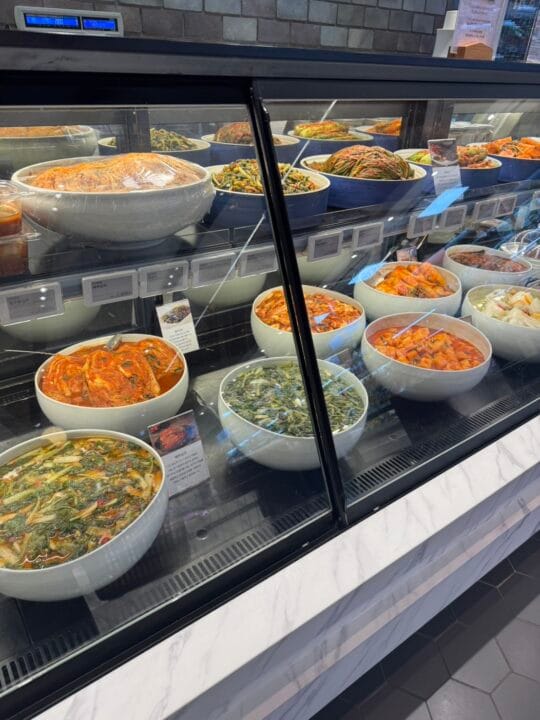
Side dishes are portioned out and lined up in rows.
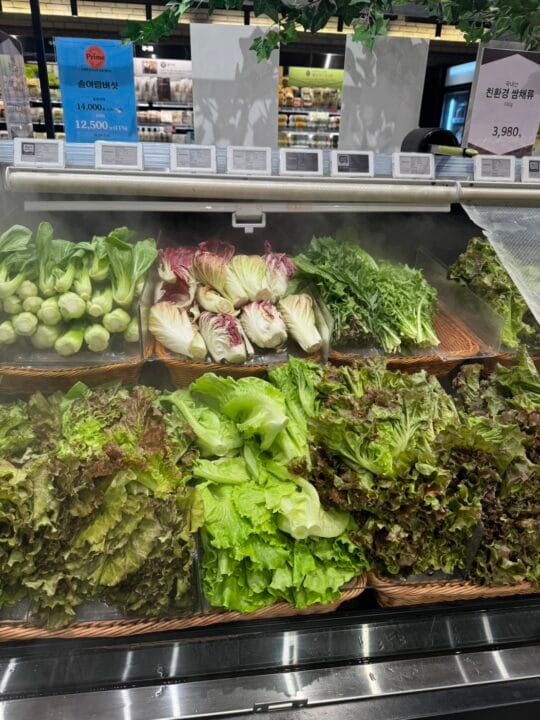
The produce section had a high proportion of leafy greens.
In a Japanese supermarket, leafy greens means a handful of kinds; here there are many more, several of which I could not name, stacked up. Having eaten the minari hotpot in Seongsu earlier in the trip, it made sense. This is a country that eats that much vegetable.
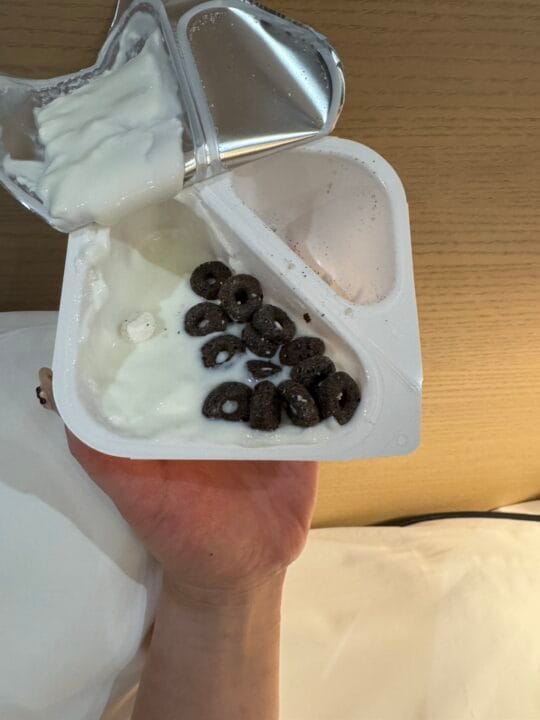
What we bought
Korean nori, and kimchi and pickles. Nothing showy.
Eating them after getting home, they were clearly not the same as the things sold under those names in Japan. Nori is nori and kimchi is kimchi, and yet they register as different foods.
A practical note: kimchi travels in checked luggage. We were worried about the smell and about leaks, so it went in the suitcase rather than the cabin.
Paying by card was no trouble and language was not an issue. In the end we only looked at the prepared-food counters without buying anything from them. Next time, that is what I want to try.
What is sold in a souvenir shop at a tourist site is generally made for tourists. What is in a department store basement is what local people buy ordinarily. When you eat it after getting home, the second kind is what continues the trip.
Prices themselves were not startlingly cheaper than the duty-free floors above. The value of this place is not that it is cheap; it is that what is for sale is different.
Next time in Seoul I would like to see a market like Gwangjang, and an ordinary local supermarket too.
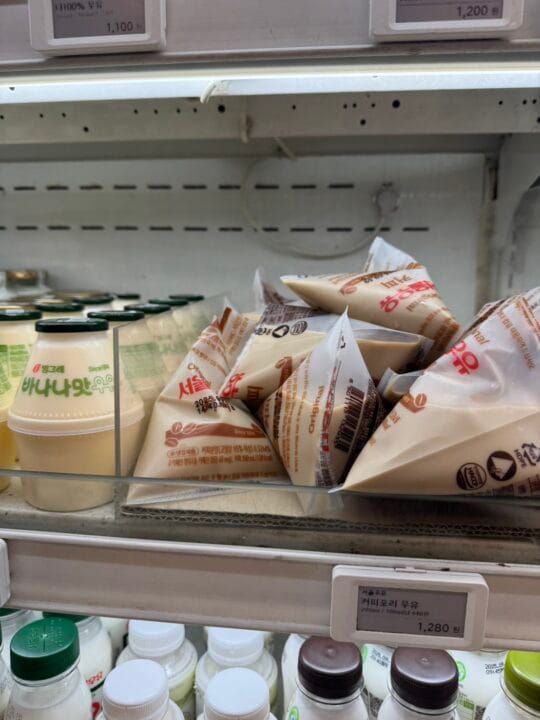
Notes from this visit
- Shinsegae department store in Myeongdong: duty-free on floors 8 to 12, food hall in the basement
- Direct from Exit 7, Hoehyeon station, subway Line 4. Five minutes on foot from Myeongdong and Namdaemun Market, ten from Seoul Station
- Confectionery, prepared dishes and produce counters run one after another
- A wider range of leafy greens than in Japan
- We bought Korean nori, kimchi and pickles. Kimchi went into checked luggage
- Card payment was fine
- This stay was at the end of March 2025. Range and hours change, so check before you go
The hotel on this stay was Hotel 28 Myeongdong, a film-themed hotel in the lanes of Myeongdong. Breakfast on the same trip is written up in the ox-bone soup that arrives unseasoned.
Frequently asked questions
Where is this food hall?
In the basement of the Shinsegae department store in Myeongdong, below the duty-free floors. It connects directly to Exit 7 of Hoehyeon station on subway Line 4.
What can you buy?
Confectionery, prepared dishes and produce, counter after counter. The range of leafy greens looked wider than in Japan. We bought Korean nori, kimchi and pickles.
How does it differ from duty-free souvenirs?
The duty-free floors are built around products made for tourists. The basement is what local people buy day to day. It is the clearest place to get a sense of prices and of what counts as ordinary.
Is it cheaper than the duty-free floors?
Not dramatically. The point is not the price but that the goods themselves are different.
Can I take kimchi home?
We put ours in checked luggage because of the smell and the risk of leaking, rather than carrying it into the cabin.
When was this visit?
The end of March 2025. Range and opening hours change, so check before you go.
Comments