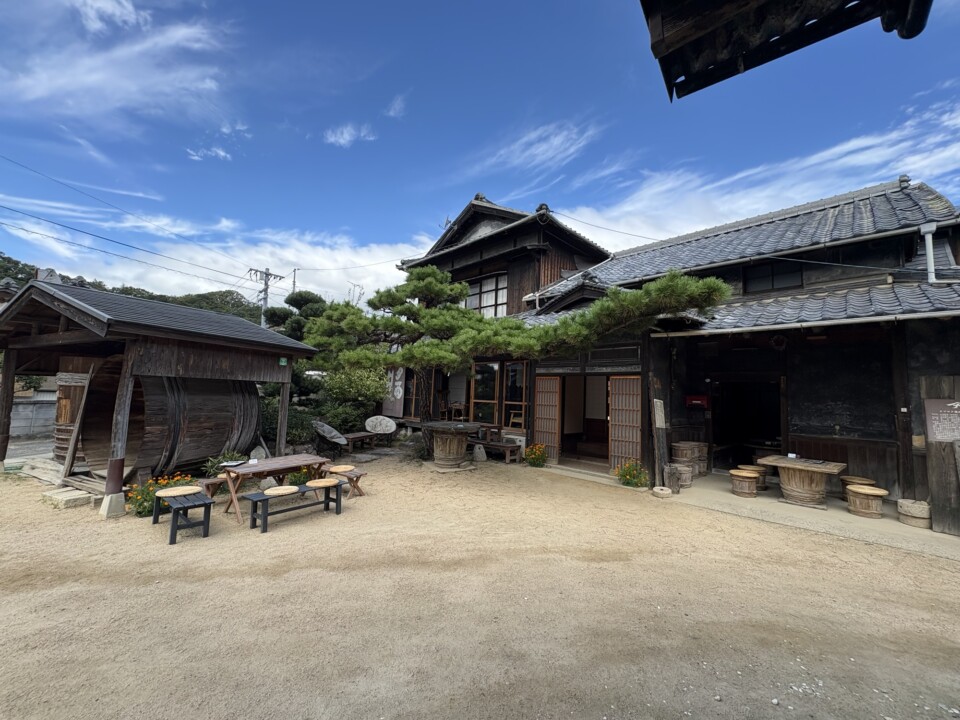
We drove down a narrow road to Yamaroku Shoyu on Shodoshima. It is a brewery that still ferments its soy sauce in wooden barrels. You can walk through the brewhouse and taste the finished soy sauce. Visits are free and no reservation is needed.
The road is wide enough that if a car comes the other way, one of you has to pull into a passing place. It feels less like the approach to a tourist site than like driving through the lanes of a village that happens to have a brewery in it.
- The smell of a wooden-barrel brewhouse
- A brewhouse home to a hundred kinds of microbes
- One per cent of Japanese soy sauce — and a quarter of it is on this island
- The people who make the barrels are disappearing
- Soy sauce on ice cream, at a veranda-style table
- Four years of soy sauce, poured on a 440-yen ice cream
- Before you go
- Frequently asked questions
- Sources
- Awaji, Kagawa and Shodoshima (September 2026)
The smell of a wooden-barrel brewhouse
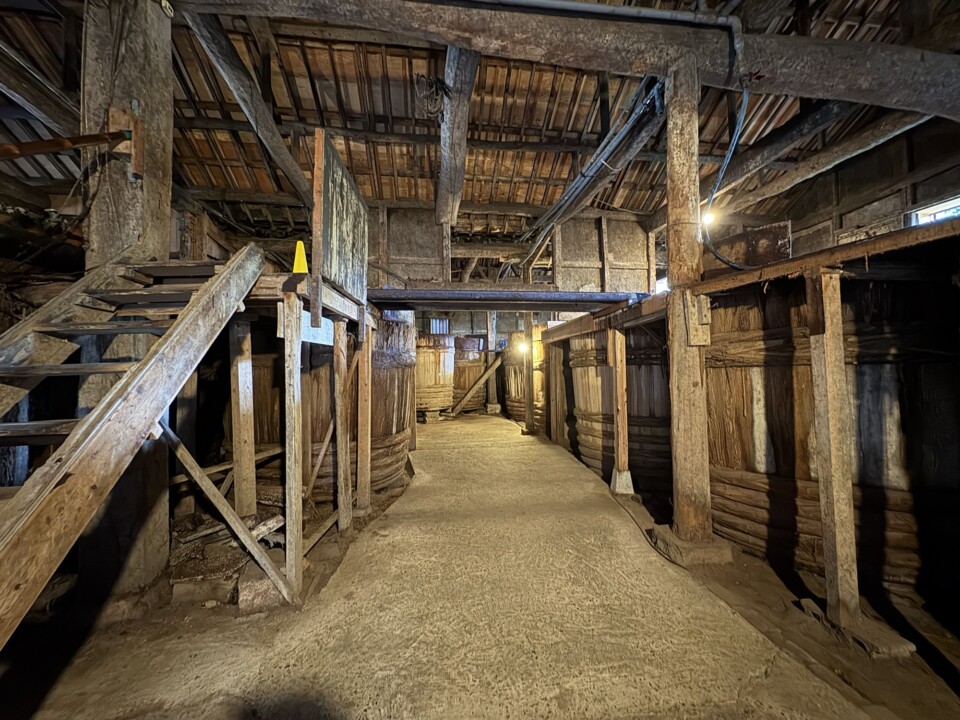
The brewhouse, full of wooden barrels, has a smell of its own — something sweet, and at the same time the saltiness of soy sauce.
That smell is what arrives first. Your nose works it out before your eyes have adjusted to the dark. It is cool inside, too; stepping in from a September day warm enough for short sleeves, the temperature is distinctly different.
The barrels are big enough that you look up at them. You have to tilt your head back to see the rim. Lean over it and the surface of the moromi mash is bubbling. What was put in here is still working.
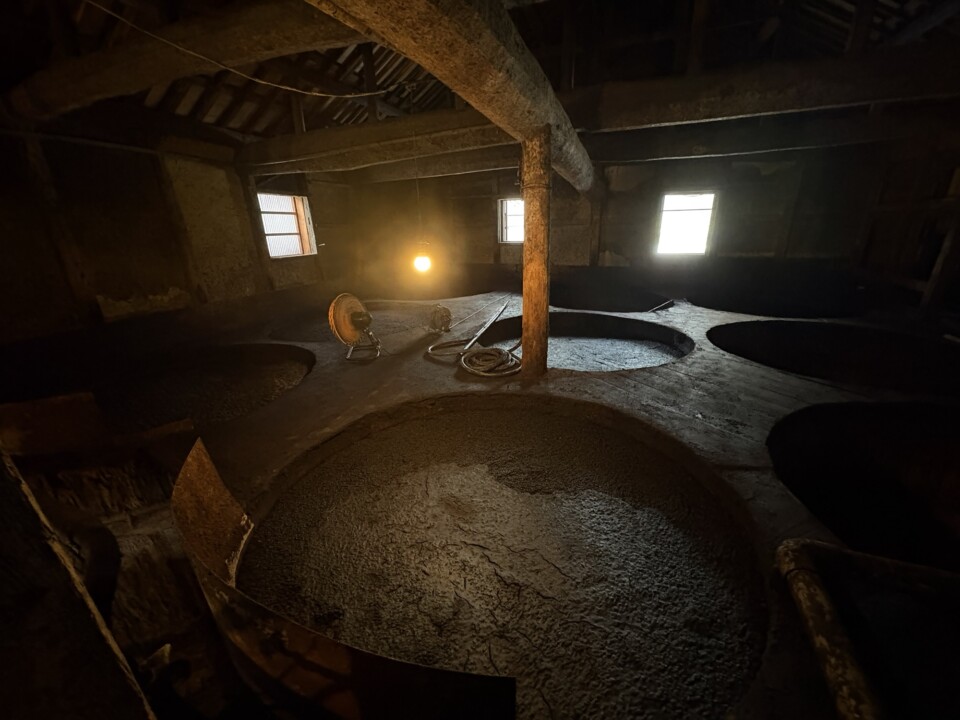
A brewhouse home to a hundred kinds of microbes
According to what we were told at the brewery, around a hundred kinds of microbes live in this brewhouse, and that ecosystem changes the flavour of the soy sauce. An ordinary soy sauce, they said, involves only a few kinds.
We heard this from someone working at the brewery. Not from a sign, not from an audio guide.
Could the depth of the flavour come from that many microbes? The thought moved me.
Yamaroku own website also explains that the yeasts and lactic acid bacteria that settle in a brewhouse create an ecosystem particular to each brewery. Soy sauce made in wooden barrels is said to be less than 1% of all soy sauce produced.
One per cent of Japanese soy sauce — and a quarter of it is on this island
Of the soy sauce produced in Japan today, 1% is made in wooden barrels. The other 99% is made in tanks of stainless steel, FRP, concrete or enamel.
A wooden barrel lasts between 100 and 150 years. Which means many of the barrels now holding soy sauce were assembled in the Meiji or Taisho era and are still working.
An estimated 4,500 to 4,700 wooden barrels remain in Japan, and 1,100 of them are concentrated on Shodoshima. On this island, at the end of that narrow road, sits roughly a quarter of the country wooden barrels.
The people who make the barrels are disappearing
Barrels are vanishing not because the barrels fail first, but because the coopers do.
Making the large barrels used for brewing had come down to essentially one workshop: Fujii Seiokesho in Sakai, Osaka. When the craftsmen go, it is not only that new barrels cannot be built — the existing ones cannot be repaired either.
Yasuo Yamamoto of Yamaroku Shoyu started a project to revive the craft, apprenticed himself at that workshop, and learned to build barrels with his own hands. A soy sauce maker making the tools that make soy sauce.
The first soy sauce brewed in a barrel they had assembled themselves went in on 28 January 2013. The madake bamboo used for the hoops has to be 13 to 14 metres long.
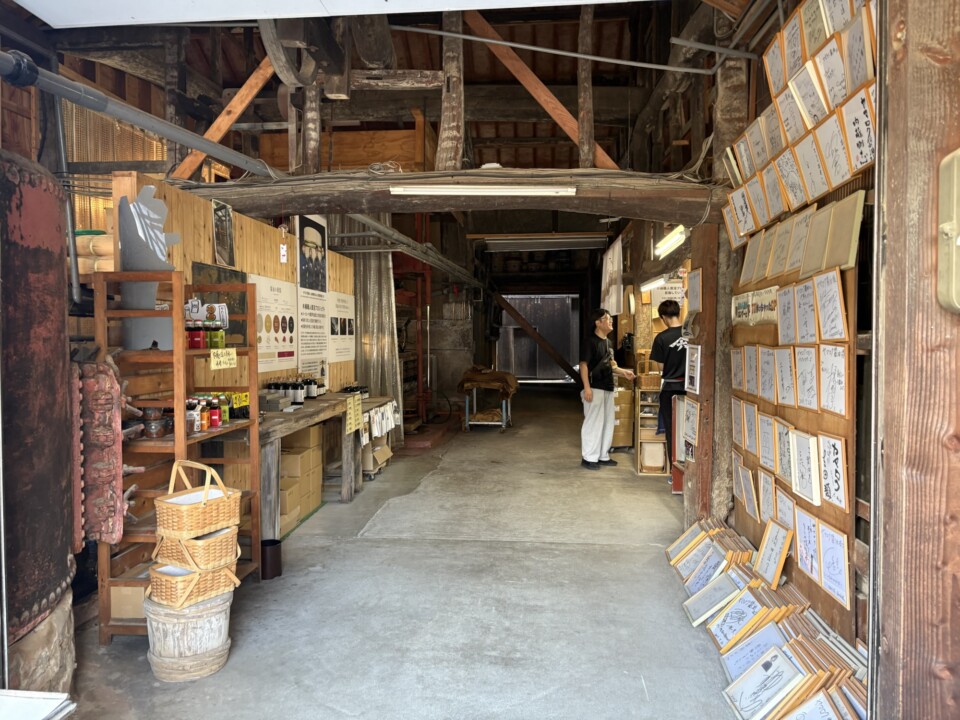
Soy sauce on ice cream, at a veranda-style table
Here we had soy sauce ice cream and an iced coffee. The menu calls it ice cream with Tsuru Bishio — ice cream with Yamaroku Tsuru Bishio soy sauce poured over it.
You pour the Tsuru Bishio yourself. How much is left entirely to you.
Poured on, the salt rides on top of the sweetness and it turns sweet-savoury. But the bigger change was the smell. It is different before it even reaches your mouth.
The iced coffee arrived in what looked like a small wooden barrel, with a glass inside it.
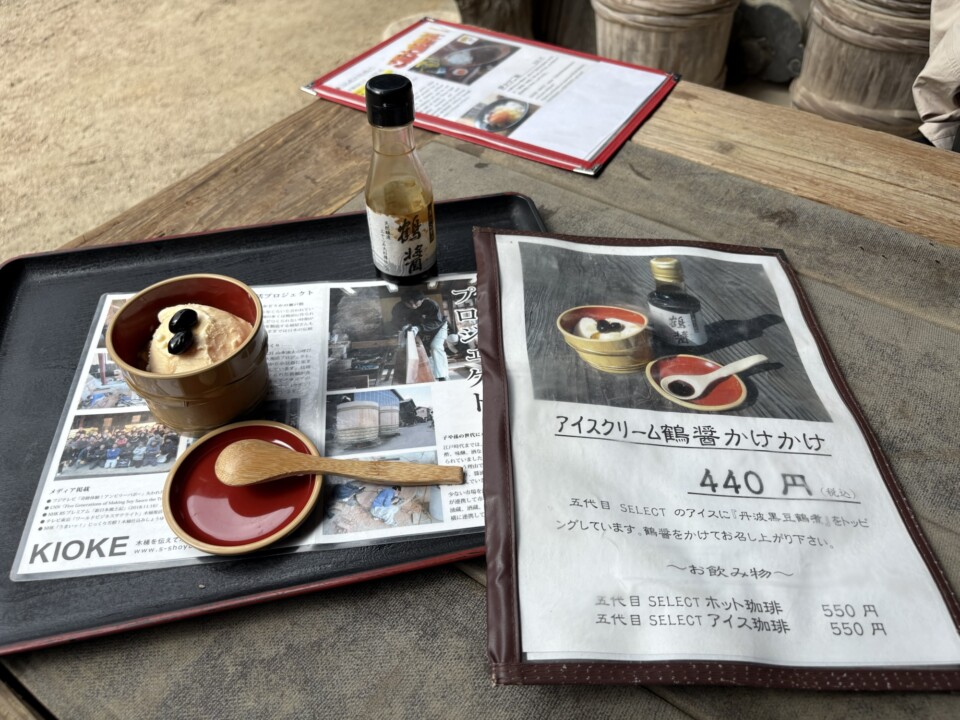
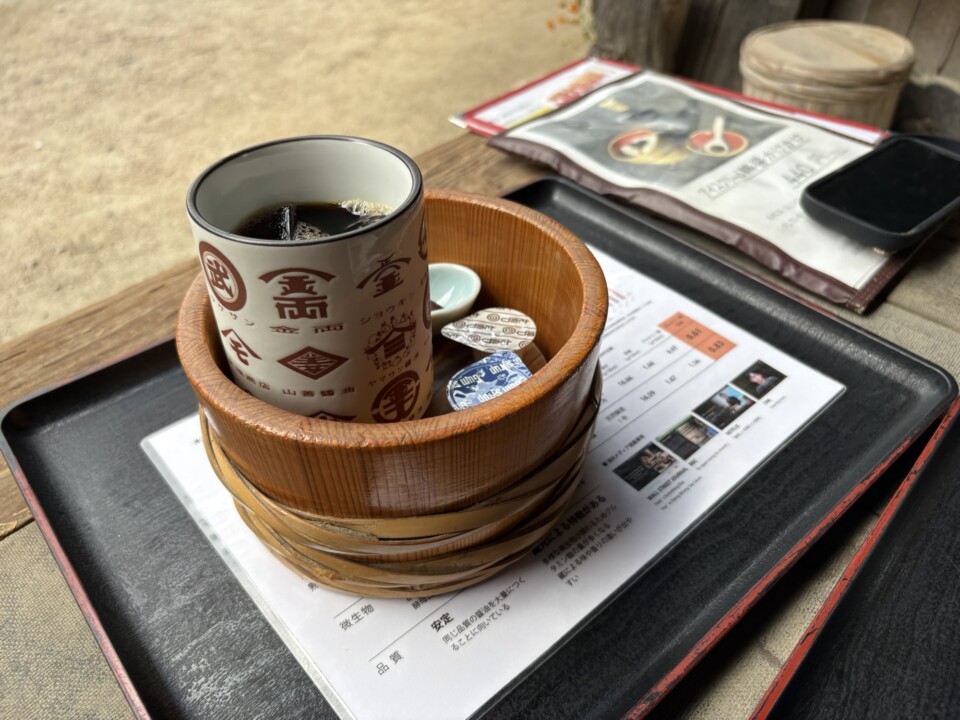
It was just warm enough for short sleeves. Surrounded by a deep blue sky and dense green, with a wind chime making it feel cooler still, the time we spent as a family at that veranda-style table felt like real luxury.
Four years of soy sauce, poured on a 440-yen ice cream
I found out afterwards that the Tsuru Bishio we poured was a saishikomi soy sauce. Ordinary soy sauce is brewed with brine. Saishikomi is brewed with soy sauce in place of the brine. It takes more work and is less efficient, so not much of it is made.
Soy sauce aged in wooden barrels takes one to two years. Saishikomi, counted from brewing the soy sauce that will be used for the brewing, takes four years to finish.
So what we poured onto a 440-yen ice cream was something that had been started four years earlier. That was what I was tilting over a dish, hesitating about how much to use.
A family I can spend time with without putting on airs, nature, and a delicious, slightly sweet ice cream. It does not get better than that.
Before you go
- Address: 1607 Yasuda-ko, Shodoshima-cho, Shozu-gun, Kagawa
- Visits: 9:00 to 17:00, open every day (according to Shodoshima Town). Free, no reservation needed
- The road to the brewery is narrow. Parking for 4 to 5 cars at the front and back
- Yamaroku Chaya, on site, serves desserts and drinks made with their soy sauce
It was quiet the day we went. We parked straight away and had the brewhouse to ourselves. With only five spaces, though, a busy hour could mean waiting.
I had expected something closer to an exhibit. It turned out to be a more living place than that. The moromi was bubbling, and the person who told us about the microbes works in that brewhouse.
Details were checked in September 2026 on the Yamaroku Shoyu official website and Shodoshima Town information pages. Visiting arrangements may change, so please check before you go.
📖 A companion guide from Private Wisdom
Going beyond the usual route? Off the Beaten Path in Japan — the islands, small towns and quiet corners most visitors never reach, and how to get to them, from a long-time local. Free to read with Kindle Unlimited.
▶ Read on Amazon (Kindle Unlimited)Frequently asked questions
Do I need a reservation to visit Yamaroku Shoyu?
No. Visits are free and no reservation is needed, 9:00 to 17:00, open every day according to Shodoshima Town. Check before travelling, as arrangements can change.
What is special about wooden-barrel soy sauce?
Yeasts and lactic acid bacteria settle into the brewhouse itself and form an ecosystem unique to that brewery. We were told around a hundred kinds of microbes live in this one, against a few kinds for an ordinary soy sauce. Wooden-barrel soy sauce is less than 1% of Japanese production.
Why is Shodoshima significant for this?
An estimated 4,500 to 4,700 brewing barrels remain in Japan, and about 1,100 of them are on Shodoshima — roughly a quarter of the national total.
Is the drive difficult?
The road to the brewery is narrow enough that one car has to pull aside when another comes the other way. Parking is four to five spaces at the front and back.
What is Tsuru Bishio?
A saishikomi soy sauce, brewed with soy sauce instead of brine. Counting the soy sauce used for brewing, it takes about four years to finish. You pour it over the ice cream yourself.
Sources
- Proportion brewed in wooden barrels, barrel lifespan and surviving numbers, and the years required for saishikomi: Business Journal
- The barrel coopers revival project and the date of the first brewing: a publication of the Shikoku Bureau of Economy, Trade and Industry, METI
- Address, parking and other basics: Tabimaga, plus the Yamaroku Shoyu official site and Shodoshima Town information pages
Awaji, Kagawa and Shodoshima (September 2026)
- Shodoshima in One Day by Car: the Ferry, Fresh Somen, Olive Park and the Tide Table
- SolaVilla Umi Terrace Minami-Awaji, Awaji Island
- Three udon shops in Kagawa
Related Articles

Comments