- Introducing Thailand Tourism and QR Code Payments: The Cashless Challenge
- Motivation to travel: reasons for not using cash.
- QR Code Payment Trial: Register for Alipay and LINE Pay
- The Challenge of Payment Failure: Barriers for International Travelers
- Alternative: use of credit cards and cash
- Field learning: the importance of advance preparation
- Satisfaction with your trip to Thailand: non-paying attractions
- Similar summaries to Private Wisdom
- Thailand QR Code Payment FAQ
- Related articles
Introducing Thailand Tourism and QR Code Payments: The Cashless Challenge
Thailand is one of the leading tourist destinations in Southeast Asia, with the bustling markets of Bangkok, the ancient temples of Chiang Mai, and the beaches of Phuket, and is set to attract around 39 million tourists in 2023 (Tourism Authority of Thailand data), and offers a diverse and vibrant cultural mix. On this trip, we tried QR code payments in Thailand (mainly PromptPay) and signed up for Alipay and LINE Pay. QR code payments are common in convenience stores and on trains in Thailand, and tourist information can be found at the Tourism Authority of Thailand, with city details on the official Bangkok Tourism website; Alipay information can be found on the official Alipay website, and LINE Pay can be found on theLINE Pay official website. In addition, the Thai Immigration Department andthe Thai Embassy also provide entry and local information. The experience gave them an understanding of the challenges and alternatives to QR code payments.
Motivation to travel: reasons for not using cash.
When planning my trip to Thailand, I tried cashless payments to avoid the hassle of cash. Exchanging local currency (Thai baht) is not favorable in terms of fees and exchange rates, and it’s a hassle. According to surveys, QR code payment (PromptPay) has become popular in convenience stores, food stalls, and trains in Thailand, and cashless payment will reach about 30% by 2023 ([web: 0,14,15]). I signed up for Alipay and LINE Pay and look forward to paying easily with my smartphone. During my four-day, three-night trip to Bangkok, I visited Wat Pho and Chatuchak Market.Tip: Install the app and register your credit card before you go. This challenge was the start of our journey to explore the possibilities of going cashless.
QR Code Payment Trial: Register for Alipay and LINE Pay
Upon arrival in Thailand, set up Alipay and LINE Pay on your smartphone. signing up is simple and takes about five minutes, with Alipay requiring a phone number and credit card information, and LINE Pay requiring a LINE account and a link to a bank card. According to the survey, Alipay is mainstream in China but works in some stores in Thailand (7-11 and tourist areas); LINE Pay is similarly supported in convenience stores and restaurants ([web: 5,9,16]). In my case, I scanned the QR code at a 7-Eleven in Bangkok and on the BTS (train), but the payment failed. Tip: check the latest version of the app and set the network connection to 4G. this failure made me realize the limitations of QR codes.
The Challenge of Payment Failure: Barriers for International Travelers
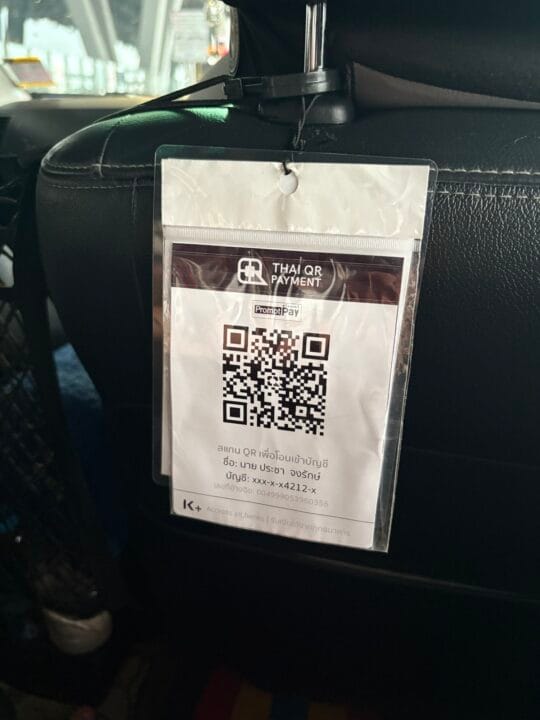
We tried Alipay and LINE Pay a couple of times at convenience stores and BTS, but payments did not go smoothly. According to the survey, PromptPay in Thailand mainly requires a Thai bank account or local number, which is restrictive for foreign tourists ([web: 1,8,12,16]); Alipay can be used in some stores, but is prone to errors when using bank cards from outside of China ([web: 9,13,16]); and LINE Pay is similar but may not be able to be used with cards issued in Japan ([web : 15,19]). I ended up paying with a credit card (Visa). It is best to use a credit card to avoid embarrassment with the store owner; advice: before trying QR code payment, check with the store owner whether the store accepts QR code payment. This challenge highlights the reality of going cashless.
| terms of payment | mileage | challenge | tip |
|---|---|---|---|
| Alipay, online payment platform | Available at some convenience stores. | Greeting cards issued in Japan are riddled with errors. | Check the store response. |
| LINE Pay | Easy Registration | QR code is not supported in Thailand | Try a Wi-Fi connection |
| credit cards | wide range of uses | And a 3% commission. | Carry Visa/MasterCard |
| in cash | Can be used anywhere | The trouble of changing money | Prepare small denomination bills. |
Alternative: use of credit cards and cash
As QR code payments failed, they had to use Visa cards and cash. Research shows that Visa and MasterCard are widely accepted in tourist areas and convenience stores in Thailand, with fees ranging from 3-5% in some cases ([web: 0,1,14]). In my case, Visa cleared at 7-Eleven and BTS without any embarrassment. Exchange small denominations of cash (20-100 baht) for use at roadside stalls and in cabs; Hint: do this at a city bank (e.g. Kasikorn Bank) as the exchange rate is lower at the airport exchange offices. Inform your bank in advance that you will be using a credit card overseas. This pragmatic approach will help the trip go smoothly.
Field learning: the importance of advance preparation
QR code payments in Thailand are a barrier for foreign tourists. Research suggests that travel e-wallets such as TAGTHAi Easy Pay will be available from 2024 and will support PromptPay ([web: 0,14]). However, registration needs to be done locally, which I have not tried. My mistake was not researching the payment environment in Thailand ahead of time; as a suggestion, research store support for QR codes before you leave. It is safer to bring 5,000 baht in cash and two credit cards. My next cashless challenge became more efficient with this learning experience.
Satisfaction with your trip to Thailand: non-paying attractions
Despite the challenges of QR code payments, Bangkok’s temples and Phuket’s beaches impress. The splendor of Wat Arun and the vibrancy of Chatuchak were impressive. The next step is to try TAGTHAi Easy Pay to go cashless again. According to research, Thailand is aiming for a 40% cashless ratio by 2025 ([web: 7,10]), and the tourist infrastructure is improving; tips include using both cash and bank cards and exchanging currency at Kasikorn Bank ([web: 0,14]). Budget 5,000 baht in cash, payable by credit card. Note: This information is based on personal experience and payment environments vary by store and time of day.
Similar summaries to Private Wisdom
The QR code payment challenge on our trip to Thailand taught us an unprepared lesson. My personal wisdom is that the key is to avoid Alipay and LINE Pay and use credit cards and cash wisely. Overcome the payment hurdles and truly appreciate the charm of Thailand. This experience quietly birthed travel wisdom.
Thailand QR Code Payment FAQ
Can tourists use QR code payments in Thailand?
QR code payments are everywhere in Thailand, but most are built around the domestic PromptPay system, which is designed for people with a Thai bank account. As a short-term visitor I found that many everyday QR options were not straightforward to use, so I treated them as a bonus rather than my main payment method.
What is PromptPay and can foreigners use it?
PromptPay is Thailand’s national instant-transfer system linked to a Thai bank account or Thai phone number. Because it assumes local banking, it is generally not available to tourists who do not hold a Thai account. Some travelers link it through a Thai SIM and e-wallet, but rules change, so confirm current options with the provider.
Do Alipay or LINE Pay work for travelers in Thailand?
Some Thai merchants accept Alipay, and cross-border wallet features are expanding, but acceptance is inconsistent from shop to shop. I tried registering these apps and still hit barriers at the counter, so I would not rely on them as a sole payment method. Check your wallet app’s official overseas-use terms before you travel.
How much cash should I bring to Thailand?
Cash in Thai baht is still the most reliable option at markets, street food stalls, and small shops. Carrying enough baht for daily meals, transport, and small purchases saved me every time a QR attempt failed. Withdrawing from ATMs as you go is usually easier than converting a large sum at once.
Are credit cards widely accepted?
Hotels, department stores, and larger restaurants generally accept international credit cards, so a card plus cash covered almost everything for me. Smaller vendors remain cash-first. A practical mix is a credit card for big payments and baht cash for everyday spending.
Related articles
- Rakuten Mobile eSIM for traveling in Thailand
- Excellent Thai food and beer at Icon Siam Ros’niyom
- Labubu hunting at Icon Siam POP MART
Related Articles
- Experience the family ties of the Hiratsuka Tanabata Festival!
- A Family Adventure at Azabudai Hills: Embracing Quiet Luxury at the MAY AT THE GREEN Playground!
- Hayama And Moon Noa Accommodation Review: Enjoy a Theater Room and Local Gourmet in a Stylish Rental Unit
- [Gyeongju] Seokguram Grotto: Lost for Words Before a 1,300-Year-Old Granite Dome

Comments