Order gyutan in Sendai and the same three things arrive with it, every time: barley rice, oxtail soup, and miso nanban.
None of it is a casual garnish. Each has a reason, and once you know the reasons the same plate reads completely differently.
From Tokyo, on the Hayabusa
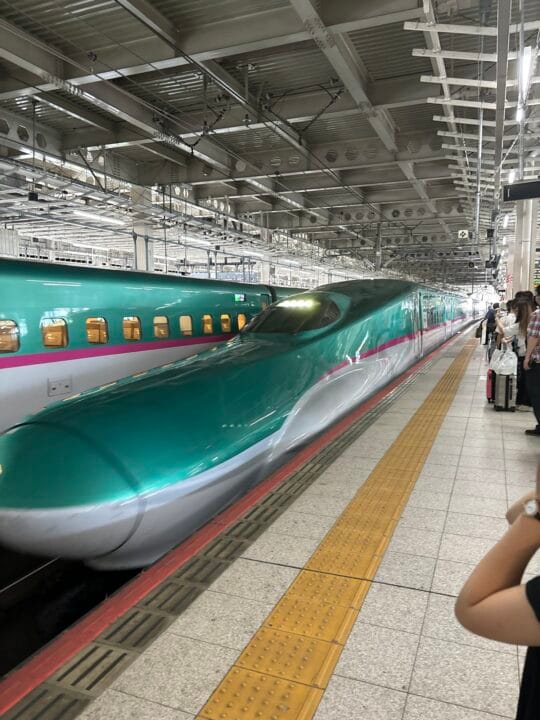
Tokyo to Sendai on the Tohoku Shinkansen takes about 1 hour 30 minutes on the fast Hayabusa service — roughly the same reach as Nagoya from Tokyo.
That distance defines the city’s character. You can go and come back in a day, which means “going to Sendai to eat gyutan” is a viable plan on its own.
The set is one piece of design
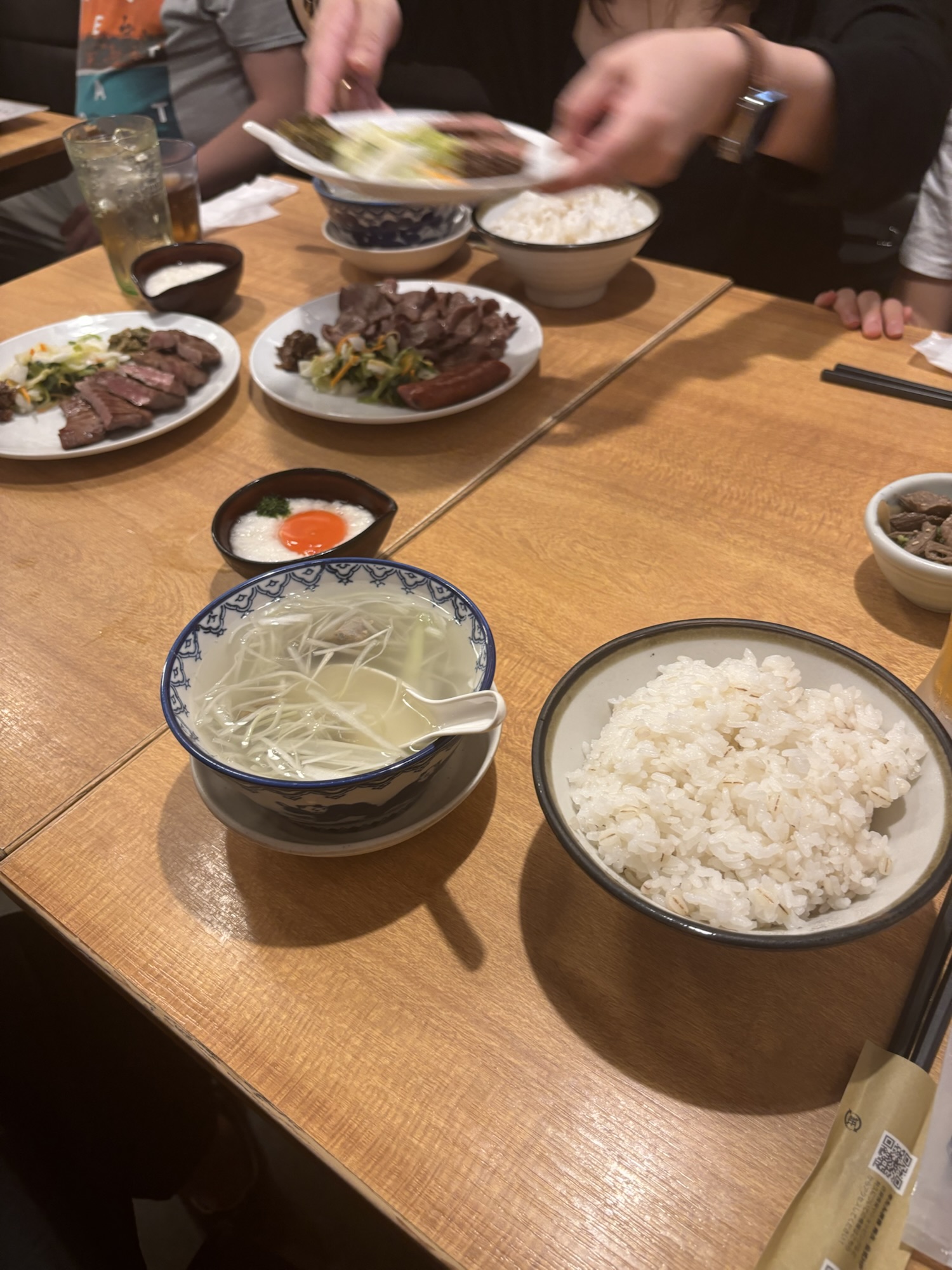
Here is what arrives: thick slices of charcoal-grilled beef tongue, a bowl of barley rice, oxtail soup with shredded leek floating in it, and small dishes of miso nanban and pickles.
The format was created by Keishiro Sano, who started grilling beef tongue in Sendai and put it on the menu at his restaurant Tasuke around 1948. Each element does a job.
- Barley rice — chosen during post-war food shortages because it was cheap and would fill people up. It stayed because the nuttiness of barley turns out to sit well with charcoal smoke
- Oxtail soup — if you are grilling the tongue, the tail becomes soup. Using the whole animal. The clear broth cuts the fat and resets your mouth
- Miso nanban — green chilli pickled in miso. The heat interrupts the flavour so the next slice tastes new again
In other words the set exists so you can finish a plate of fatty, thick-cut tongue without tiring of it. Ordering the tongue à la carte drops you out of that design. “Get the teishoku” is advice with a reason behind it.
As the photo shows, a single portion is not large. Sharing a few plates while everyone takes their own set is the realistic way to eat here.
The Date Masamune statue at Sendai Castle
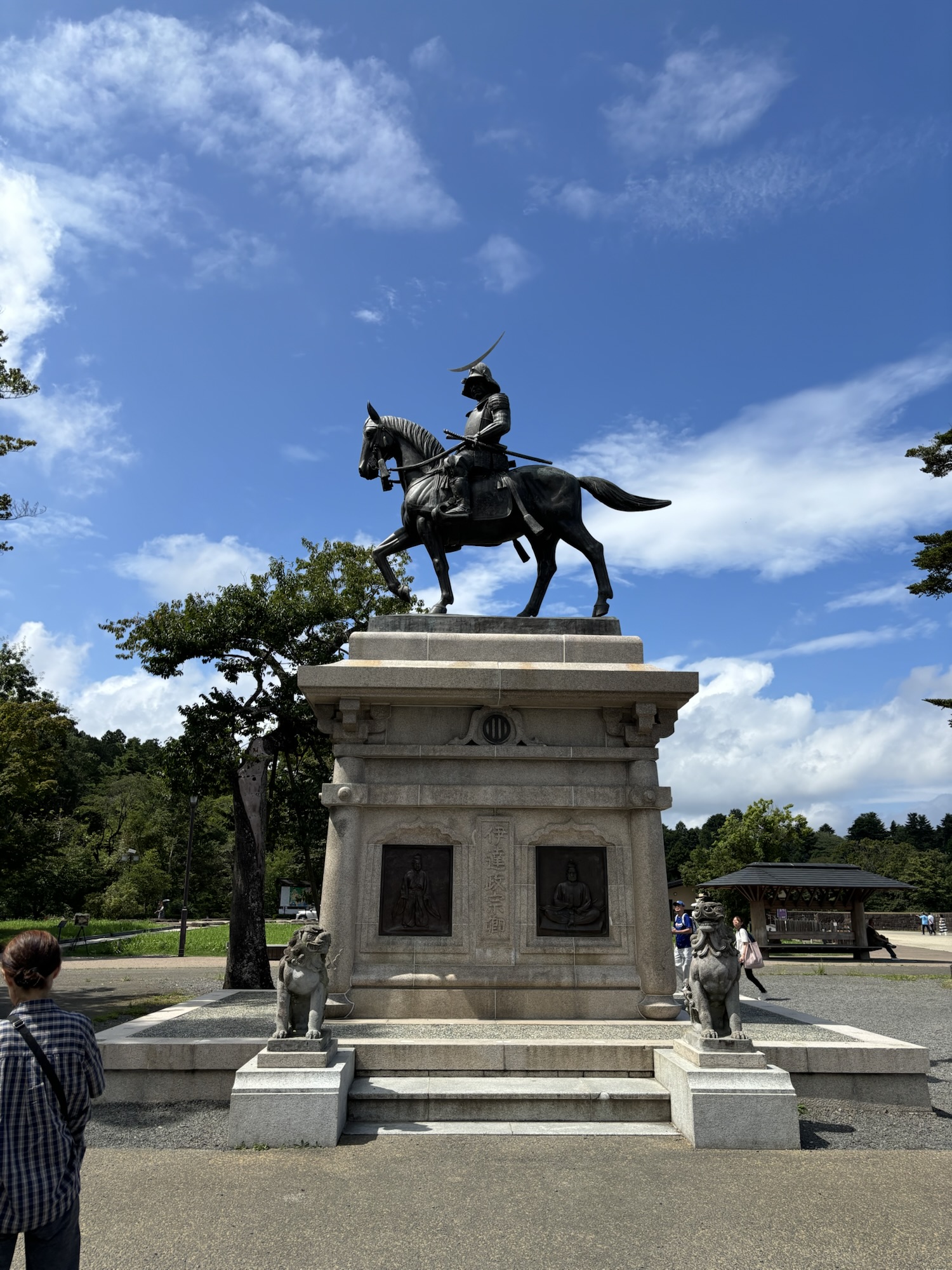
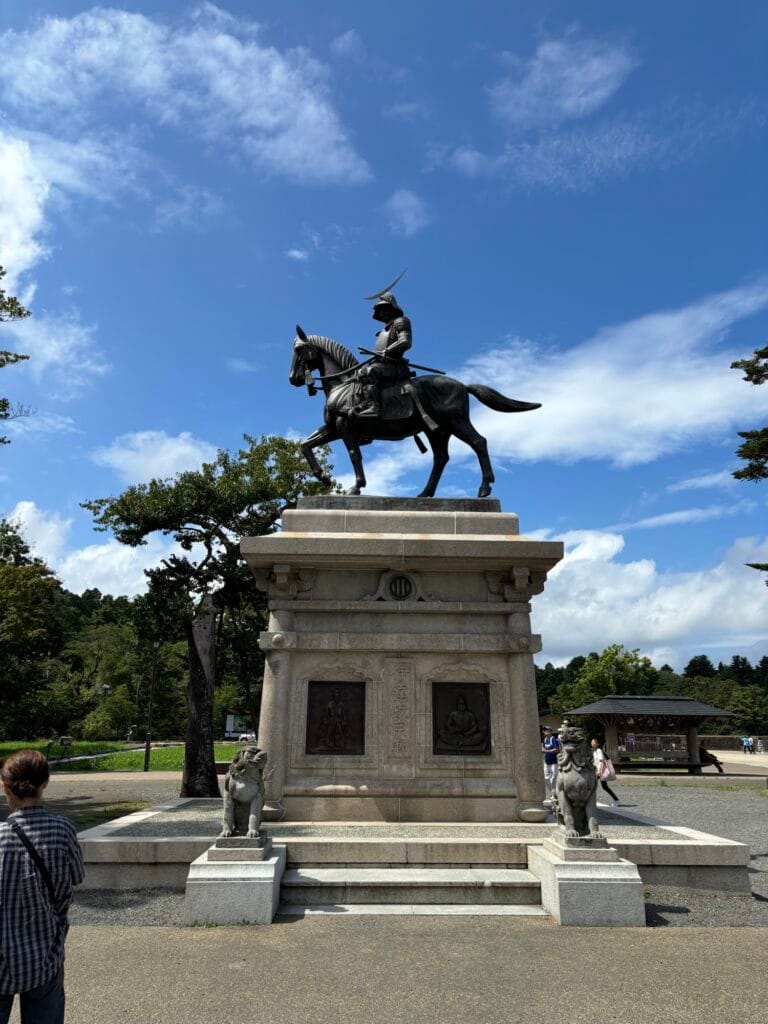
On the hill above the city stands Date Masamune on horseback. The statue faces the city, and the point of standing here is to look the same way he is looking. On a clear day you see across Sendai to the Pacific.
- Access: from Platform 16 at the Sendai Station west exit bus pool, take the Loople Sendai sightseeing loop bus and get off at “Sendai Castle Ruins”. There are stairs from the stop up to the main bailey
- Admission: the castle grounds are free. The Aoba Castle Exhibition Hall is ¥770 for adults, ¥550 for students, ¥330 for primary school children
- Illumination: the stone walls and the statue are lit from sunset until 23:00
The statue itself takes a few minutes. The view from the hill is what the time is actually for. Going up after dark gets you the city lights and the stonework together.
Summary
- Tokyo to Sendai is about 1 hour 30 minutes on the Hayabusa — a day trip works
- Order the teishoku, not the tongue alone. The barley rice, oxtail soup and miso nanban each have a purpose
- The format dates to Keishiro Sano at Tasuke, around 1948
- Portions are modest — share a few plates and take a set each
- Sendai Castle ruins are free, on the Loople Sendai bus from Platform 16. Lit until 23:00
📖 A companion guide from Private Wisdom
Eating your way around Japan? How to Eat in Japan — a long-time local’s friendly guide to ordering, dining etiquette, and what to actually eat, from the convenience store to the sushi counter. Free to read with Kindle Unlimited.
▶ Read on Amazon (Kindle Unlimited)Related Articles

Comments