We spent two days in Busan in August 2026, staying at the Westin Chosun on Haeundae beach. From there: a temple built on the rocks above the sea, a local kitchen, a fish market in Nampo-dong, and the Blue Line Park after dark.
- Where we stayed: the Westin Chosun Busan
- Haedong Yonggungsa, a temple on the sea
- Lunch at a local kitchen: Kosulkosul
- A live octopus at Shindonga fish market
- The Blue Line Park is better after dark
- Nakgopsae at Kemijip, while our daughter did her homework
- After dinner: a walk through Haeundae Traditional Market
- Day three, morning: dwaeji gukbap at Eom Yong Baek
- Driving from Busan to Gyeongju: the expressway service areas
Where we stayed: the Westin Chosun Busan
Our Busan base was the Westin Josun Busan, standing at the western end of Haeundae Beach by Dongbaek Island — one of the city’s storied addresses, in business since 1978. As the place to come home to after the Blue Line’s night views, the location could hardly be better.
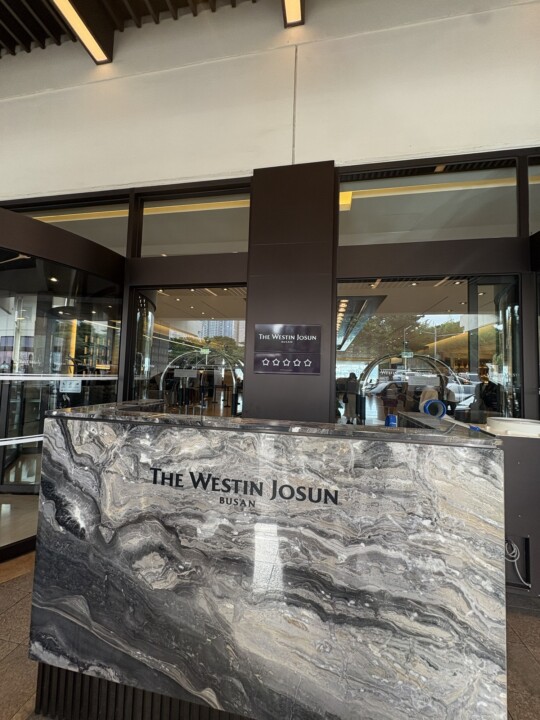
The Westin room that never betrays you, in any city
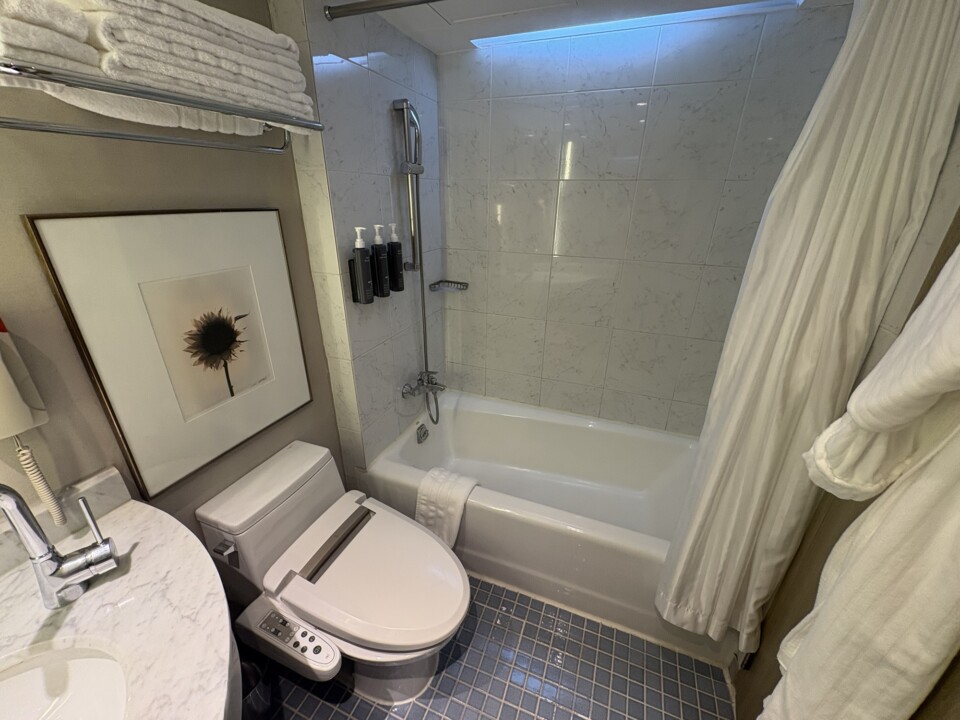
Step inside and the first thought is simply: this is a Westin. The cleanliness and fittings hold the same standard you find at Westins anywhere in the world. At the same time, the building carries real history, and the bathroom keeps a touch of traditional construction about it. I chose to read that coexistence of freshness and age as the particular charm of a grand old hotel.
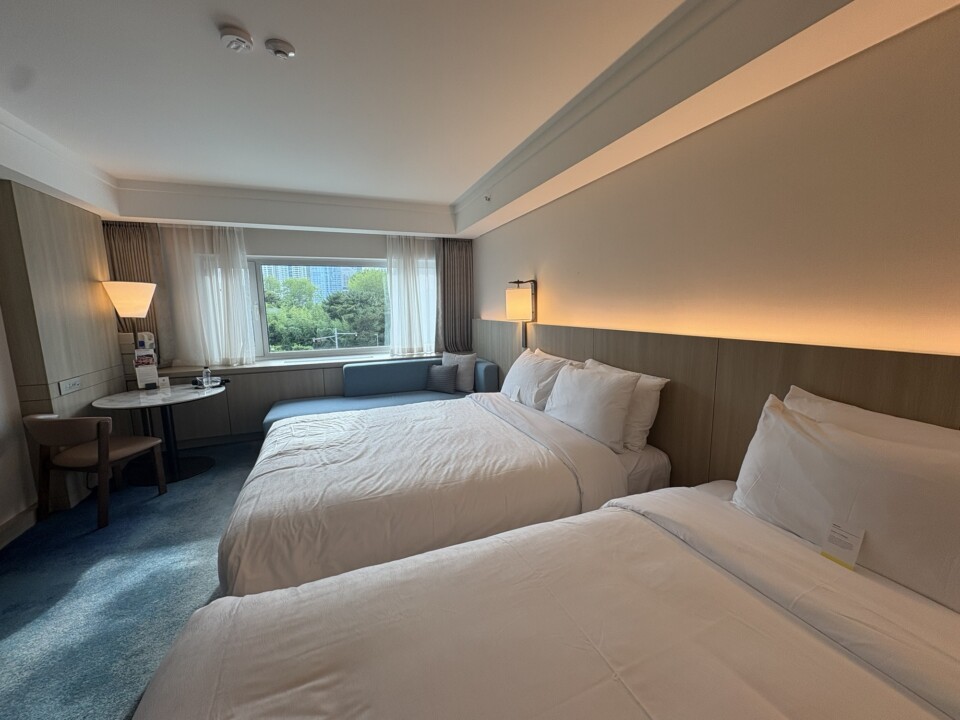
And then there is the bed. The famous Westin sleep survives fully intact in Busan, carrying off a full day’s travel fatigue in one night. A smaller personal pleasure: the scent of the hand and body soap — every visit to the bathroom quietly reminds you where you are staying.
Step outside, and it is the beach
The hotel’s greatest luxury is that Haeundae Beach begins directly in front of it. Drifting down to the sand at a loose end of the day and letting time pass slowly — that is one ideal form of the resort hotel, realized.
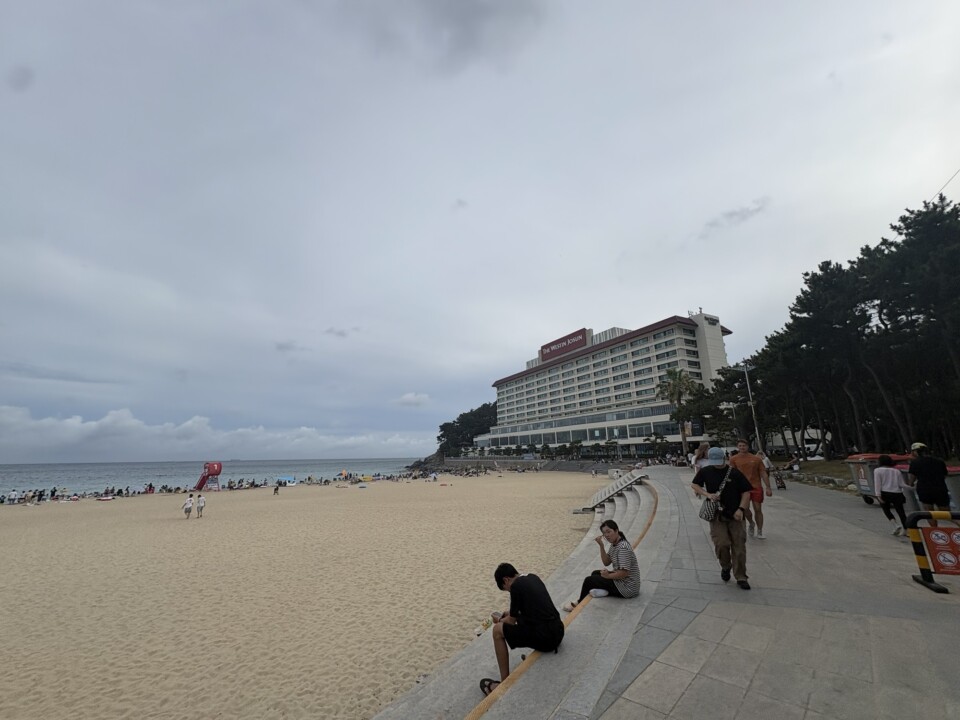
That said — tomorrow we tour Busan by sightseeing taxi, so the lazy talk ends here. Things are about to get busy.
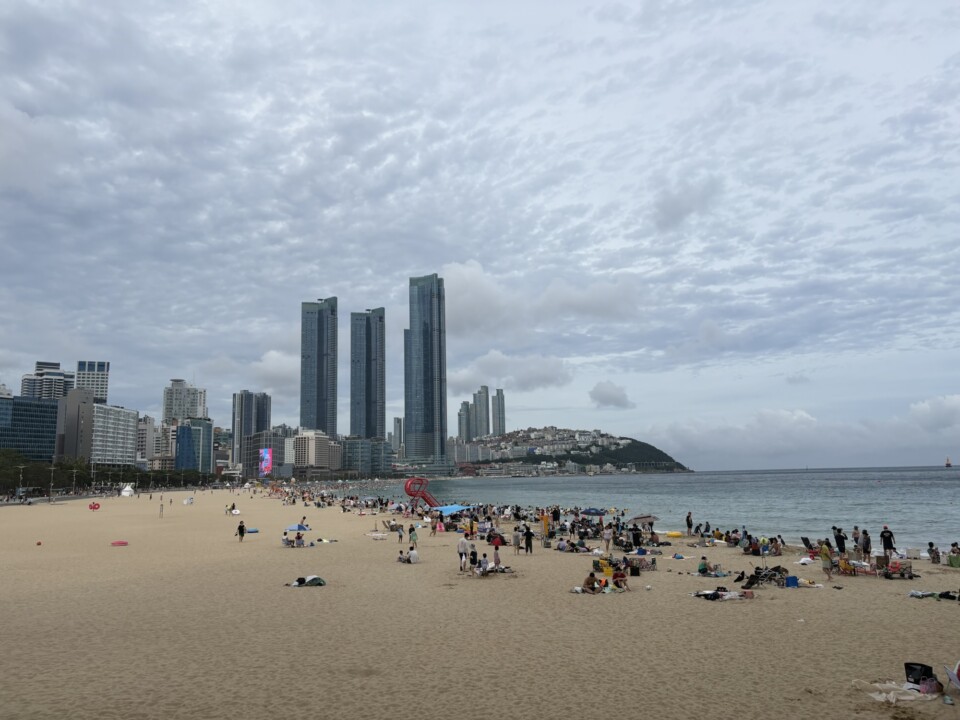
Notes from the day
- The Westin Josun Busan sits at Haeundae Beach’s western end by Dongbaek Island; opened 1978, one of Busan’s historic hotels
- Rooms meet the global Westin standard; the bed and the bath amenities’ scent stand out
- The building’s age shows gently in the plumbing — part of a grand hotel’s character
- Direct beach access is the headline luxury; Blue Line Park and central Haeundae are close
Current rates and details on the official Marriott site. Tomorrow: Busan by sightseeing taxi — next post.
Related: Up the 100th floor at BUSAN X the SKY
Haedong Yonggungsa, a temple on the sea
Day two in Busan was a sightseeing-taxi day, and our first stop was Haedong Yonggungsa. Most Korean temples sit deep in the mountains; this one instead spreads its halls along a rocky stretch of coastline — one of the country’s rare seaside temples.
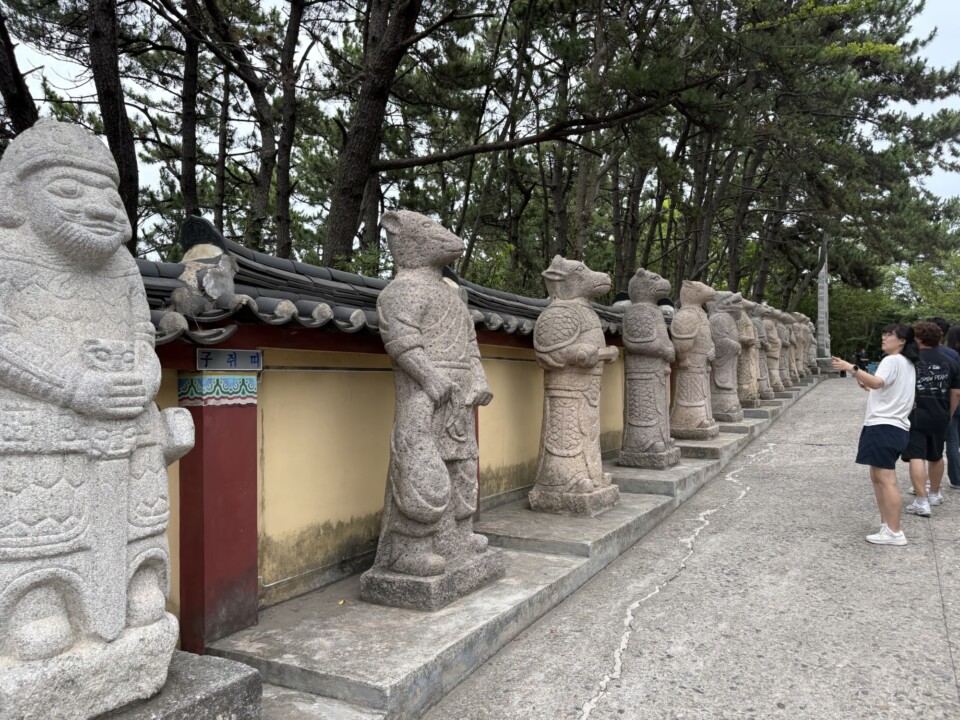
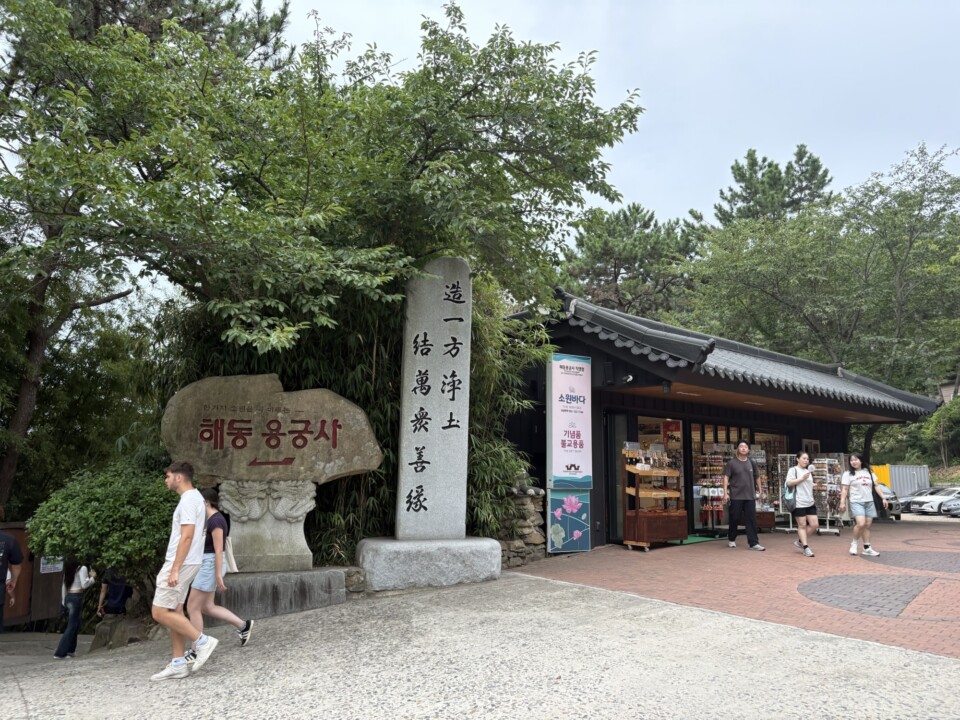
From the dragon’s tail to its head, along the sea
What makes this temple special is that worship here doubles as a coastal walk. We circled the grounds as if tracing a dragon from tail to head, waves breaking on the rocks below the path. It feels less like a temple visit than a promenade over the sea, and every angle composes itself into a picture.
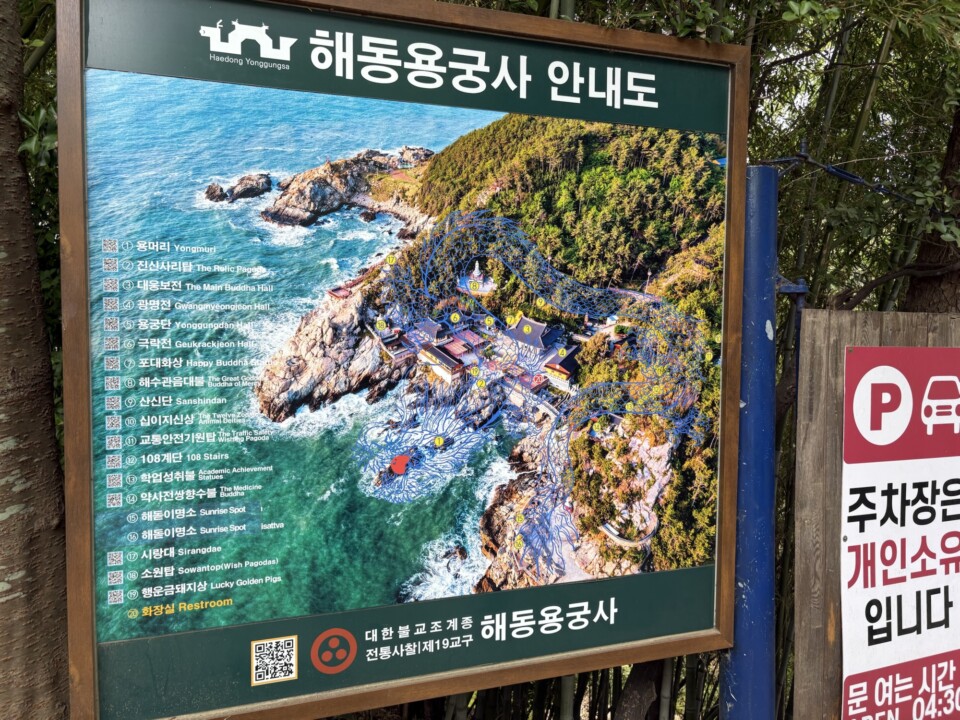
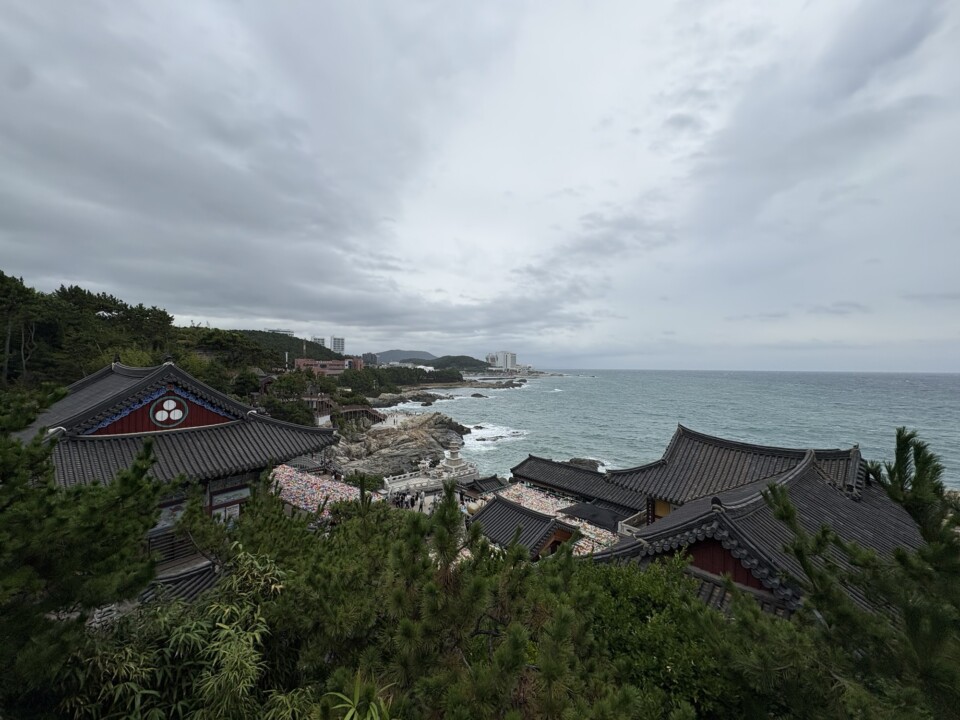
The temple where one wish comes true
Yonggungsa is said to grant one wish, without fail, to those who pray sincerely. I happen to carry one such wish — the same one I make at every New Year’s shrine visit at home. So here too, facing the water, I placed that single wish. Prayers made at a temple far from home somehow feel a shade more serious than the ones made every January.
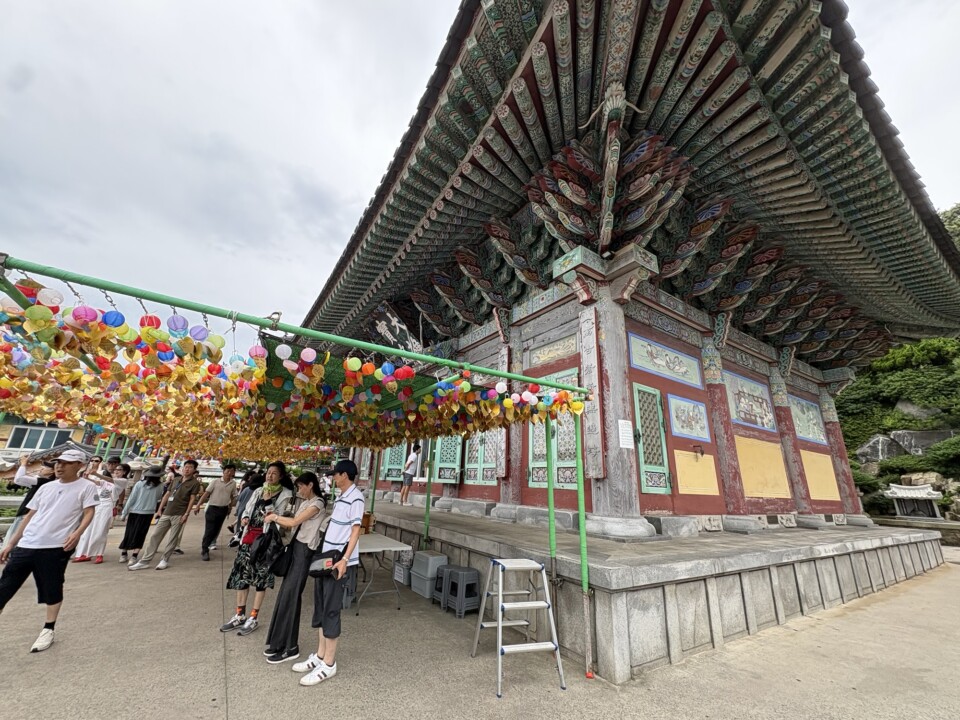
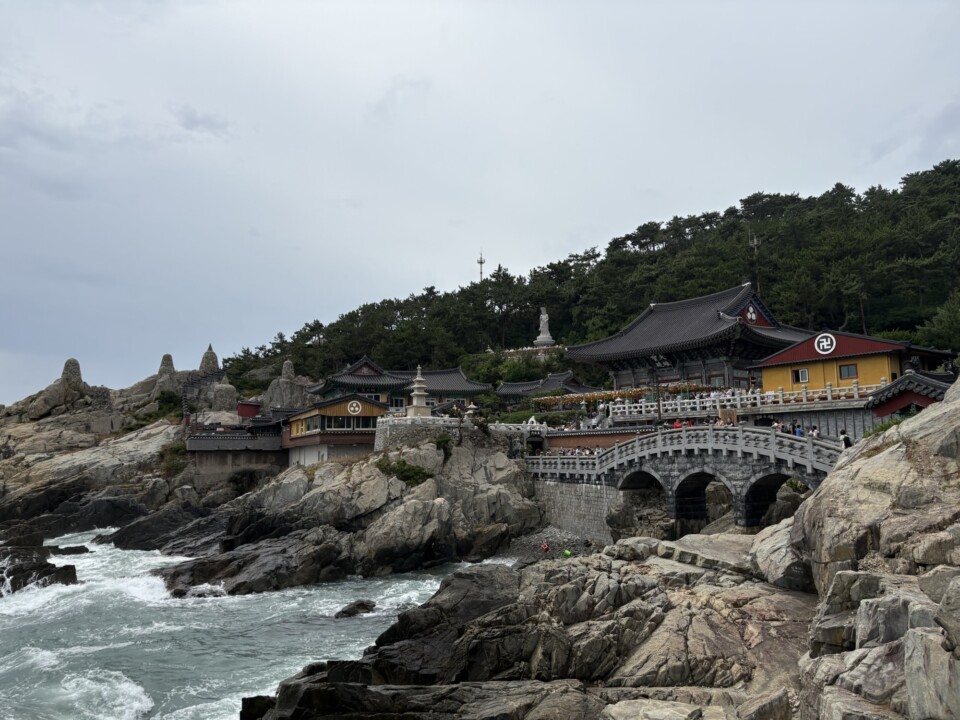
Notes from the day
- Haedong Yonggungsa is an easy taxi ride from Haeundae; the loop walk through the grounds is the experience
- Famed for the saying that it grants one sincere wish without fail
- The rocks-sea-temple scenery photographs beautifully — morning light was lovely
- An ideal first stop on a Busan sightseeing-taxi day (check locally for current visiting details)
We are staying at the Westin Josun Busan. Next, the taxi carried us to a kamado-rice lunch.
Visited in August 2026. Prices and details are as of my visit.
Lunch at a local kitchen: Kosulkosul
Leaving Haedong Yonggungsa, we let our sightseeing-taxi driver steer lunch, and he delivered us to Goseul Goseul Gamasotbap — a kamado-rice restaurant with zero tourist gloss, the kind of place only locals seem to know. In my experience, those are precisely the places that hit.
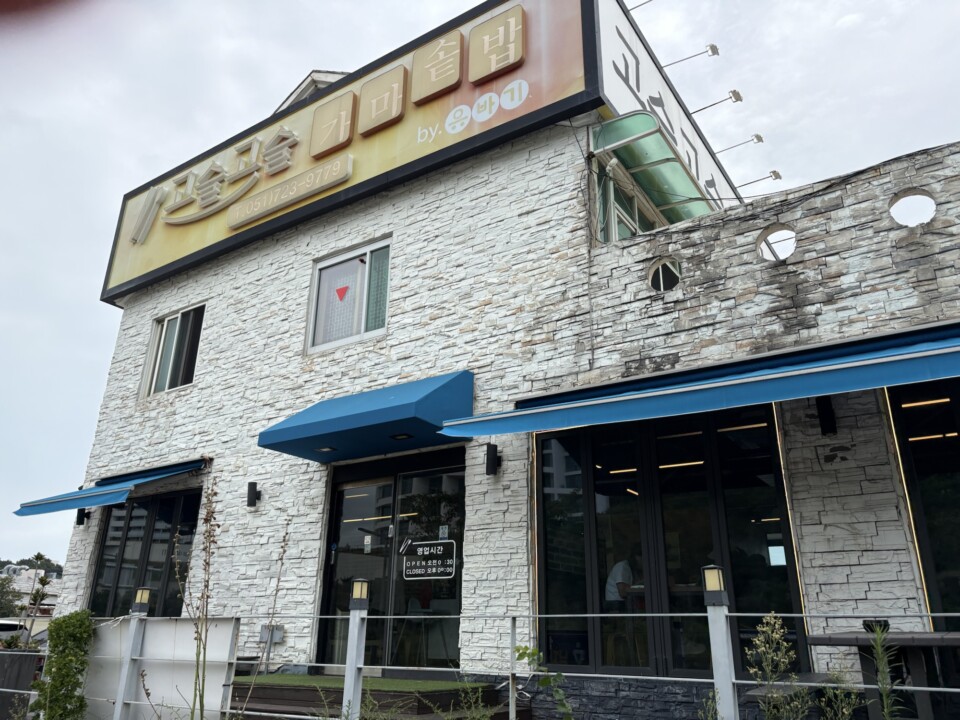
A plate that rewrites your idea of bulgogi
We ordered the bulgogi set and the grilled-fish set. In Japan, bulgogi tends to mean a sweet-savory, oily stir-fry. Here it was another dish entirely — closer to Hokkaido’s jingisukan, where you let the juices released from the grilling beef soak into the vegetables as you eat. You taste both the broth-soaked vegetables and the beef’s own clean flavor.
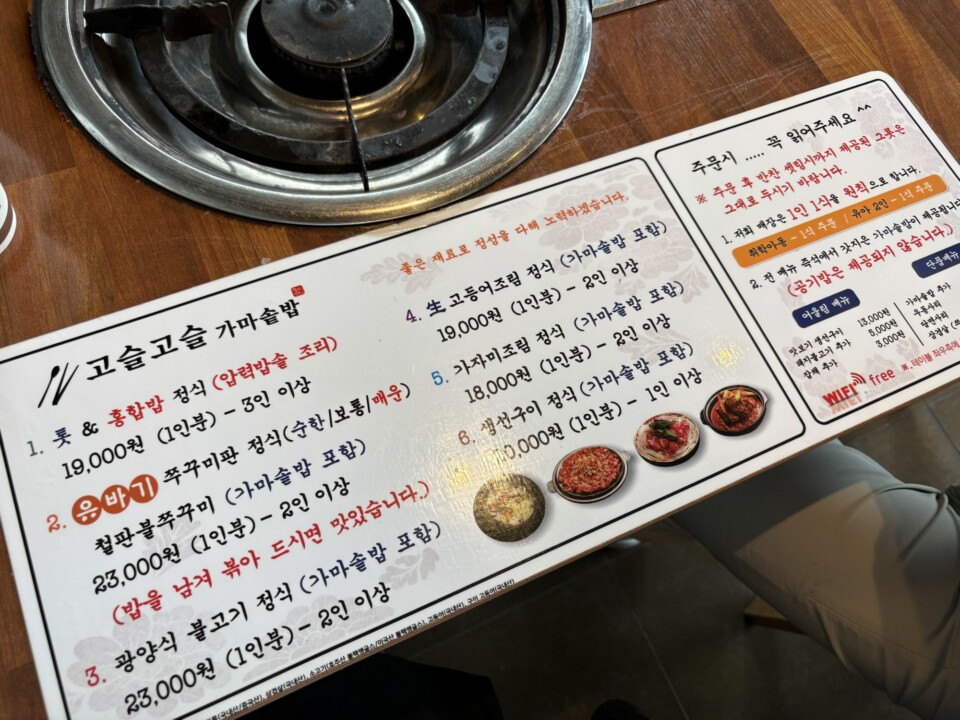
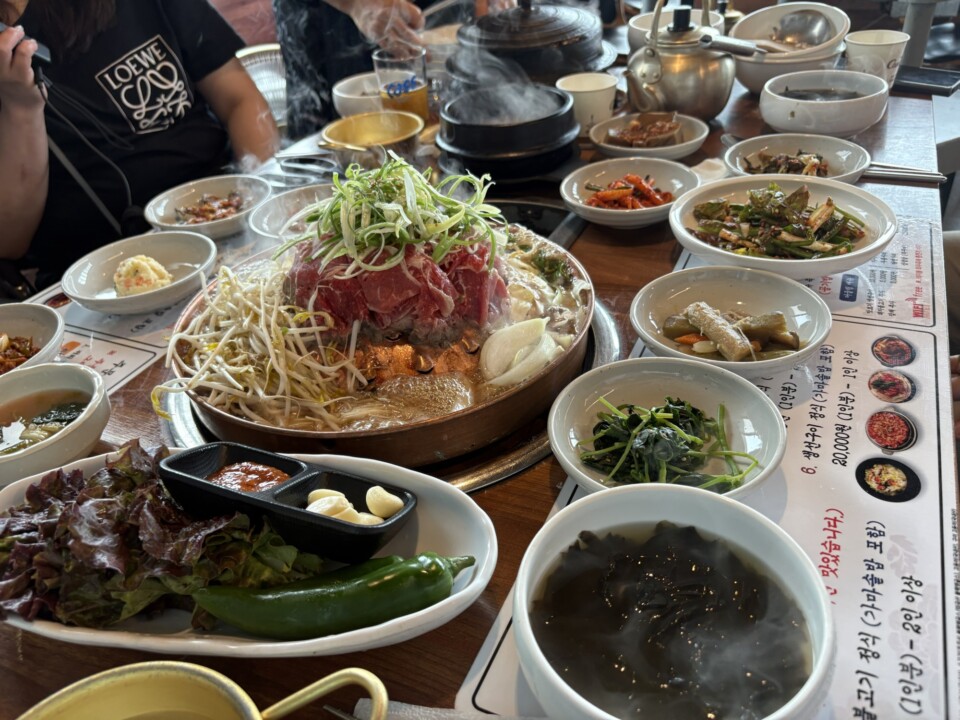
Similar to the Japanese version, and yet decisively not the same. That “alike but different” distance is exactly the pleasure of eating in a neighboring country.
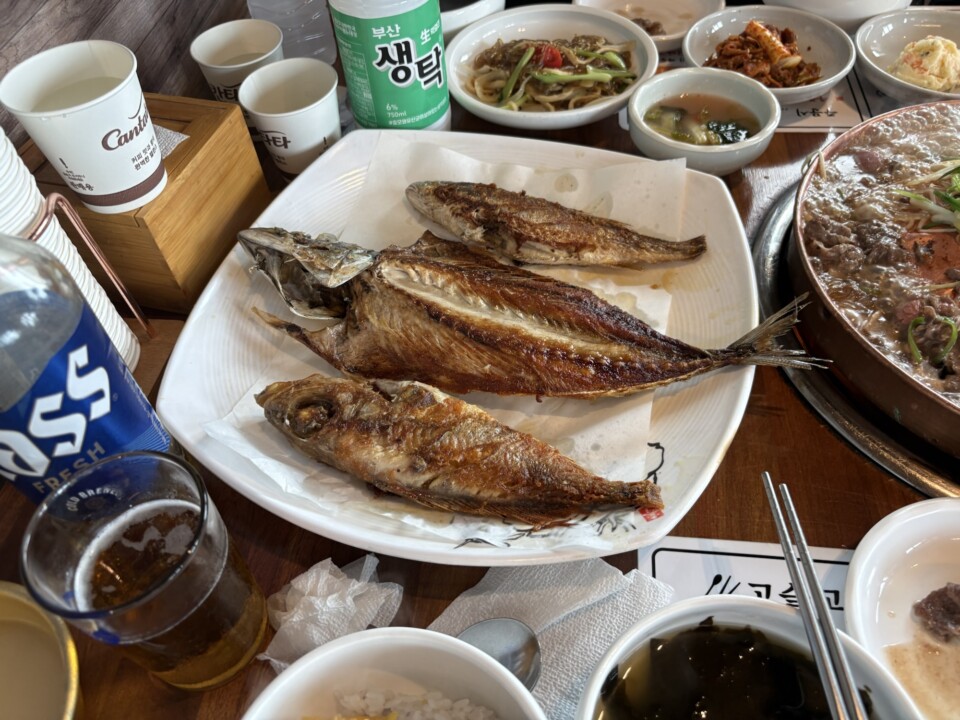
Do not underestimate the grilled fish
The grilled fish deserved its own applause: fresh fish cooked hard enough to pick up an almost fried fragrance at the surface, made for kamado-cooked white rice. Nothing flashy — just a deeply satisfying lunch.
Notes from the day
- Goseul Goseul Gamasotbap: a kamado-rice set-meal restaurant with a local, untouristed feel
- The bulgogi is jingisukan-style — juices soaked into vegetables — unlike the Japanese image of the dish
- The grilled-fish set, fragrant and crisp-edged, pairs perfectly with the rice
- Trusting your sightseeing-taxi driver’s restaurant pick proved a good gamble
In the afternoon we headed toward Nampo-dong — and my first encounter with live octopus at the Sindonga fisheries market.
Visited in August 2026. Prices and details are as of my visit.
A live octopus at Shindonga fish market
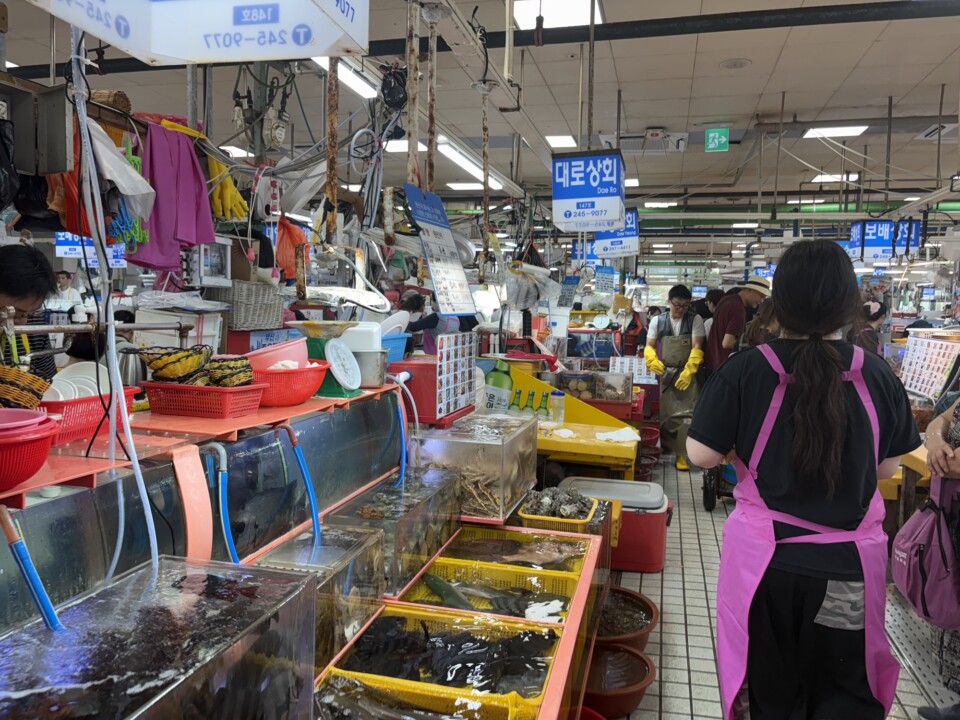
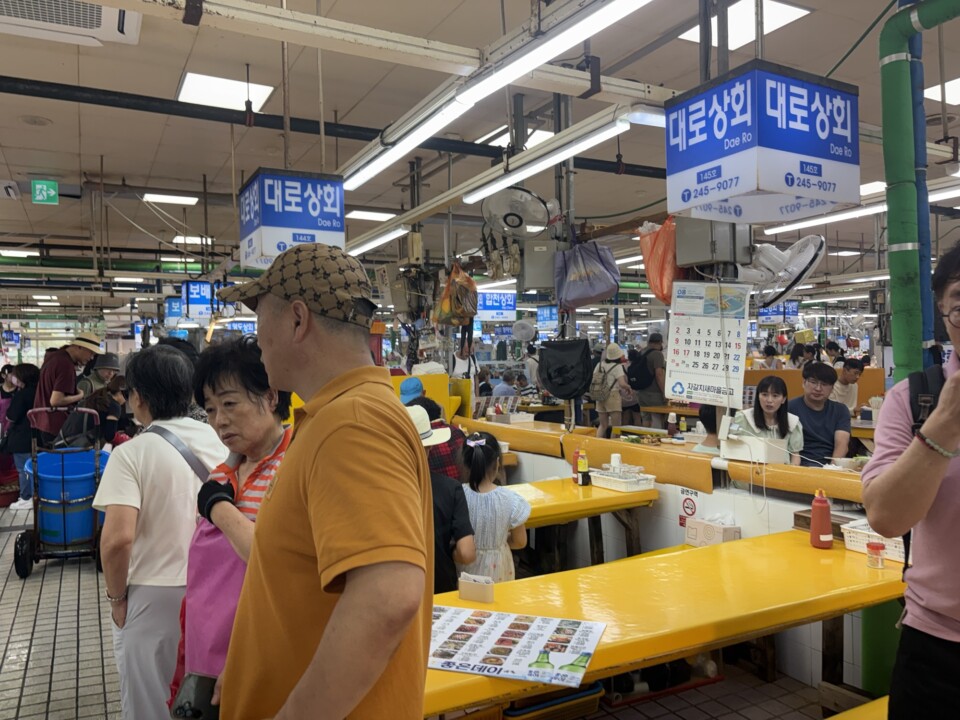
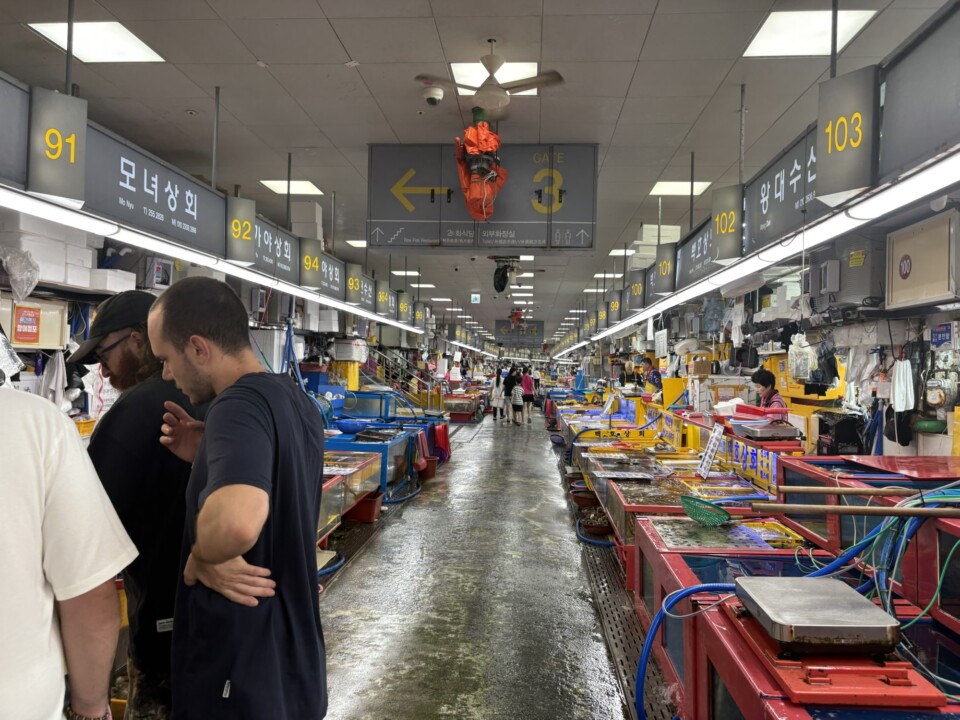
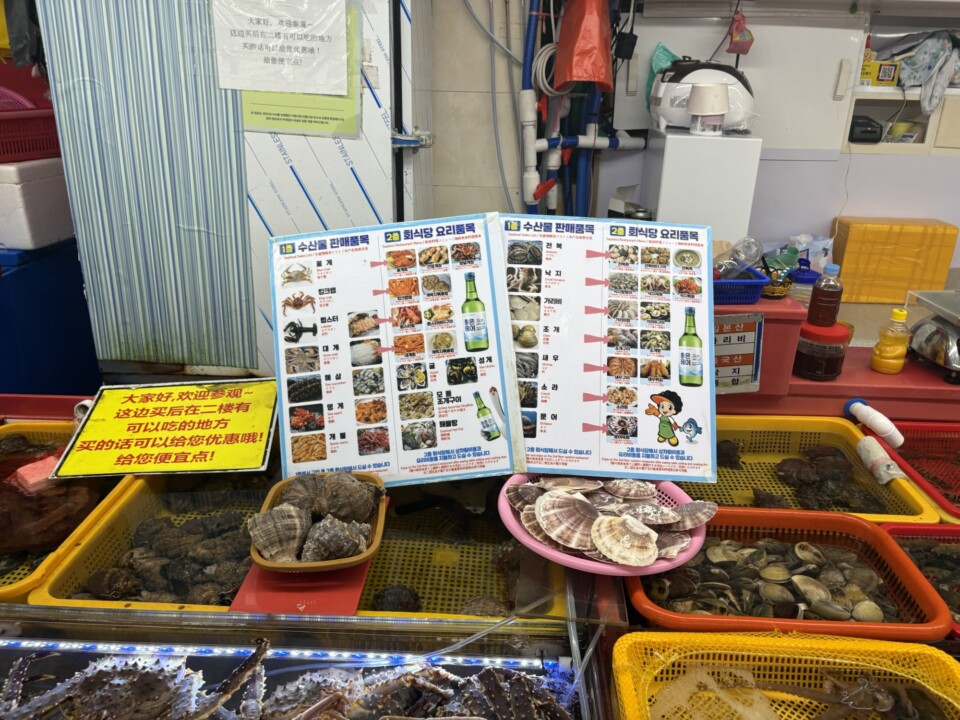
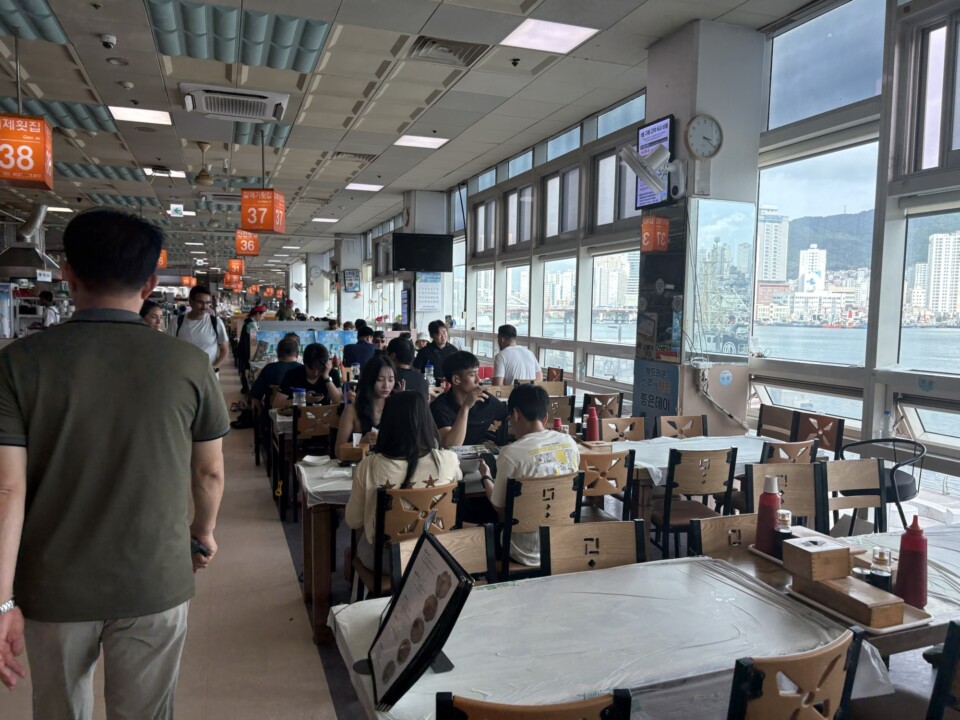
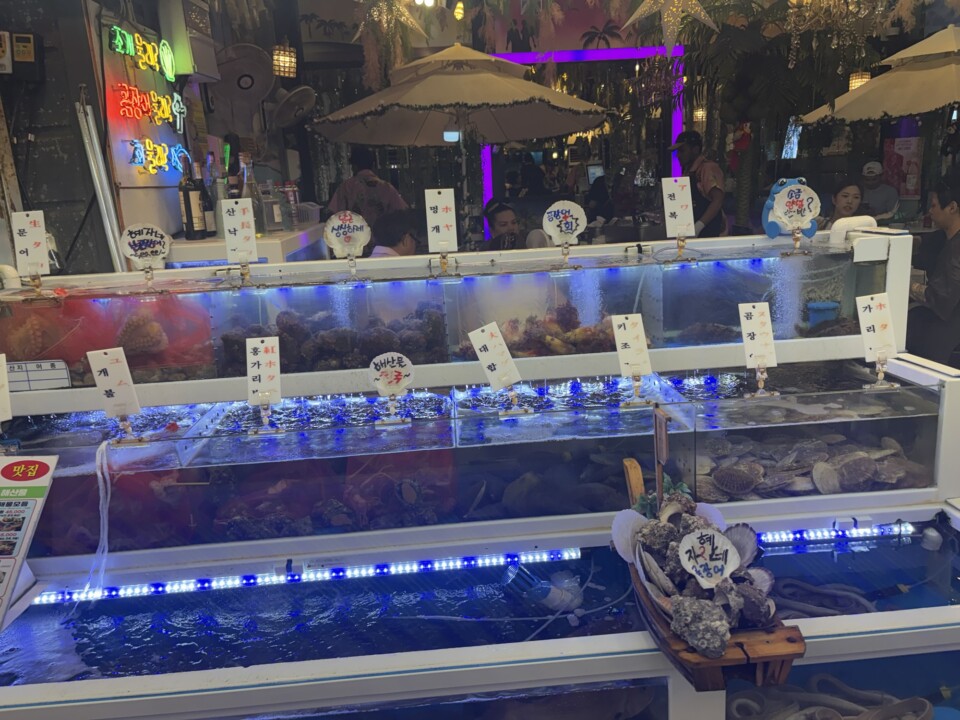
After the kamado-rice lunch, we headed toward Nampo-dong. Next to the famous Jagalchi Market stands the Sindonga Fisheries Wholesale Market, and it was here that I faced one of the highlights of this trip: my first live octopus.
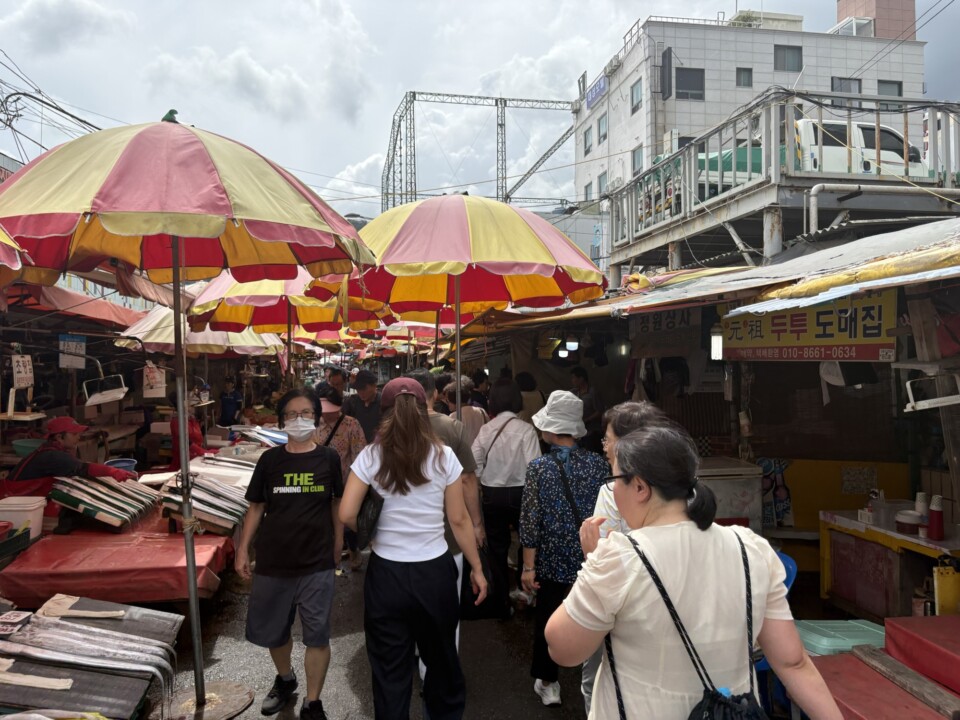
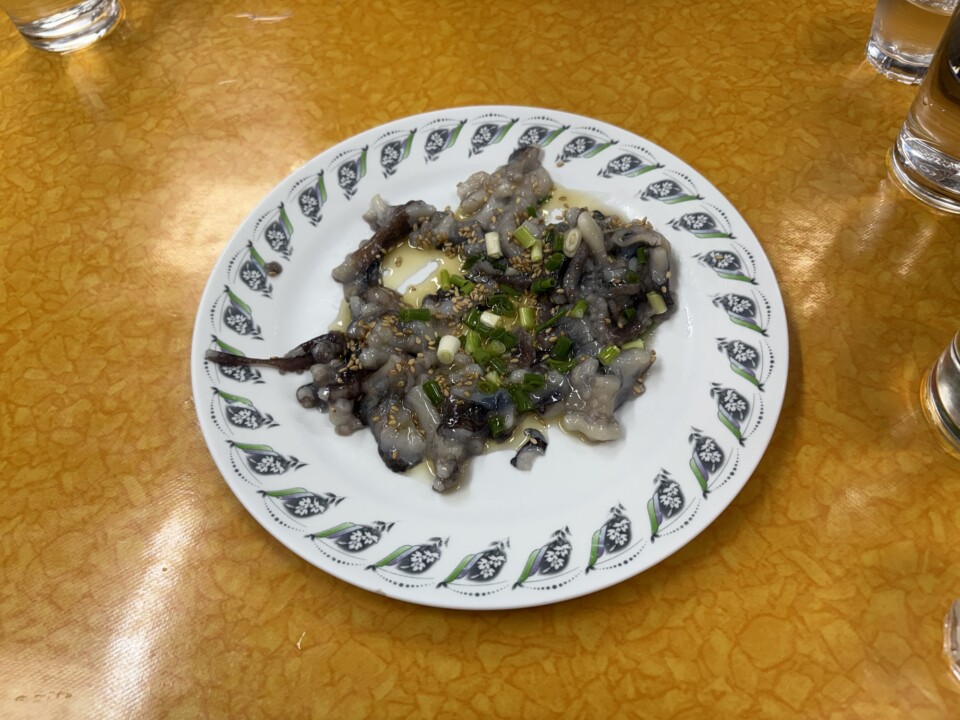
My First Live Octopus
I will be honest — the sight of the pieces still moving on the plate made me flinch. But dipped in the sesame-oil salt sauce, everything changed. Beyond the sensation of suckers gripping the tongue, there is a delicate sweetness and umami that is unmistakably octopus. Umami and sesame oil — the pairing simply works. It was delicious, and I write that without reservation.
Grilled Abalone, and the Sake That Was Not There
The other plate was fresh abalone, grilled and eaten with soy sauce and wasabi. The aroma of the sea, the richness of the liver — it was not cheap, frankly, but it earned its price. My only regret: there was no good sake in the house. Faced with good soy sauce, wasabi, and grilled abalone, a Japanese palate instinctively reaches for a cup of sake that, on this evening, did not exist. Beer had to do.
Notes from the Day
- Sindonga Fisheries Wholesale Market sits right next to Jagalchi Market in Nampo-dong. Pick your seafood live from the tanks and they prepare it on the spot.
- Sannakji (live octopus) pairs beautifully with the sesame-oil salt dip. Chew thoroughly — that is the safe way to eat it.
- Grilled abalone comes with soy sauce and wasabi. Not cheap (market price — confirm before ordering), but worth it.
- Do not expect good sake here. Beer or soju is the realistic companion.
From here, we climb toward the hillside of colorful houses — Gamcheon Culture Village.
Visited in August 2026. Prices and details are as of my visit.
The Blue Line Park is better after dark
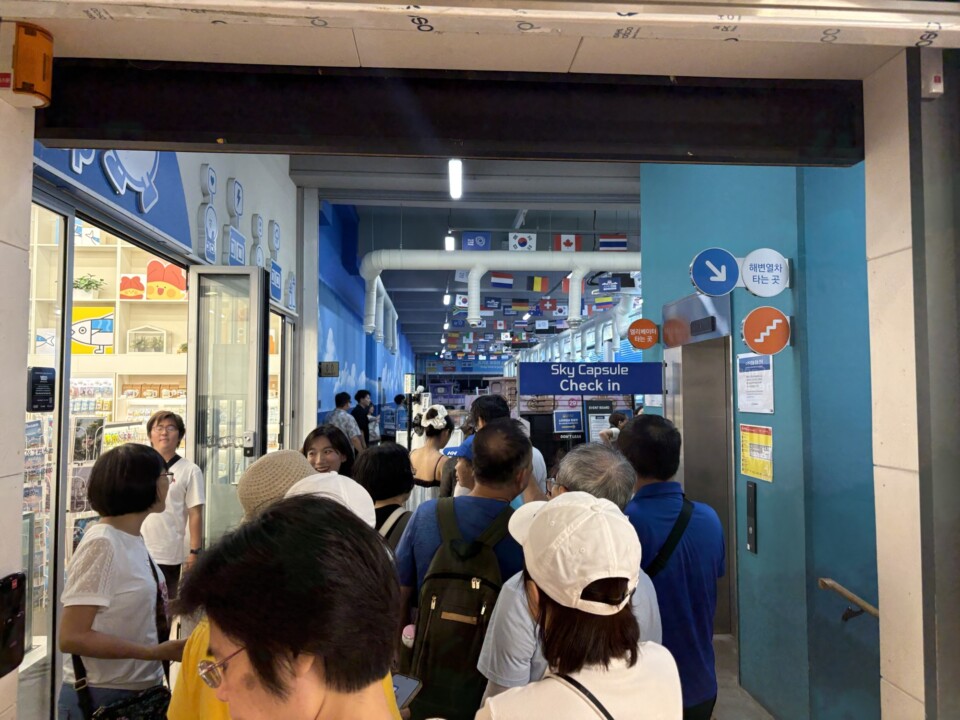
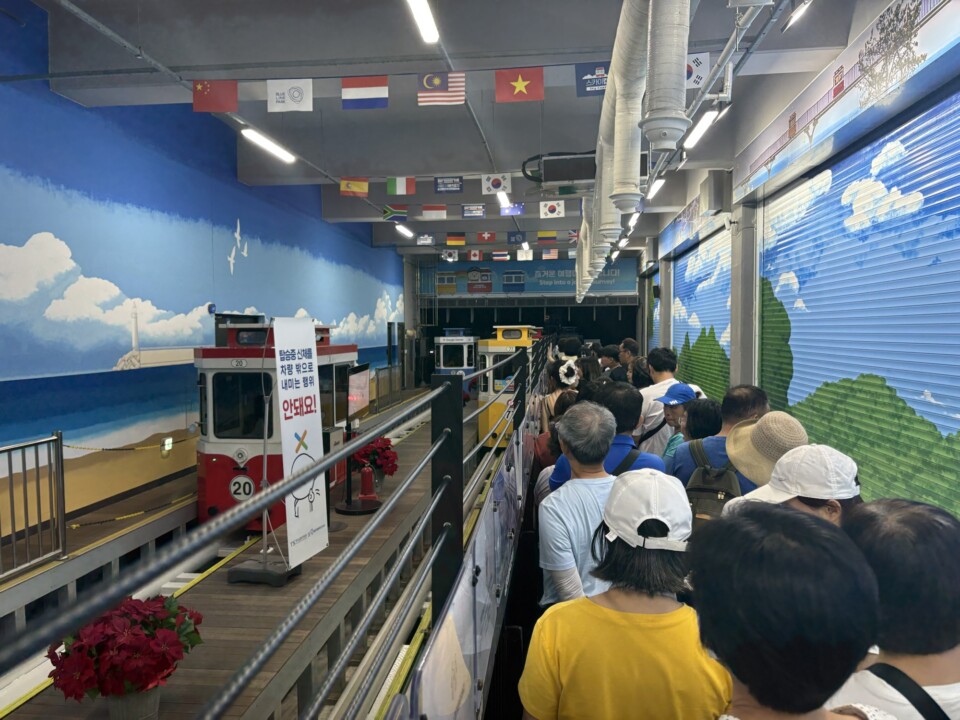
After our stroll through Haeundae Traditional Market came the ride I had been looking forward to: the Haeundae Blue Line Park, a sightseeing train running along the old coastal railway between Mipo, Cheongsapo, and Songjeong. We boarded at Cheongsapo Station.
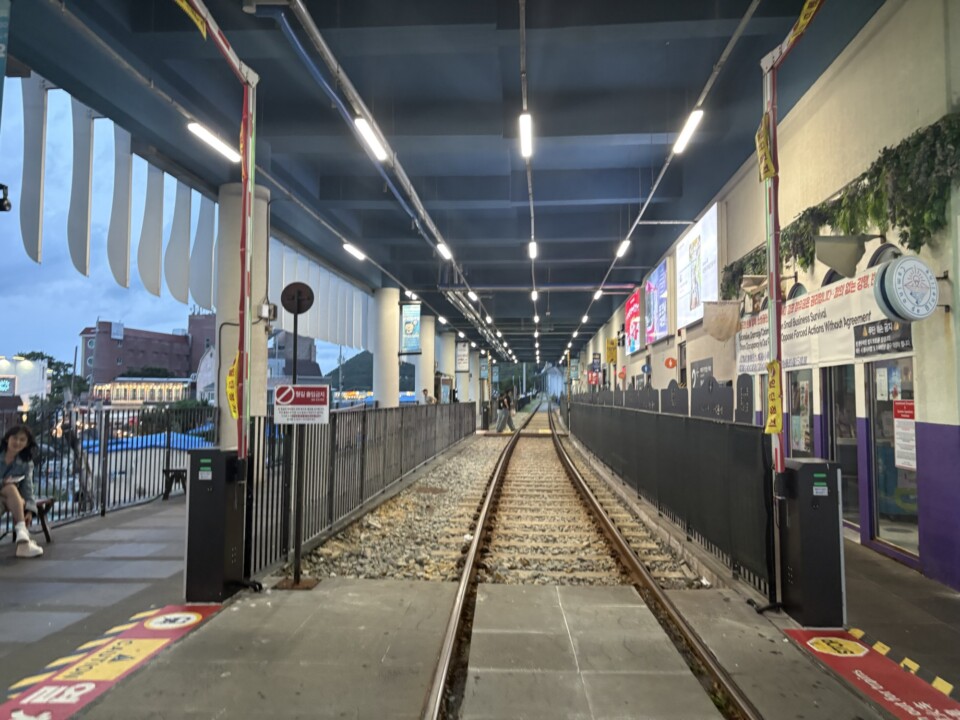
Daytime sold out — so, the 7:30 p.m. departure
The daytime slots were fully booked; what we could reserve was the 7:30 evening run. That meant giving up the postcard promise of blue sea under blue sky — and it turned out to be the better ticket.
The other Blue Line: a night-view machine
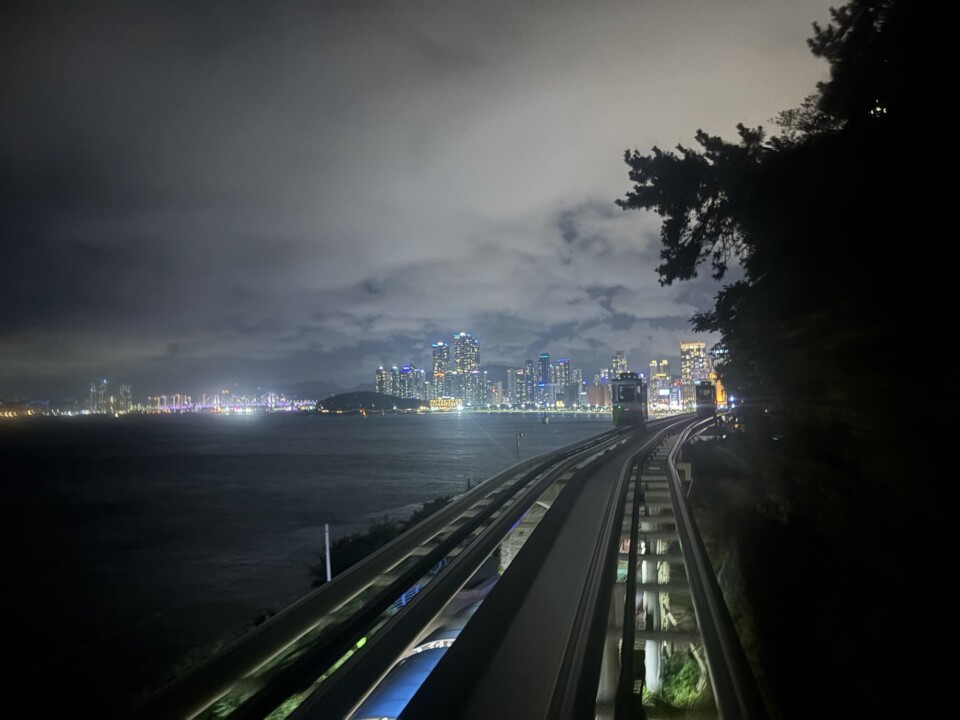
For the first stretch, the windows show dark water and the small lights of breakwaters. Then, as the train nears central Haeundae where the Westin stands, the scene transforms: the lights of the high-rise skyline spilling onto the sea. A quiet cheer actually went up inside the car.
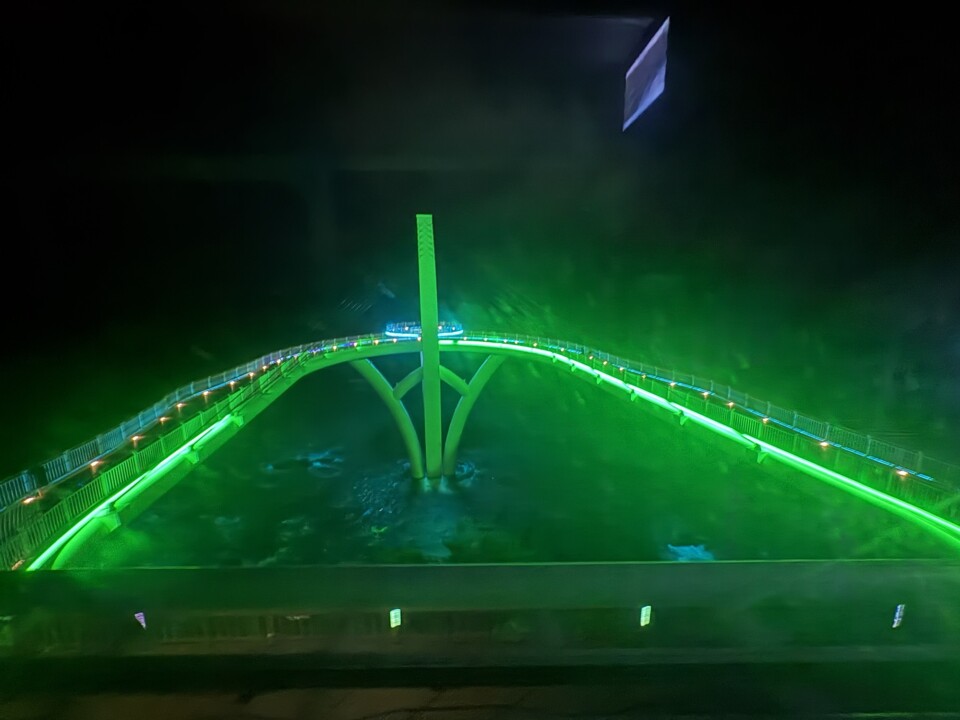
Midsummer Busan taught us something else: the daytime runs would be a battle with heat. After sundown the air turns comfortable, and for summer visits I would actively recommend the evening departures.
Off the train, into the wind
A short walk from the end of the line brought us to the foot of a 100-story skyscraper, where the building wind hit us hard enough to make the whole family laugh. A gale right after a spectacular view — that, too, files itself under travel memories.
Notes from the day
- Blue Line Park runs the Mipo–Songjeong coast; Cheongsapo Station is a boarding option
- Daytime slots sell out — book ahead via the official site
- In summer, evening departures dodge the heat and add the Haeundae night view
- Hours vary by season (summer runs extend into the night); check officially
Schedules and reservations at the official Blue Line Park site. Next: our stay at the Westin Josun Busan.
Nakgopsae at Kemijip, while our daughter did her homework
The biggest piece of homework we carried to Busan got collected on night one. Back at a Korean restaurant in Yokohama, our daughter had ruled: “you have to try the real thing.” In Busan, the real thing means nakgopsae — and we went straight to Gaemijip, the venerable specialist’s Haeundae branch, a short walk from Haeundae Station.
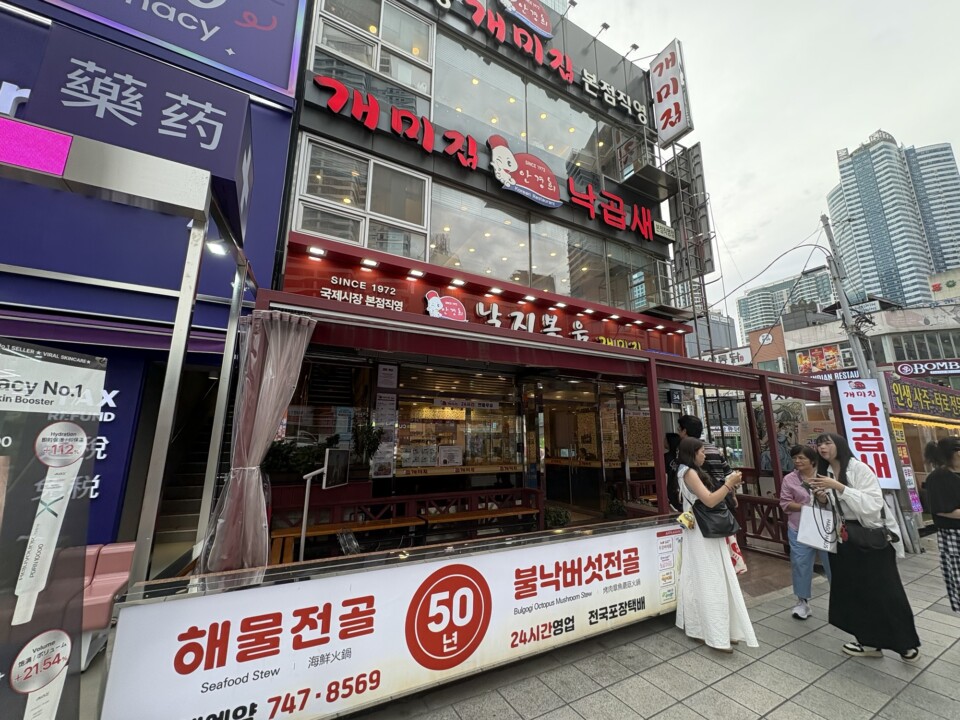
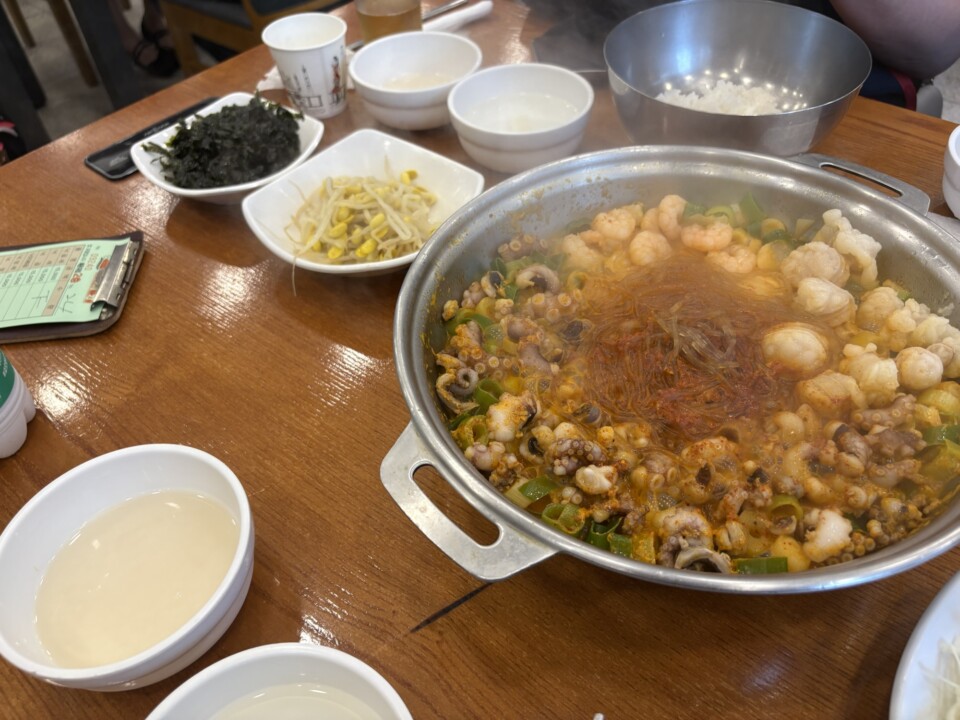
Nakgopsae: a trio of octopus, beef intestine, and shrimp
Nakgopsae is Busan’s own creation: octopus (nakji), beef intestine (gopchang), and shrimp (saewoo) simmered together in a fiercely spicy broth — the name simply strings the three ingredients together. Somewhere between a stew and a stir-fry, it produces a broth in which all three flavors collapse into one, and that broth is terrifyingly good over white rice.
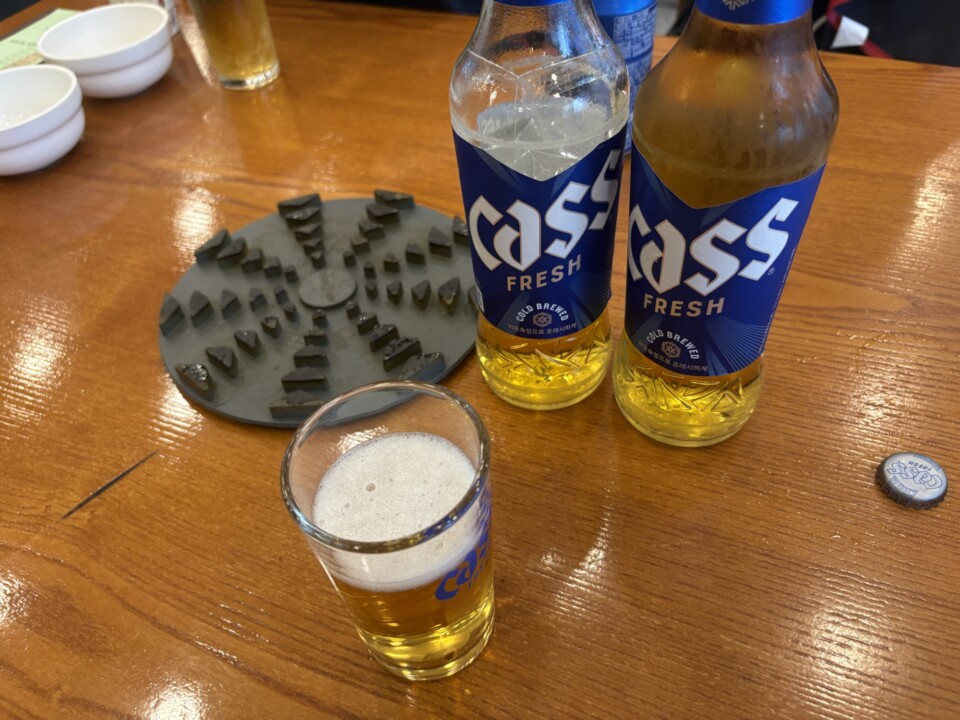
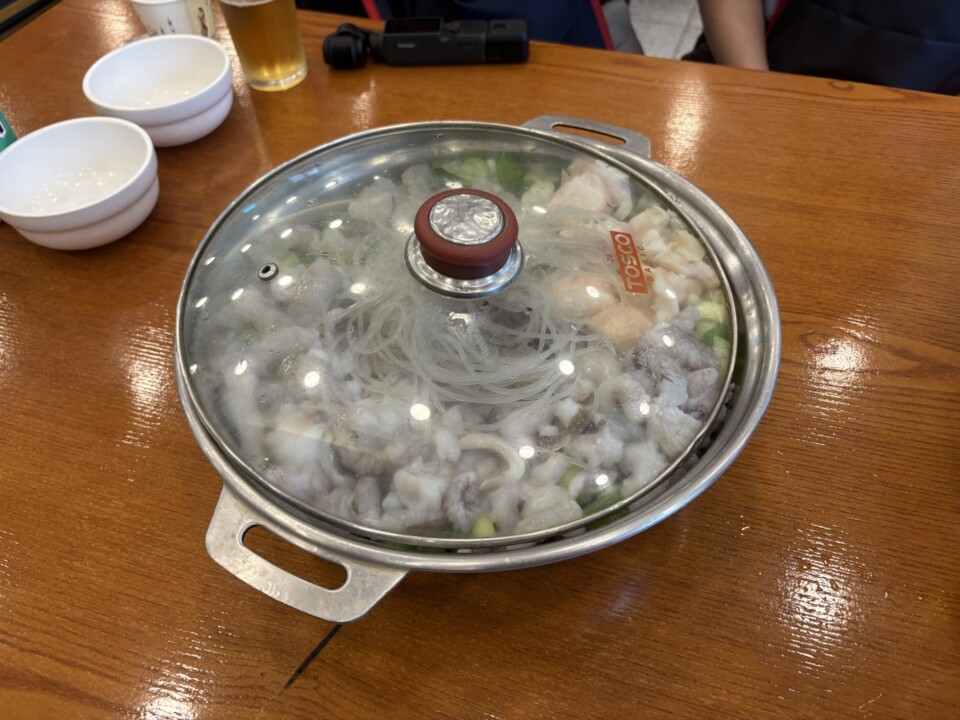
Delicious. But spicy. Relentlessly spicy
Let me be honest: this was a deliciousness I had never met in Japan. It was also hot. Punishingly hot. I negotiated with the side dishes — bean sprouts, sheets of seaweed — and my mouth burned anyway. And yet the chopsticks would not stop. That contradiction, pain and pleasure in the same spoonful, is precisely the addiction of nakgopsae.
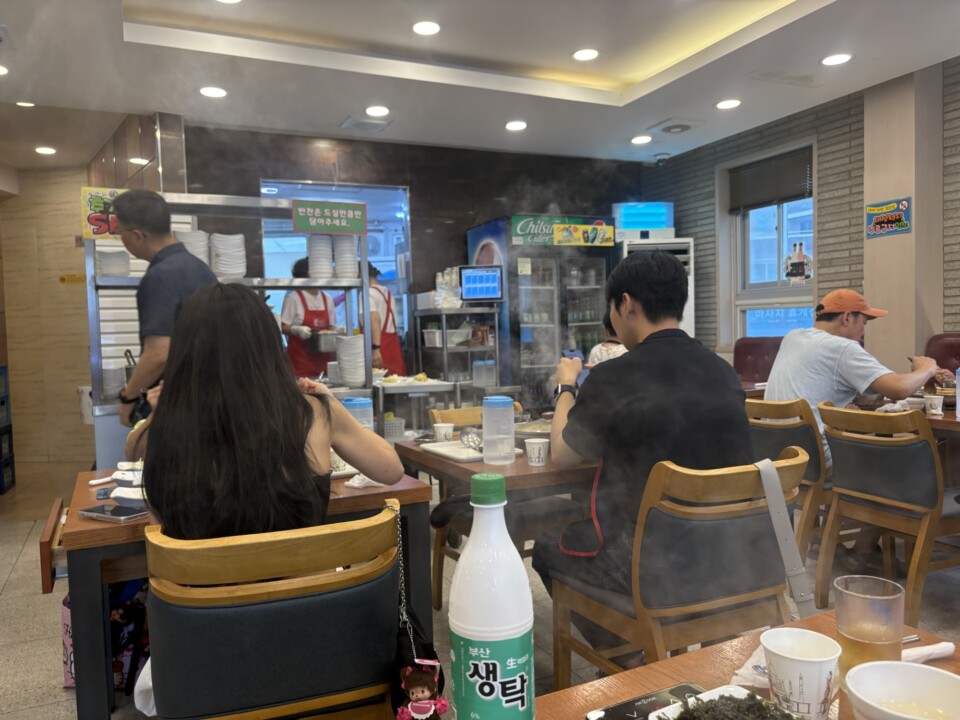
The local method is to ladle it over a big bowl of rice with the seaweed and sprouts and eat it bibimbap-style — the broth-soaked rice may be the true main course. Most shops let you choose a spice level when ordering; unless you are confident, start mild. It will still be plenty hot.
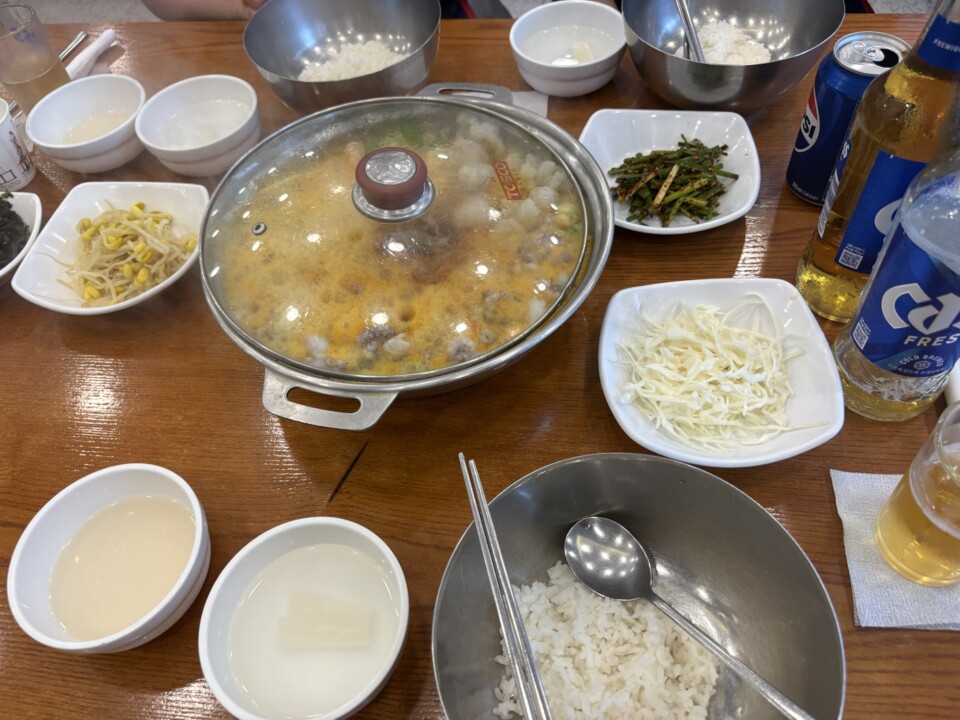
Grading the homework
Our daughter’s “real thing” does exist. It is rougher and more direct than anything we ate back in Yokohama — a different animal altogether. Would I tell you it is worth flying to Busan for? Without hesitation. Eat it once, at least.
Notes from the day
- Gaemijip Haeundae (direct branch of the Gukje Market original), minutes on foot from Haeundae Station (Metro Line 2)
- Nakgopsae = octopus, beef intestine, and shrimp in spicy broth; eat it mixed over rice, local-style
- It is seriously spicy — use the bean sprouts and seaweed, and order the milder level unless you are sure
- Gaemijip traces back to 1972; check locally for current hours
The road to Busan starts from the Gimpo transfer chapters. Next: the avenue outside and Haeundae Traditional Market.
After dinner: a walk through Haeundae Traditional Market
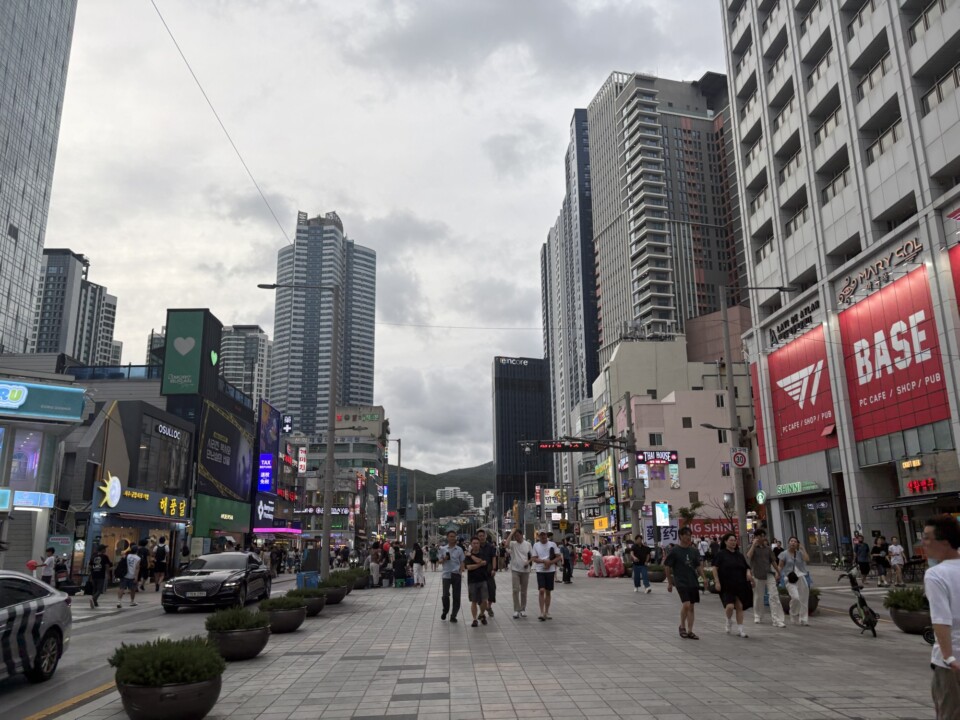
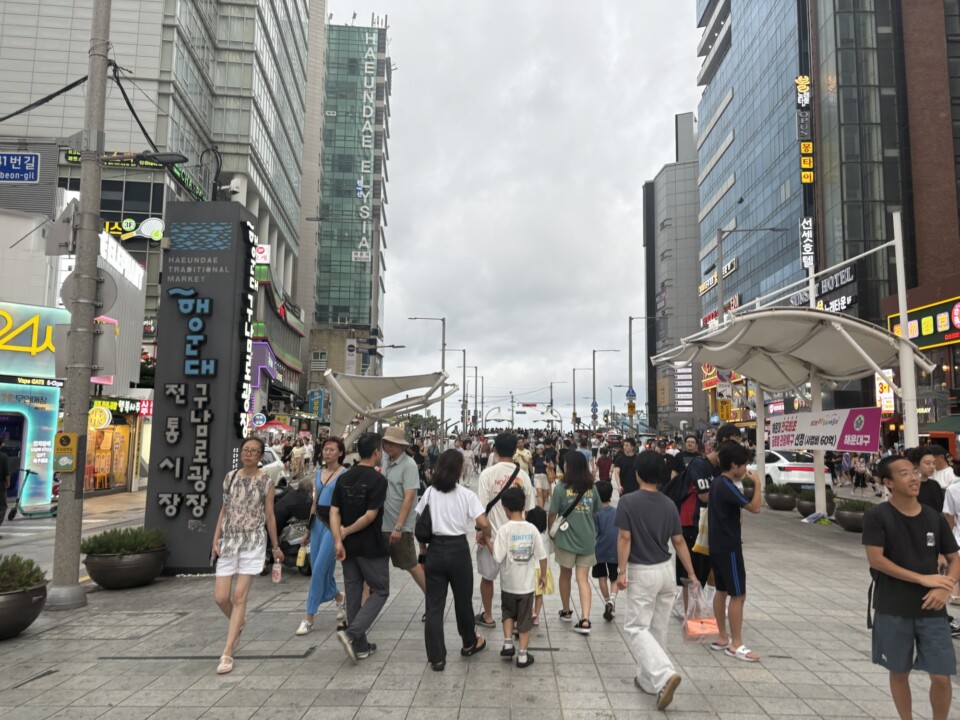
After doing battle with the heat of nakgopsae at Gaemijip, we walked it off along the avenue outside. Haeundae’s main street runs warm well into the night, locals and travelers mixed in equal measure.
Down a side street: Haeundae Traditional Market
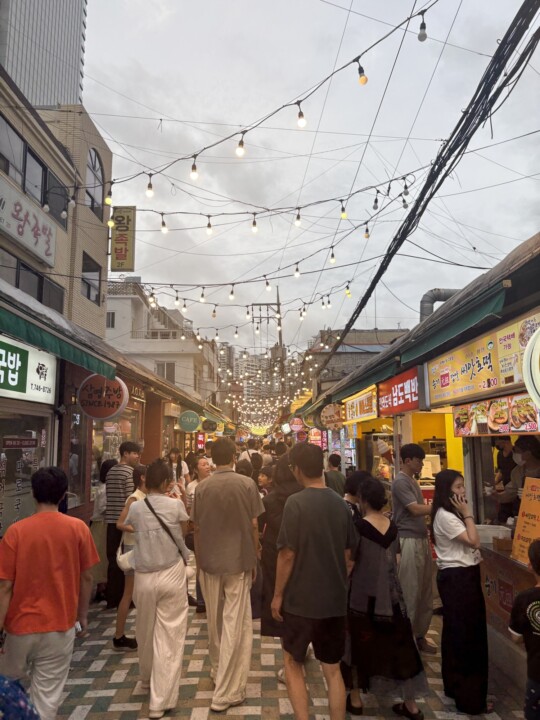
The best find of the night sat just off the main drag: Haeundae Traditional Market. Under its arcade, shops crowd shoulder-to-shoulder like street stalls — seafood, fried snacks, desserts, everything at once. Simply walking through, you are met by waves of steam, aroma, and vendors’ calls.
Like strolling Kamakura’s Komachi-dori
The nearest comparison I can offer is the pleasure of walking Komachi-dori in Kamakura: temptation every few meters, everyday local life and holiday high spirits sharing one narrow lane. Haeundae is more than its beach-resort face — this market lets you taste both of its identities in a single stroll.
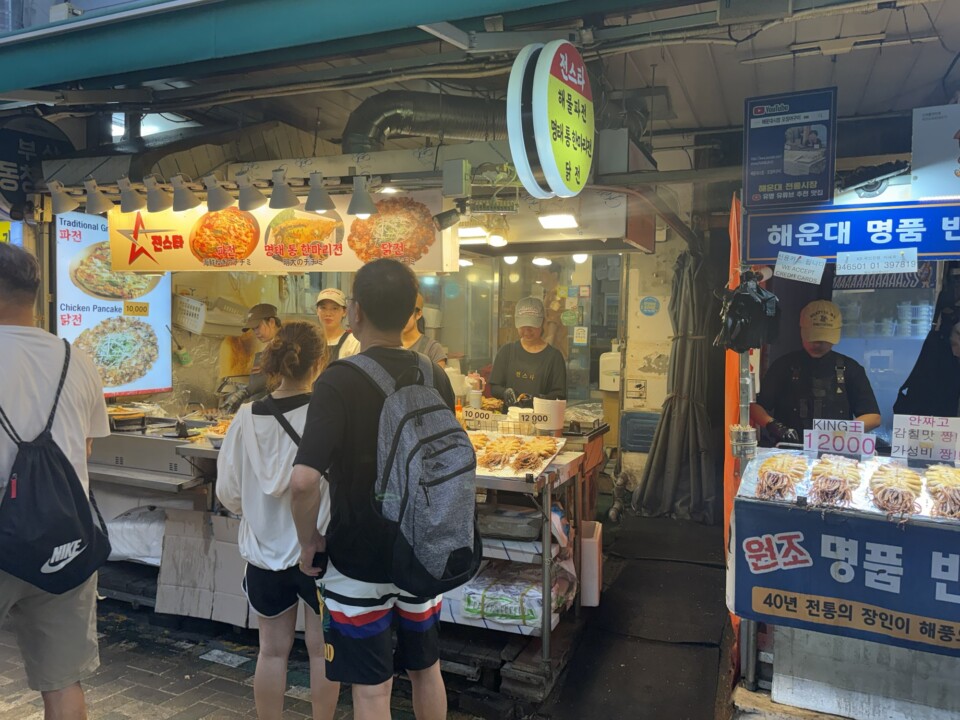
Busan is, after all, a city of markets — Gukje Market in Nampo-dong and the seafood halls of Jagalchi are the famous names. What Haeundae Traditional Market offers instead is ease: it sits within walking distance of the beach, letting you fold thirty minutes of market heat into a resort day without any real logistics. For a first, effortless brush with everyday Busan, start here.
Notes from the day
- Haeundae Traditional Market is an arcade market just off the main street
- Seafood, fried snacks, and desserts line up stall-style — built for grazing
- The vibe recalls Kamakura’s Komachi-dori; perfect as an after-dinner walk
- Lively at night, but individual shops keep their own hours — earlier is safer
Later that night came the Haeundae Blue Line Park night ride — that story is next.
Day three, morning: dwaeji gukbap at Eom Yong Baek
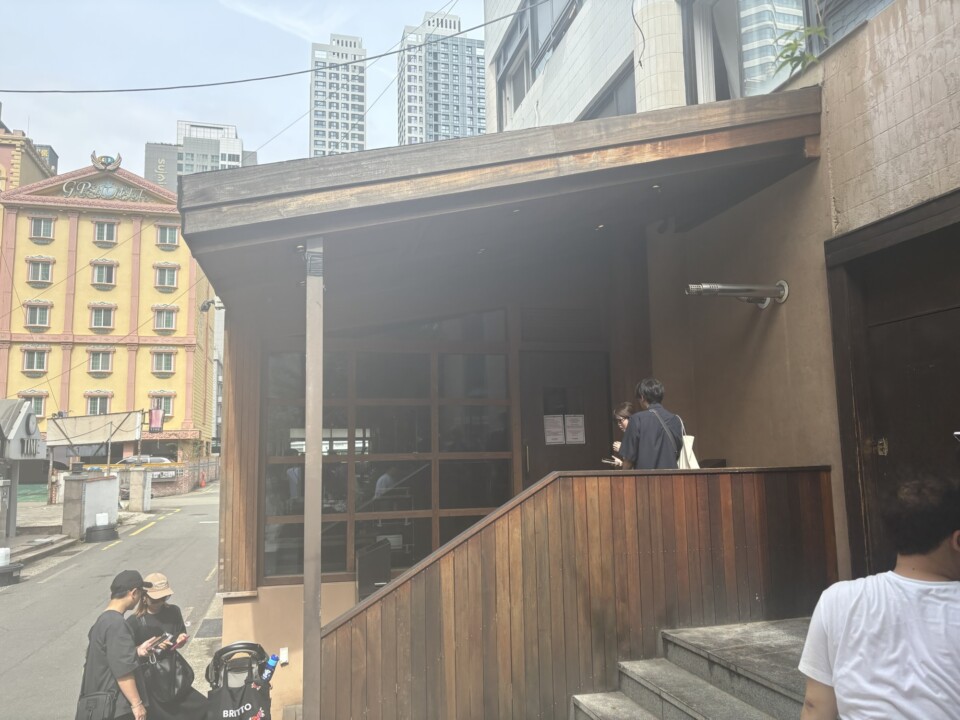
Morning of day three in Busan. We went back to Eom Yong Baek, where we had grilled pork the night before — this time for the dish on the sign. A restaurant that advertises the “ideal dwaeji gukbap” does not get to send me home without a verdict.
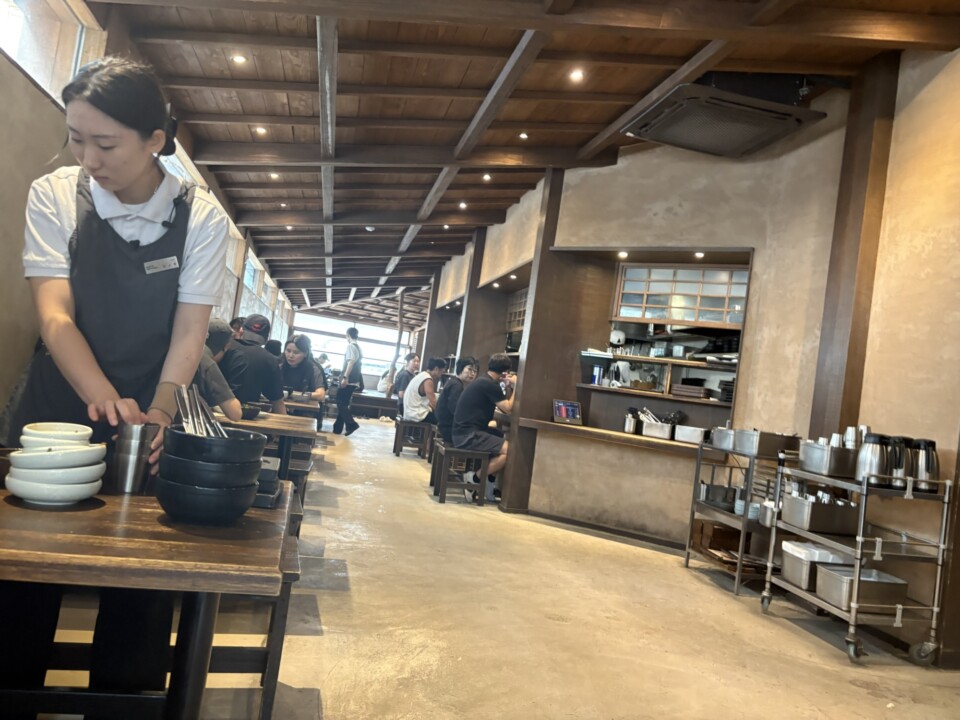
A Clear Broth You Raise Yourself
The gukbap arrived looking nothing like the cloudy pork soup I had imagined: rice resting in a perfectly clear, composed pork broth. The first spoonful, frankly, is mild. Then you realize this is not a finished dish but raw material. Add kimchi, scoop the meat, stir in the condiments, and the salt and umami build layer by layer. At some point I stopped talking entirely and simply ate until the bowl was empty.
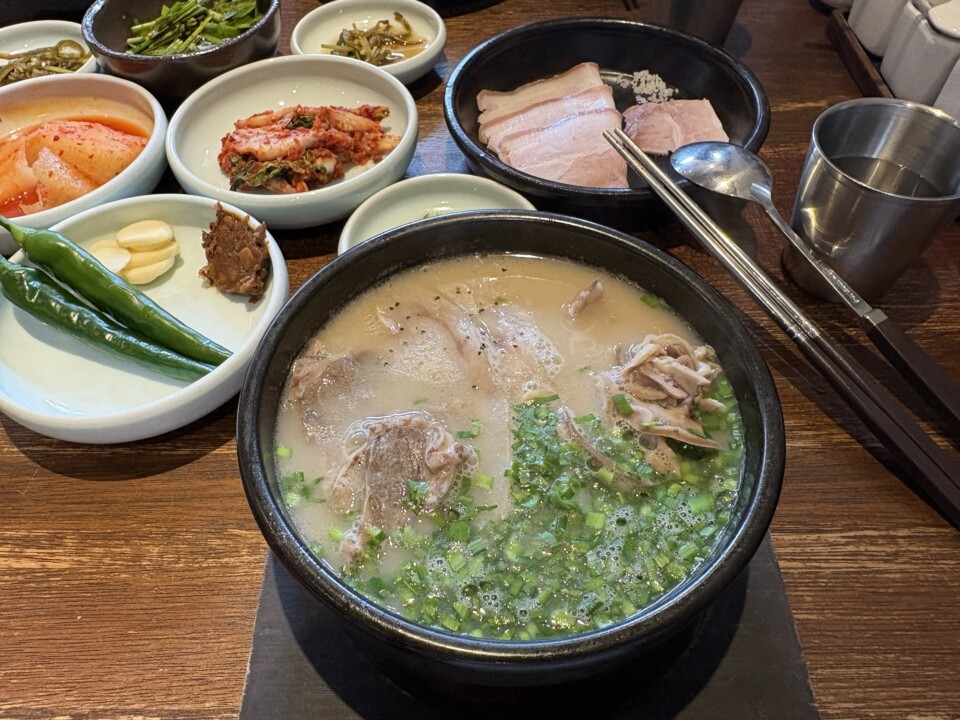
The Supporting Cast: Suyuk and Soy Noodles
On the side: a platter of suyuk — boiled pork, gently seasoned so the meat’s own sweetness leads — and kanjang guksu, thin warm noodles in a soy broth that works as a palate cleanser. Alternating between them and the soup, I kept circling back for one more spoonful. A very good morning’s work.
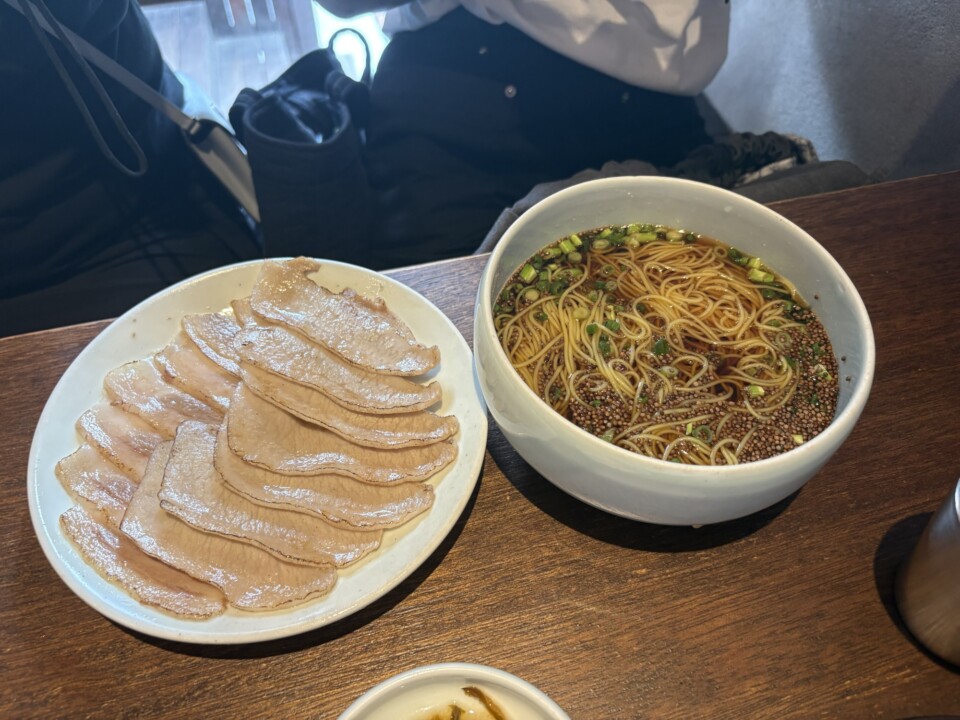
Notes from the Day
- Eom Yong Baek Haeundae specializes in dwaeji gukbap (pork and rice soup) and opens in the morning, making it a solid breakfast option (check hours before visiting).
- The broth is the clear type, not milky. It starts mild by design — build it up with kimchi, meat, and condiments as you go.
- The suyuk (boiled pork) platter and kanjang guksu (soy-broth noodles) make popular companions.
- Our previous night’s grilled-pork dinner at the same place is here — same restaurant, entirely different face.
Breakfast done, we drive north to Gyeongju — the thousand-year capital of the Silla kingdom.
Visited in August 2026. Prices and details are as of my visit.
Related: BIFF Square to Bupyeong Kkangtong Market
Driving from Busan to Gyeongju: the expressway service areas
Fueled by the morning dwaeji gukbap, we drove out of Busan toward the ancient capital of Gyeongju. Along the way we pulled into an expressway rest stop — Oedong (King Munmu) service area, Pohang direction — mildly curious what a Korean service area would look like.
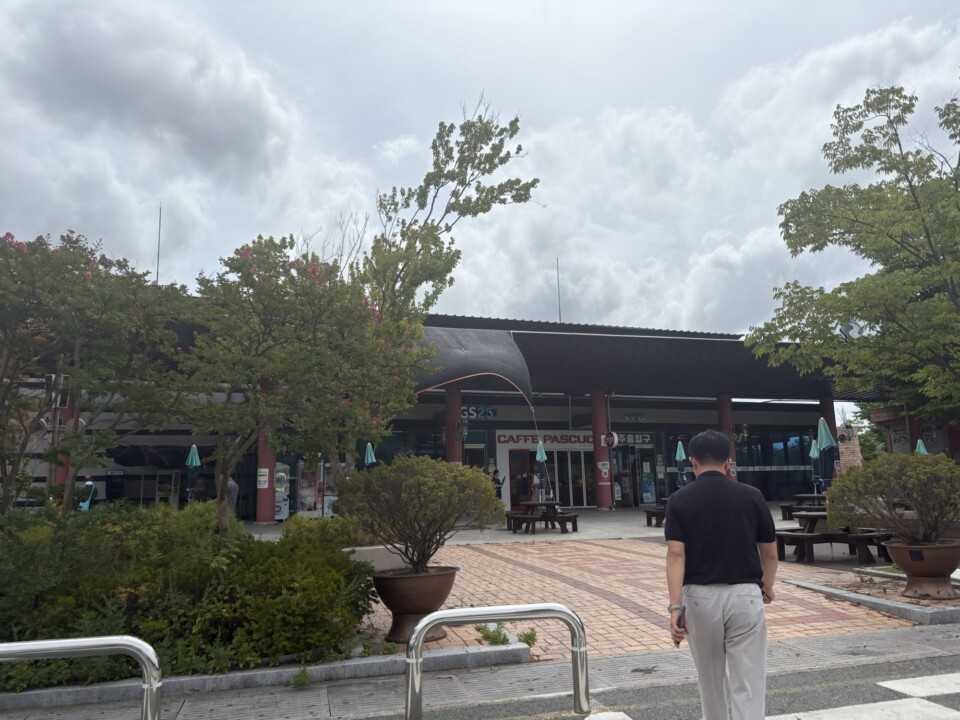
Verdict: Almost Exactly Like Japan
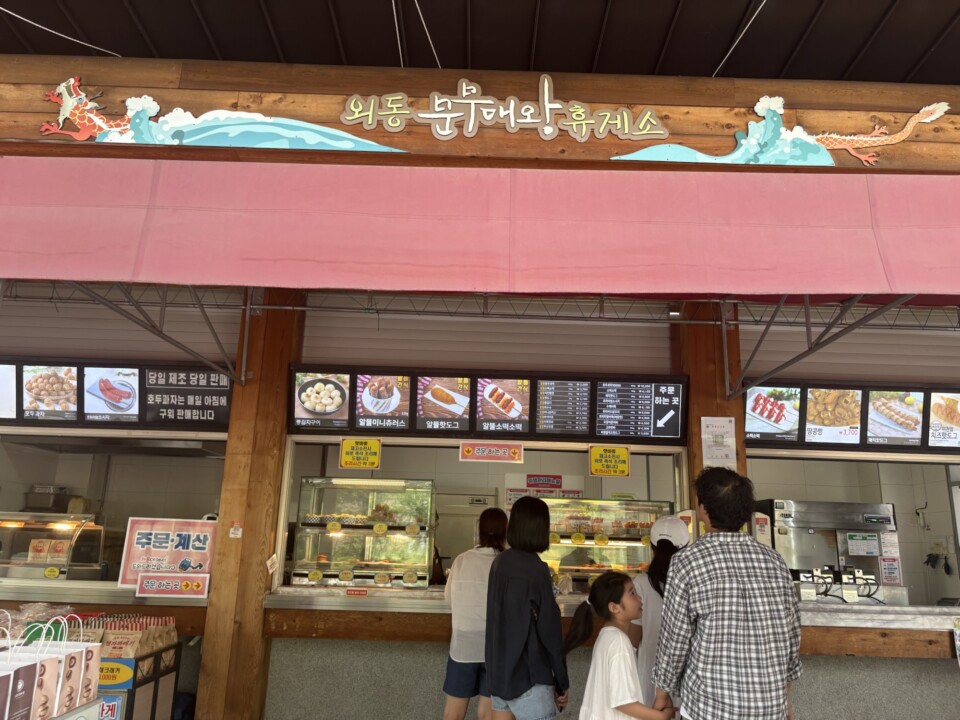
The verdict came fast: it is remarkably similar to a Japanese service area. There is a food court, a cafe, a convenience store (GS25), souvenir stalls, and a row of outdoor snack stands. Only the contents differ.
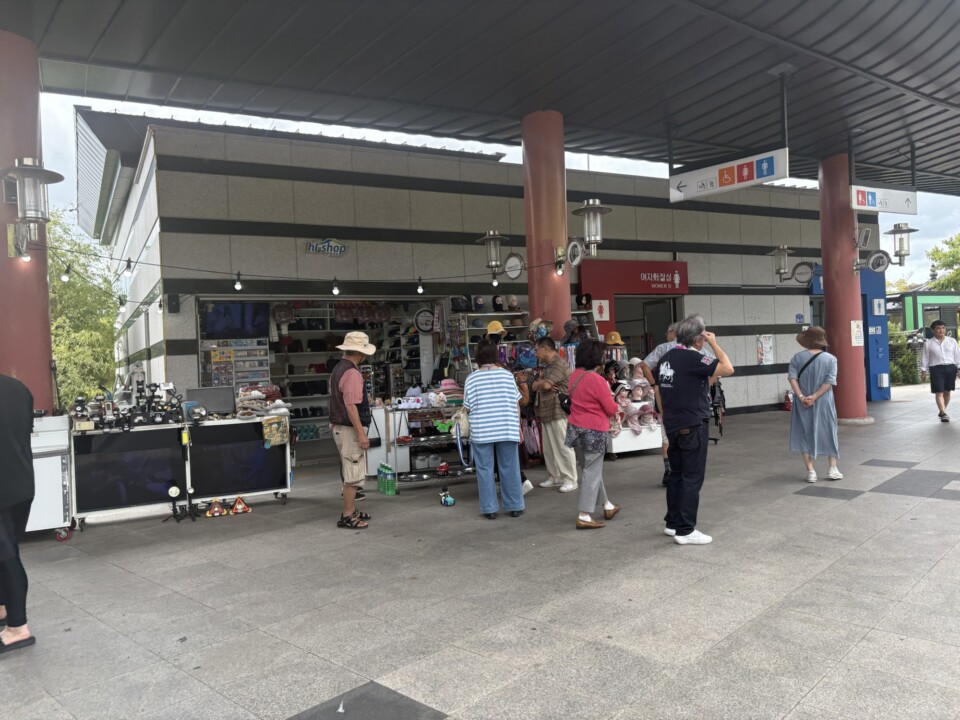
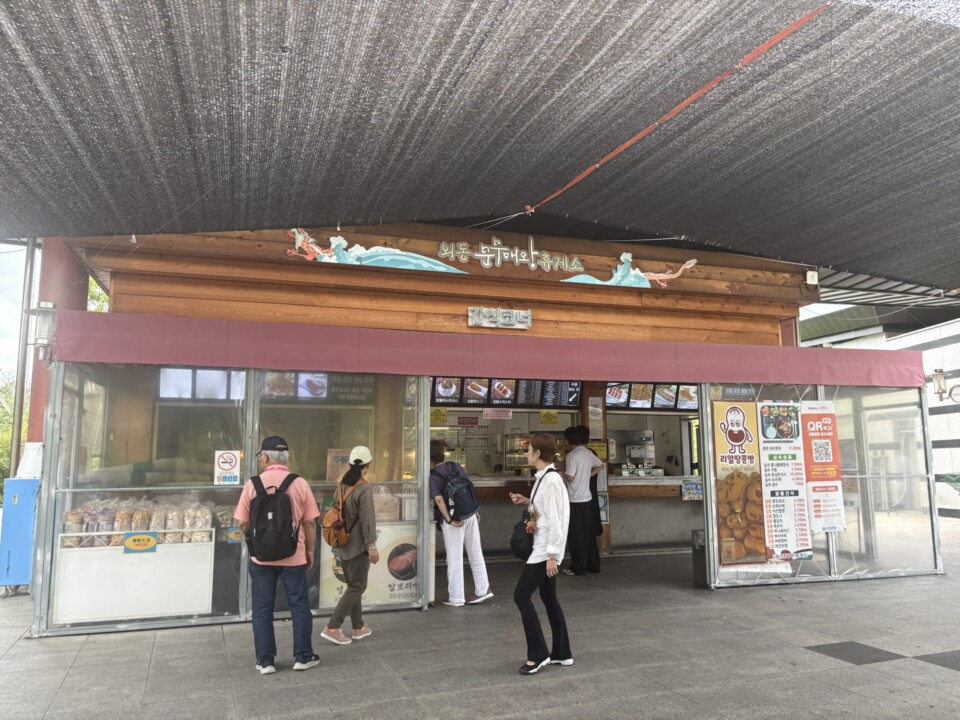
The snack corner sells Korean-style hotdogs and sweet breads, with posters advertising Gyeongju specialty snacks. The grammar of road-trip food, it turns out, is universal.
Local Comfort Food for Around
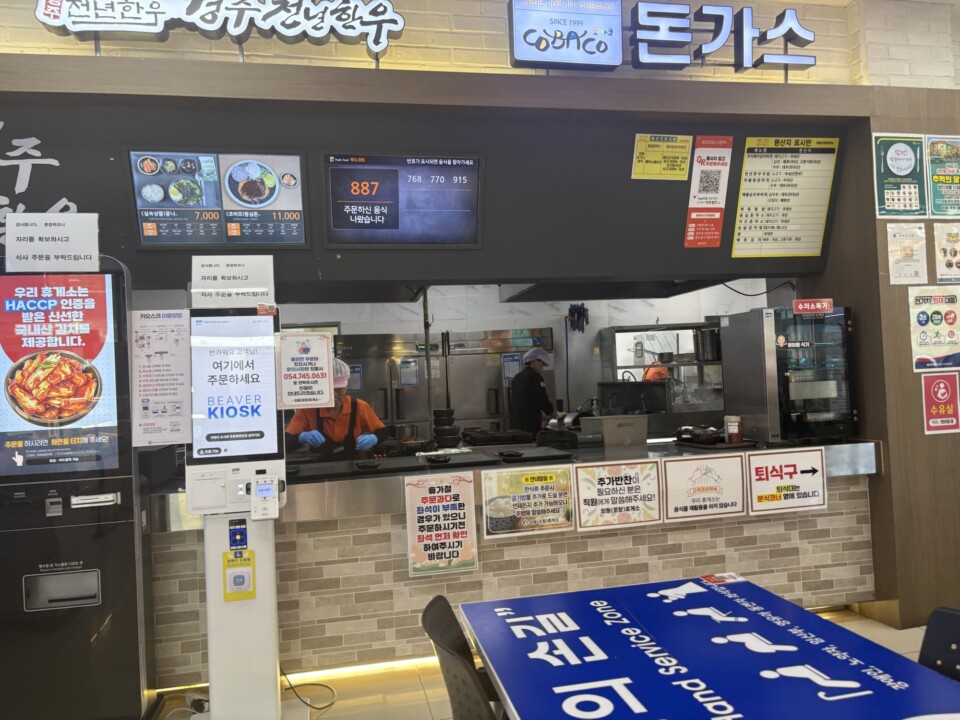
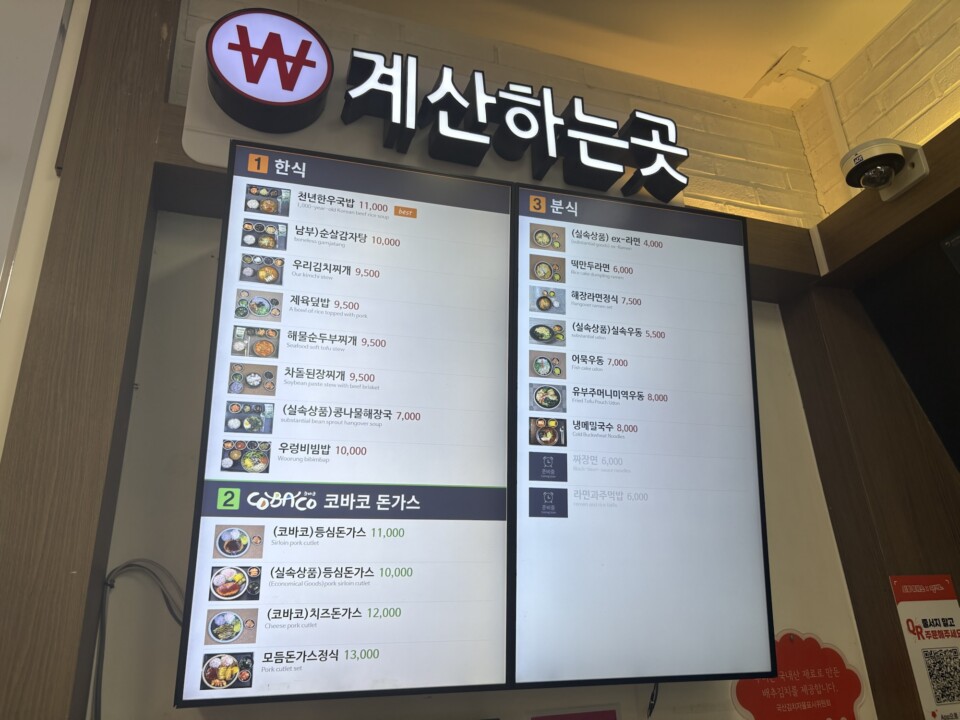
In the food court, meals run 7,000–13,000 won. The one that caught my eye: Cheonnyeon (“thousand-year”) Hanwoo gukbap, a beef and rice soup made with Gyeongju’s branded hanwoo beef — as local as a rest-stop menu gets. You order at a kiosk and wait for your number on the monitor; photo menus carry you through without a word of Korean.
Notes from the Day
- The stop was Oedong (King Munmu) service area on the Busan–Gyeongju expressway, Pohang direction.
- The layout mirrors a Japanese expressway rest stop: food court, cafe, convenience store, souvenir stalls, and outdoor snack stands.
- Meals run roughly 7,000–13,000 won (about US$5–10). Local flavor included a “Cheonnyeon Hanwoo” beef gukbap, using Gyeongju’s famous hanwoo beef.
- Ordering is by kiosk with a number display — photo menus make it easy even without Korean.
Break over, back on the road to Gyeongju. First stop: Seokguram, the World Heritage grotto at the top of the mountain.
Visited in August 2026. Prices and details are as of my visit.
Related Articles

Comments