Here is the conclusion first. A restaurant run by a seafood wholesaler will always have good material. It will also charge tourist prices.
Kaikobo in Hakodate is exactly that kind of place. To be clear, I am not criticising it. But what you expect walking in decides how you feel walking out.
A restaurant with live tanks
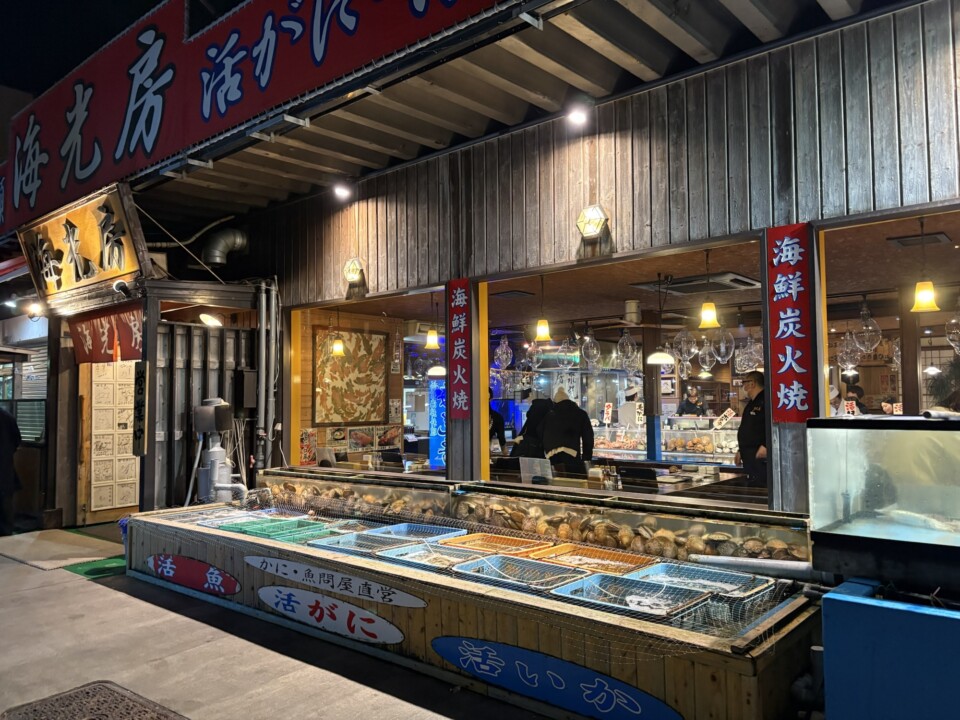
The first thing you see is the tanks. Fish swimming, crab laid out beside them, a grill running next to that. The claim that a seafood wholesaler runs the place is borne out by the fact that the inventory is visible from the door.
That visibility is itself a menu. You can decide by looking at the tank before you read anything on the wall.
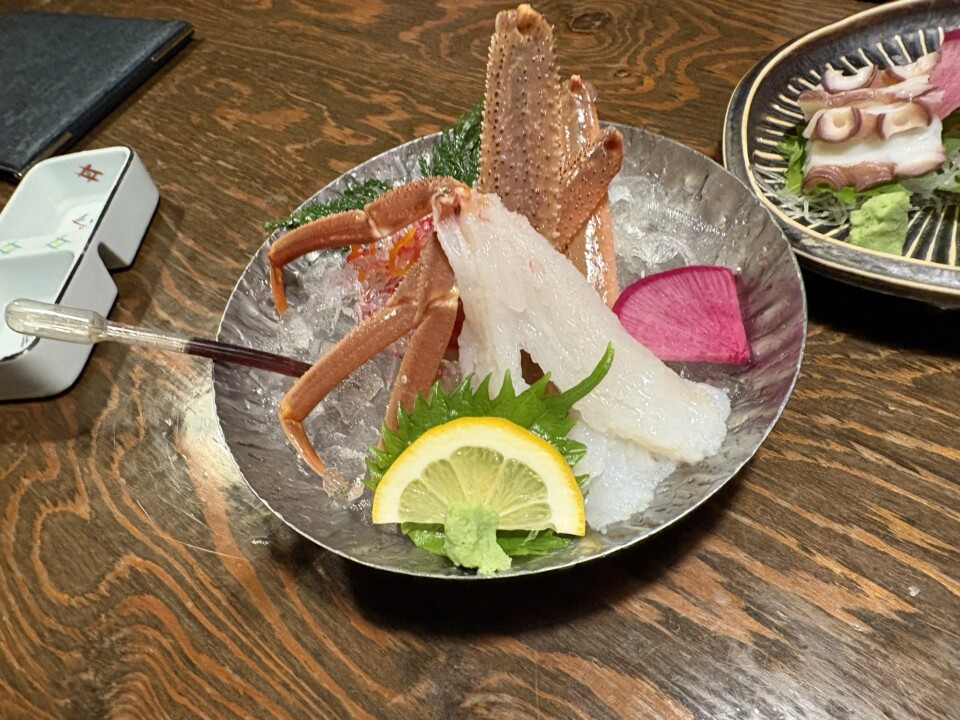
Crab legs, oysters, crab fried rice
We ordered crab legs, oysters and crab fried rice.
The crab came out on ice. The meat slides free and it is sweet. The advantage of a wholesaler-run kitchen shows most plainly in a dish nobody has done anything to.
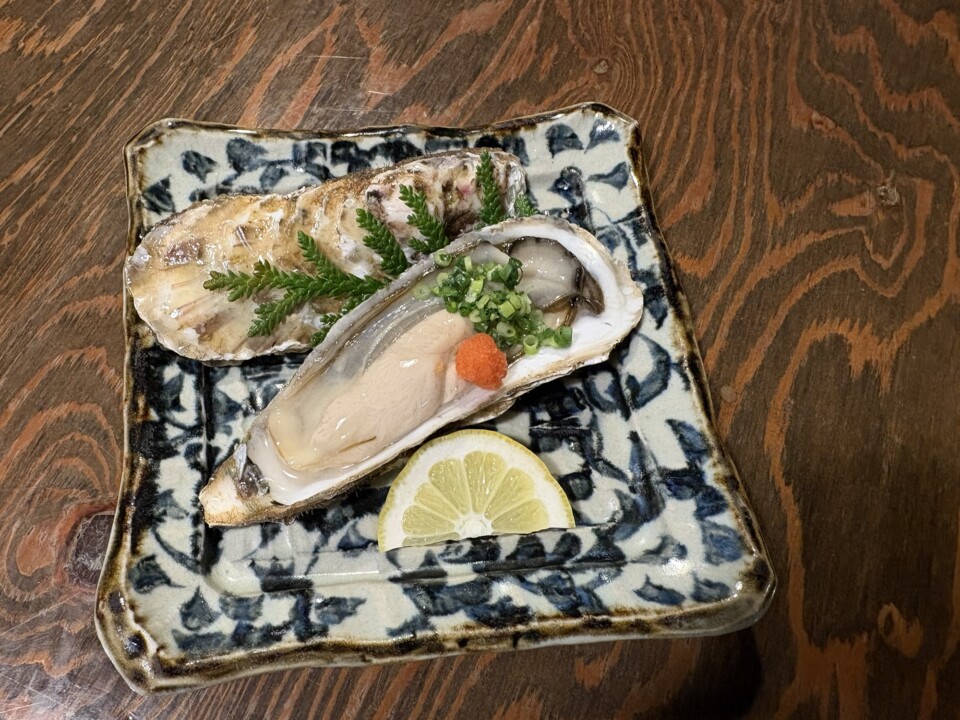
The oysters arrive one to a plate with lemon and a garnish, neatly composed. That single plate tells you the kitchen takes presentation seriously.
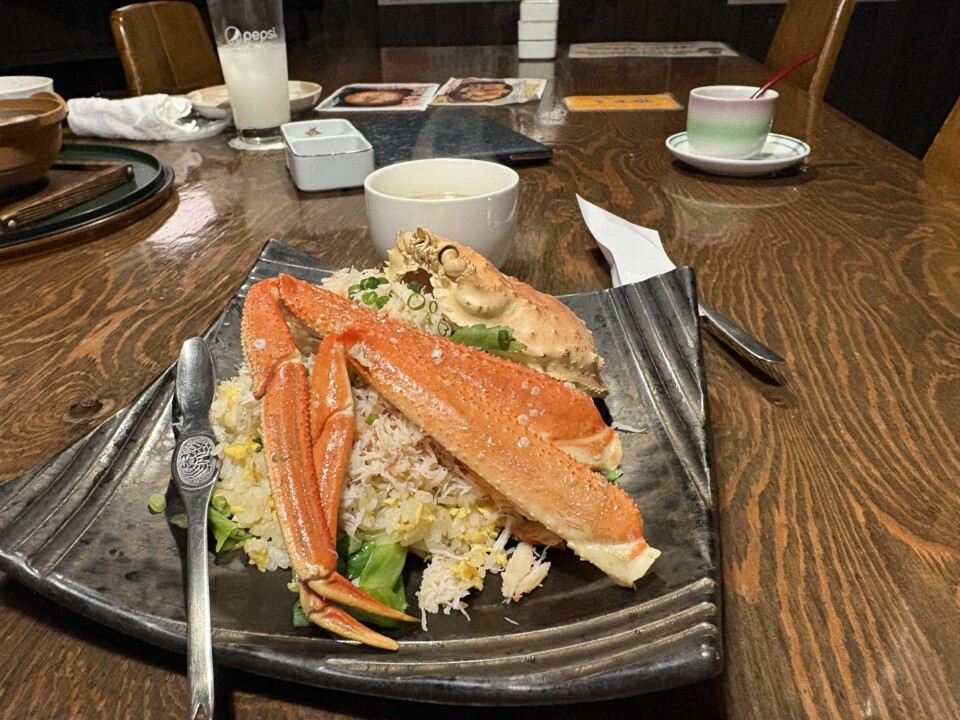
The crab fried rice comes with whole crab legs laid over the top. It is a dish that leads with spectacle, and the taste held up. Ordering carbohydrates at a seafood restaurant can go wrong; this did not.
On the price, honestly
Overall it was expensive.
That is not to say unjustified. Order crab and oysters at a wholesaler-run restaurant and the bill will be what it is. But if you walked in hoping to eat Hakodate seafood at local prices, the numbers will not match the plan.
The atmosphere also reads as priced for visitors. If you know the feeling of the outer market at Toyosu, it is that. A place that functions as a destination, charging destination prices.
This is not a complaint about tourist pricing
For the avoidance of doubt, I am not attacking the pricing itself.
A wholesaler operating a restaurant takes on premises, staff and location on top of procurement. Maintaining tanks, keeping crab alive, grilling in front of the customer: that setup costs more than the raw ingredients. Hakodate lives on tourism, so pricing that reflects it is the natural outcome.
The problem is on our side. Walk in assuming a port town must be cheap and the gap catches you. Walk in understanding it as good material at a fair price for the setup, and you leave satisfied.
Better with company
This is a place for sharing rather than for eating alone.
Order one crab and divide it, oysters for everyone, a plate of fried rice at the end. That structure keeps the per-head figure sensible, and the time spent discussing what to pick while looking at the tanks is part of the evening.
For a quiet drink alone it is heavy going. On that sort of night, something else will do.
So how should you use it?
Use it as the proper dinner of the trip.
One crab, a few oysters, fried rice to finish. If that combination satisfies you, the quality will not let you down.
If what you want is cheap seafood, go to the morning market instead. Prices there vary wildly between stalls, but choose correctly and you eat the same sea for a completely different budget. Kaikobo at night, the market in the morning, is the realistic split.
In short
- Wholesaler-run, so the material is good. It shows most in dishes nobody has touched, like the crab legs
- You choose by looking at the tanks. The stock is visible before the menu
- It is expensive. Priced for visitors. Local prices are not the expectation to bring
- The crab fried rice works. The carbohydrate at the end does not disappoint
- Here at night, the market in the morning. That is how to budget the trip
Frequently asked questions
What kind of restaurant is Kaikobo?
A seafood restaurant in Hakodate run by a seafood wholesaler. There are live tanks inside and you can order by looking at the crab and fish.
How much does it cost?
My impression was that it is expensive. Crab and oysters add up. Check current menus and prices with the restaurant.
What should I order?
We had crab legs, oysters and crab fried rice. The less a dish is worked on, the more the wholesaler advantage shows. The crab fried rice was good in both looks and taste.
Where should I go for cheaper seafood?
The morning market in the morning. Prices between stalls differ enormously there, so choose carefully.
Related reading
- Hakodate morning market: the same bowl costs three times more two doors down
- Lucky Pierrot: the burger you can only eat in Hakodate
- fav Hakodate: five minutes from the station, and the room changes colour
Sources
- Based on our visit in November 2026. Prices and menus change, so check the restaurant for current information
Related Articles

Comments