- Beginning of a journey to experience Niigata’s fascinating food culture
- The Appeal of Hegi-Soba and My Actual Tasting Experience
- Practical Tips for Enjoying Hegi-Soba on Your Trip to Niigata
- Q&A section to answer readers’ questions
- Private Wisdom’s Food Philosophy through Hegi-Soba
- Private Wisdom Summary
Beginning of a journey to experience Niigata’s fascinating food culture
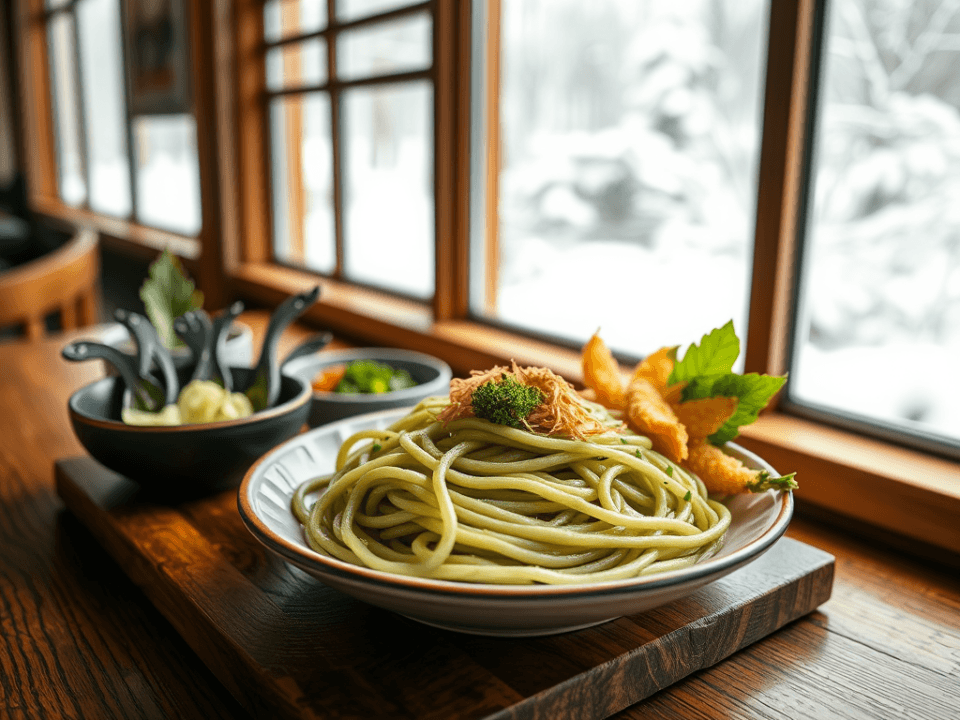
Niigata Prefecture is a place that comes to mind when one thinks of abundant nature and delicious rice, but on my most recent visit, I was captivated by the local traditional food, hegisoba. This trip fit perfectly with the spirit of Private Wisdom, which seeks out upscale culinary experiences away from the hustle and bustle of everyday life. Hegisoba is a type of buckwheat noodle that has long been popular in the Echigo region of Niigata, and is characterized by its unique texture made of seaweed called furiwa (seaweed) as a binding agent. This time I visited Kojimaya Sohonten, a long-established restaurant in Tokamachi City, Niigata Prefecture. This famous store has been in business since the Meiji era (1868-1912) and serves authentic hegisoba made with locally grown buckwheat flour. Checking the menu on the official website ( Kojimaya Sohonten official website), you will find a wide variety of dishes that make use of seasonal ingredients. Upon entering the restaurant, I was enveloped in a calm space with the warmth of wood, as if I had stepped back in time. The snowy landscape seen from the window was a beautiful contrast of pale white and deep green, and the atmosphere was refreshingly reminiscent of the smooth texture of buckwheat. This visual gently welcomes visitors and heightens their anticipation of the food.
The Appeal of Hegi-Soba and My Actual Tasting Experience
The greatest appeal of hegisoba is its unique firmness and smoothness. The addition of furiwari makes it more elastic than regular soba, and it has a great thirst-quenching effect. In my experience, I ordered the set with tempura on the recommendation of the waitress. When the soba was brought to the table, its beautifully arranged appearance on a cedar board called a hegi was eye-catching. The color of the soba was a pale green, and its glossy texture reflected the light, making it shine. The surrounding air had a subtle aroma of soba, creating a relaxing atmosphere in the quiet restaurant. First, I took a bite of the soba, dipping it lightly in the sauce and tasting it, the flavor of the soba filled my mouth and I felt the bounty of Niigata’s earthly blessings. Next, the tempura was crispy and the freshness of the shrimp and vegetables stood out. This combination was not just a meal, but an artistic experience. As I continued to eat, my body warmed up and my heart was filled with a sense of contentment, a moment of quality time that is typical of Private Wisdom. In fact, the day I visited was a winter day with light snow flurries, and the warmth of the restaurant contrasted with the cold outside, making the soba even more appealing.
- When ordering hegisoba, it is recommended to choose cold zaru-soba to enjoy the smoothness of the soba.
- For tempura, specify seasonal vegetables to enjoy the freshness of local produce.
- If you like sake, try pairing it with local sake. Niigata sake is a perfect match.
See also: Niigata’s Local Sake Tour for the Finest Taste
Practical Tips for Enjoying Hegi-Soba on Your Trip to Niigata
If you plan a trip to Niigata, I recommend that you make hegisoba your main attraction. I myself took the train to Tokamachi and walked around the area to get to the restaurant. To get there, take the Joetsu Shinkansen to Echigo Yuzawa Station, and then take a bus or rent a car for about an hour. In winter, you need to be careful on snow-covered roads, but that is also the best part of the trip. The restaurant tends to be crowded, so be sure to make reservations in advance. In my case, I arrived in the morning and avoided lunch time, allowing me to savor the food in a relaxed atmosphere. Visually impressive was the soba noodle-making demonstration area. The craftsman’s hands were rhythmic and the dancing white particles of buckwheat flour were as delicate as snow, and the soft lighting in the restaurant provided a pleasant atmosphere. The time spent waiting and watching this spectacle heightens one’s anticipation of the food. In addition, with spots such as Matsunoyama Onsen in the vicinity, relaxing in a hot spring after dinner is also a good plan. With a budget of about 2,000 yen per person, you can enjoy a full-fledged set meal, making a high-class experience affordable.
- Rental cars are recommended for transportation. If you are not used to driving on snowy roads, take a bus.
- The best time to visit is from fall to winter. The autumn leaves and snowy scenery deepen the flavor of hegisoba.
- If you have allergies, check the ingredients of furiwari. The shopkeeper will kindly explain it to you.
- Buy dried noodles as souvenirs. You can recreate it at home and enjoy the aftermath of your trip.
See also: A Heartwarming Experience on a Winter Trip to Niigata
Q&A section to answer readers’ questions
Many readers have questions about hegisoba. Here, I will answer them based on my experience.
Q: What is the difference between hegi soba and regular soba?
A: The main difference is the use of ふのり for the binding. This gives it a unique slippery texture and a richer flavor. When I ate it, I found it to be stronger and more satisfying than regular soba.
Q: Do I need to make a reservation at Kojimaya Sohonten?
A: Reservations are recommended on weekends and during the tourist season. I went on a weekday, but called to make sure. Reservations can also be made online through the official website.
Q: What kind of sake goes well with hegisoba?
A: Niigata dry sake is the best choice. In my experience, a light-flavored junmai sake enhanced the delicacy of the soba. We have an extensive local sake menu in the restaurant.
Q: Can I bring my children?
A: Yes, we have a small menu for children. At the time of my visit, there were many families and the atmosphere was friendly.
Q: Are there any nearby attractions?
A: I recommend the Tokamachi Kimono Museum and the beech forest called Bijinrin. After having hegisoba, a walk in the forest is a good way to refresh yourself.
These Q&A are derived from my own experience. As a visual, I imagine the Q&A as a calm scene, like taking notes in a notebook under soft lighting. The texture of the paper is smooth, and the black of the ink floats clearly, evoking the image of the reader resolving his or her own questions.
Private Wisdom’s Food Philosophy through Hegi-Soba
At Private Wisdom, gastronomy is more than just a meal; it is a life-enriching experience. Hegi-Soba is just that. Using ingredients nurtured by Niigata’s natural environment, the craftsmanship of this dish is as satisfying as a course at a fine restaurant. On my trip, after eating this soba, I visited a local sake brewery to observe the sake making process. There, I was struck by the beauty of the clear sake liquid being poured into bottles, coupled with the luminous glass and the subtle sweet aroma of the space. This visual evokes a culinary chain of events and elevates the entire journey to something special. Such an experience creates a sense of relaxation in the midst of our busy financial and business lives. Exploring Niigata’s food culture with hegisoba as a starting point will give you a unique perspective.
See also: Exploring Private Wisdom’s Gastronomic Philosophy
Private Wisdom Summary
Niigata’s hegisoba is a hidden, exquisite delicacy that is sure to be a highlight of your trip. From my own experience, the slippery texture and local warmth gave me a memorable blissful experience. If you are looking for a luxury food experience away from the ordinary, I encourage you to visit Kojimaya Sohonten and continue to explore these special gems from the perspective of Private Wisdom, which will enrich your life. We hope you enjoy your next trip to Kojimaya.
Comments